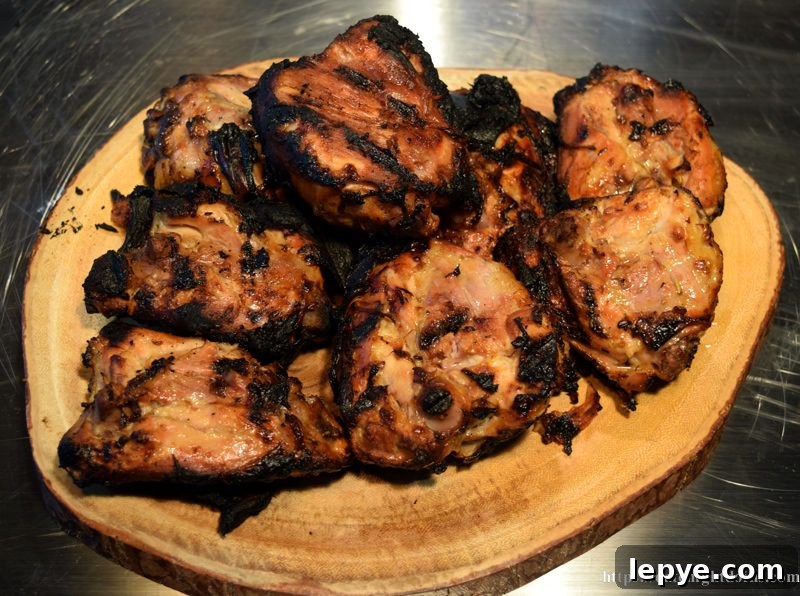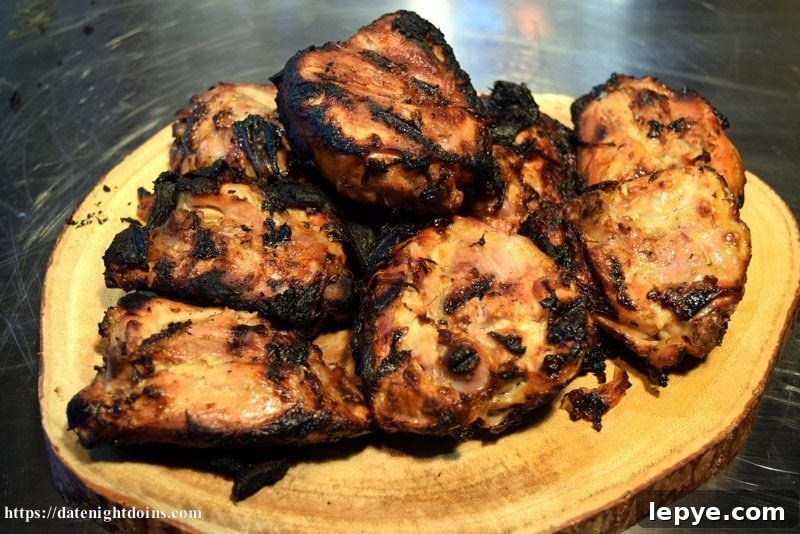
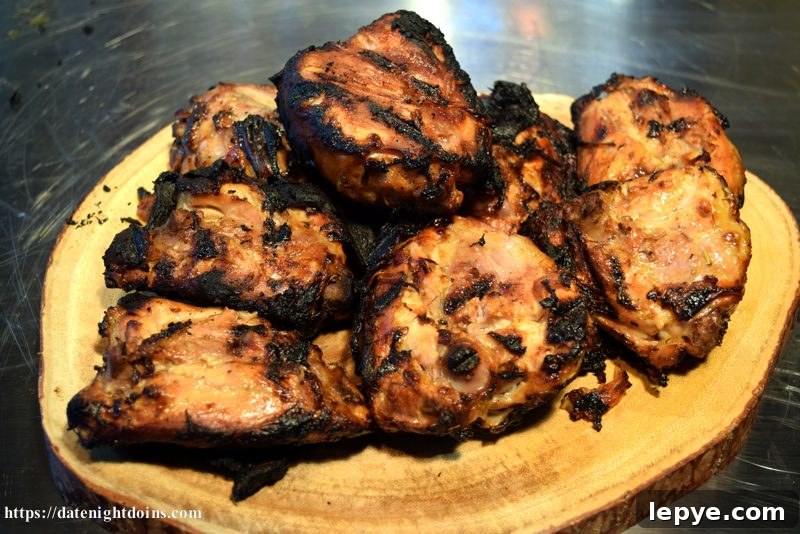
Lemon Herb Chicken is one of our favorite weeknight or weekend meals. We live in a neighborhood where everyone shares fruit from their trees, so at this time of year citrus is abundant — thanks, Rudy, for the lemons. In this recipe we used bone-in thighs because they were a great price, but bone-in chicken breasts work equally well. The chicken benefits from a long marinate; overnight is ideal, though a minimum of six hours will still produce great flavor.
Patti and I set aside one night each week as our date night. Most of the time we fire up our Green Mountain wood pellet grill/smoker, but sometimes we cook indoors and still enjoy dinner together on the patio. Our outdoor space has a rainforest theme with a wood pellet patio heater, soft lighting, candles, lanterns and surround sound. We like to unwind with a glass of wine or a strawberry margarita made with frozen strawberries, listen to music, enjoy good food and sometimes even dance.
Lemon Herb Chicken — A Gas Grill Recipe
Prep Time: 10 minutes, plus marinate time
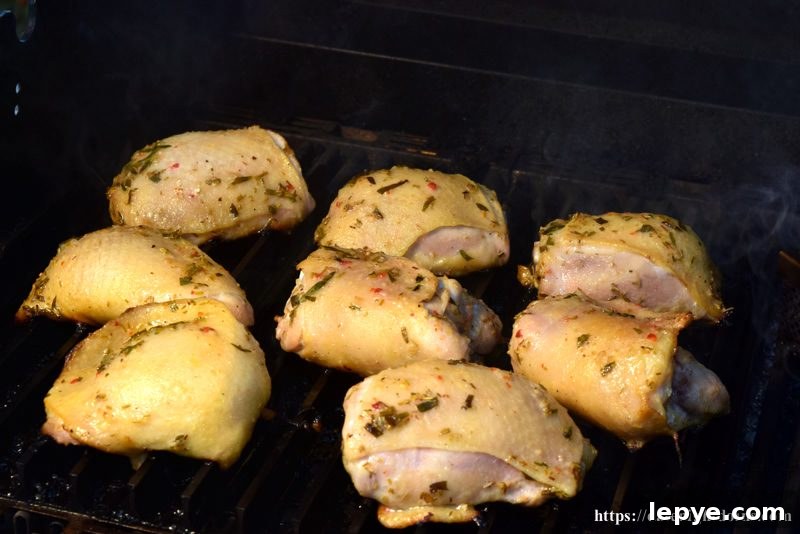
Cook Time: 30 minutes at 400°F (205°C)
Grill: Gas
Ingredients: Lemon Herb Chicken
- 8 bone-in chicken thighs
Ingredients: Marinade
- 1 cup Italian salad dressing
- 1/4 cup fresh rosemary, minced
- 1/4 cup fresh tarragon, chopped
- 8 oz fresh lemon juice
Grill Setup and Equipment
For consistent results on a gas grill, use a model with front-to-back burners and at least three burners (four is better). Being able to control burners independently lets you create hot and cooler zones — I usually light one side and leave the others off. An oven thermometer placed at grate level is essential; the hood thermometer doesn’t reflect the temperature where the meat cooks. I use a dual-probe thermometer so I can monitor both the meat and the grill temperature, and a handheld instant-read thermometer to check doneness.
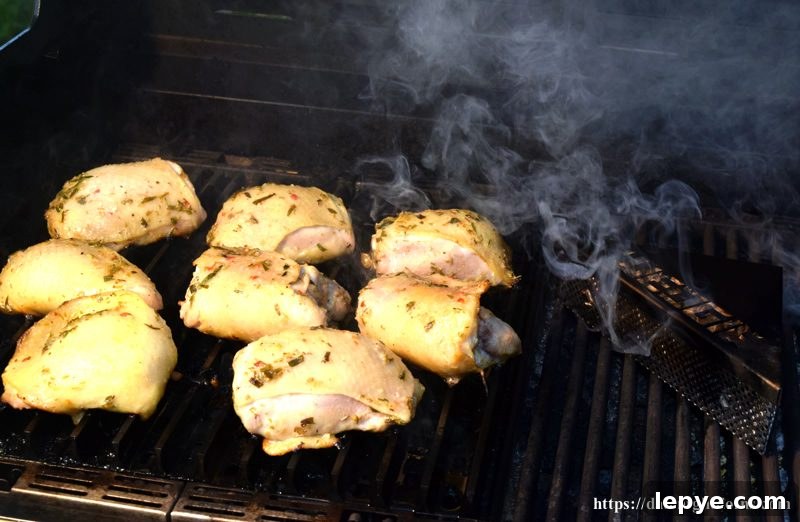
If you want a touch of smoke on a gas grill, use a small smoke box or a pellet smoker attachment. A compact smoker accessory lets you try different pellet flavors without buying large bags, and a light “kiss” of smoke pairs nicely with the lemon and herbs in this dish. Keep in mind that at cooking temperatures above 250°F (122°C) you will get less smoke flavor.
Cooking Directions: Lemon Herb Chicken
1. Place the chicken in a large resealable bag or nonreactive container.
2. In a small bowl, whisk together the Italian dressing, minced rosemary, chopped tarragon and lemon juice. Pour the marinade over the chicken, seal the bag, and refrigerate. Marinate overnight or for at least six hours, turning occasionally so the chicken coats evenly.
3. Preheat the grill to 400°F (205°C). If you are using a smoke box or pellet attachment, start that now for a light smoke.
4. Place the chicken directly on the hot side of the grill. Cook for about 15 minutes before flipping — times will vary by grill, and the chicken is ready to flip when it releases easily from the grates.
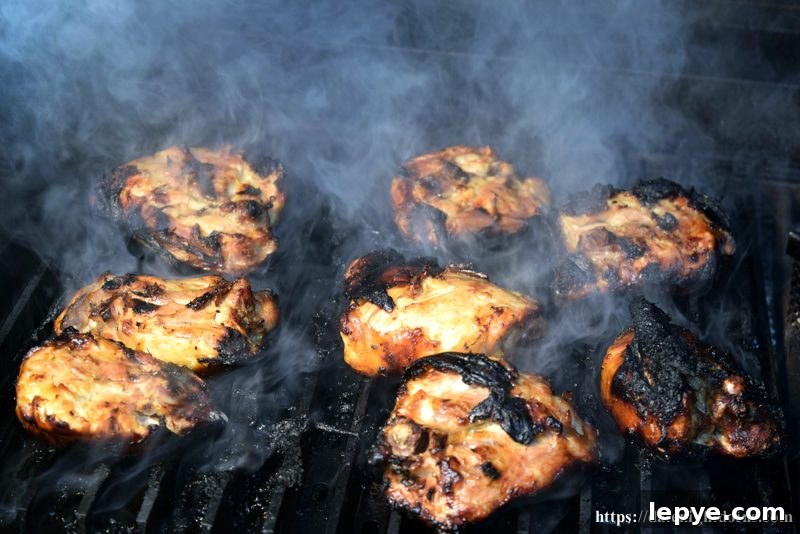
5. Continue grilling until the internal temperature reaches about 170–175°F (77–79°C). Because grills vary, cook by temperature rather than time; the USDA safe minimum is 165°F (74°C), and the meat will continue to rise a few degrees after you remove it from the heat. I prefer the higher range so the meat flakes apart nicely.
6. When the chicken reaches the target temperature, remove it from the grill, cover loosely, and let it rest for 5–10 minutes before serving. Use an instant-read thermometer to verify doneness.
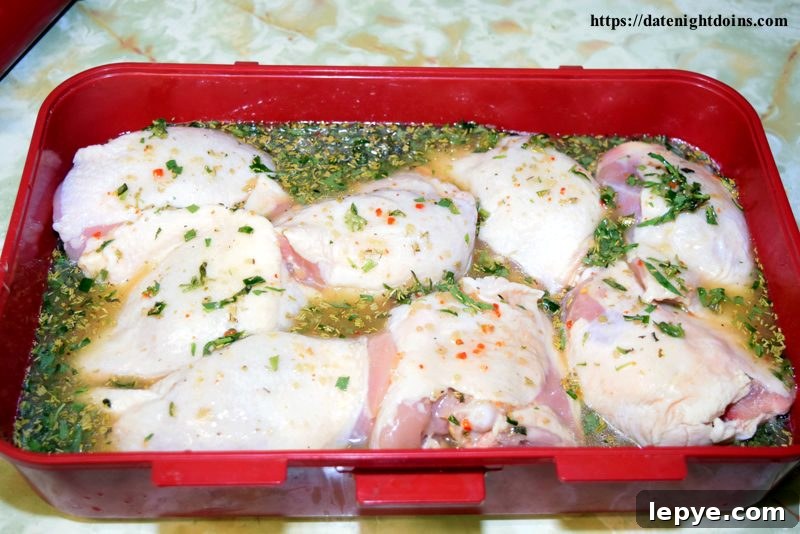
Note: A recipe is an outline rather than an inflexible set of rules. Adjust herbs, marinade quantities or pellet flavors to suit your taste. If you smoke at temperatures below 250°F (122°C) you will get more smoke flavor; at higher temperatures you’ll mostly be cooking rather than smoking, so pellet variety matters less.
About Our Recipes
We test recipes across a variety of grills on our patio, from pellet grills to gas, charcoal and wood-fired equipment. We call our collection the “Wall of Grill.” Our approach is focused on flavorful, lower-fat grilling that works for pelletheads, gas grillers, natural wood and charcoal purists. Many recipes are adaptable to different heat sources; the key is paying attention to time and temperature.
Remember that recipes are starting points — feel free to tweak ingredients and techniques to match your preferences. Take what you like and make it your own.
Live your passion and do what you love,
Ken & Patti