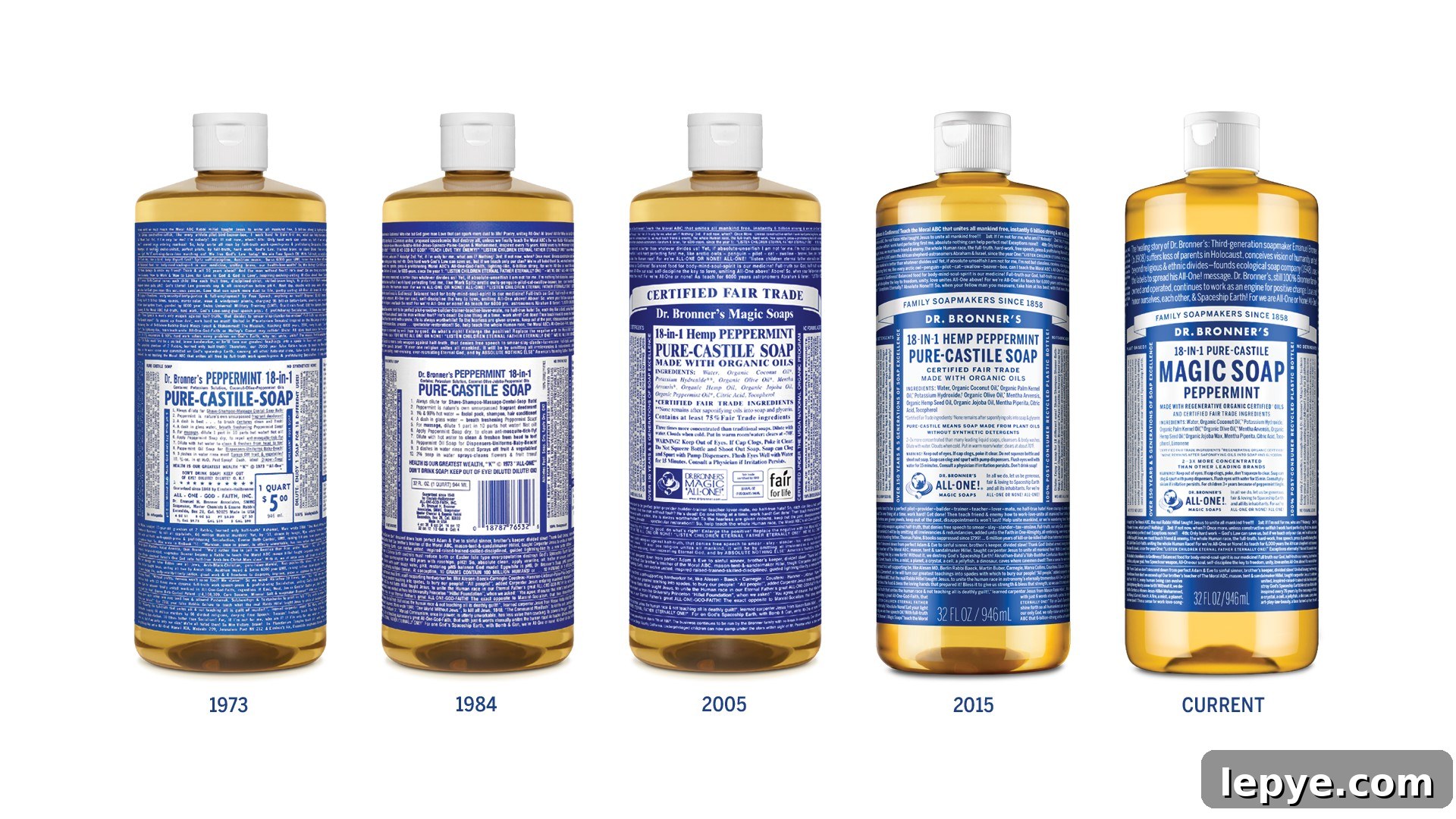
Most companies design a product and then create a label to promote it. Dr. Bronner’s story was different: the label — the message — existed before the product found its wide audience. There was nothing calculated or subliminal about it. The dense, small-print text that covers Dr. Bronner’s Liquid Castile Magic Soap is not a marketing gimmick. It is the expression of a mission: my grandfather Dr. E.H. Bronner wrote those words to urge people toward peace, unity, and personal responsibility. That message launched the company now known as Dr. Bronner’s.
On many bottles since 1960 you can read an excerpt from his autobiography:
In ’47, after father-mother-wife murdered, ourself tortured-blinded, we wrote this poem: “To keep my health! To do my work! To love, to live! To see to it I gain & grow & give & give! Never to look behind me for an hour! Never to wait in weakness nor to brag in power! Always working, searching for more truth, more light! Always writing, teaching what I found good & right! Robbed-starved-beaten-blinded, wide astray! Back with the full-truth I’ve gained, back to the way: Smile, help teach the whole Human race, the Moral ABC of All-One-God-Faith, Lightning-like strong & we’re All-One! All-One!”
I can’t tell you the story of the Dr. Bronner’s label without telling you my grandfather’s personal history. They are inextricably intertwined.
Emanuel Theodore Bronner — born Emil Heilbronner in 1908 in Heilbronn, Germany — was a third-generation soapmaker trained in the German Master craftsman system. Though his family owned the Madaform soap company, Emil left Germany at 21 after clashing with his father over his philosophical interests. He emigrated to the United States in December 1929, arriving in New York with few resources and a determination to pursue his ideas.
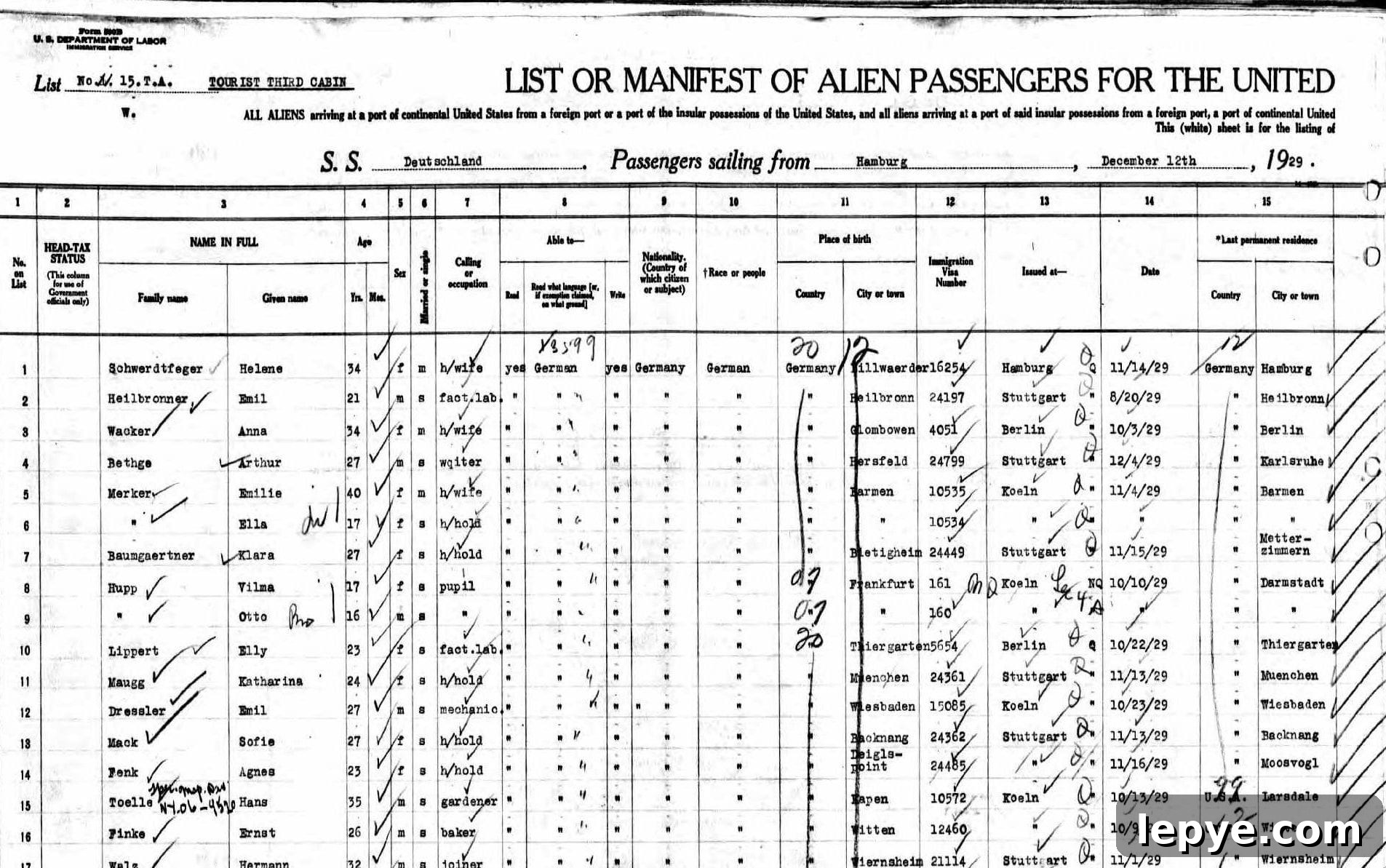
Manifest of the SS Deutschland, arriving in New York December 22, 1929. Emil Heilbronner, listed second, is recorded as a 21 year old single German male who can read and write, speak German, is trained as a factory lab worker, from Heilbronn. He received his visa in Stuttgart on August 20, 1929.
He spent his first decade in America working and learning his trade. He married Paula Wohlfart and had three children: Ellen, Ralph, and James (my father). In 1936 he became a naturalized U.S. citizen and adopted the name Emanuel Theodore Bronner. He later added the title “Dr.”, reflecting the German tradition of the title “Master.”
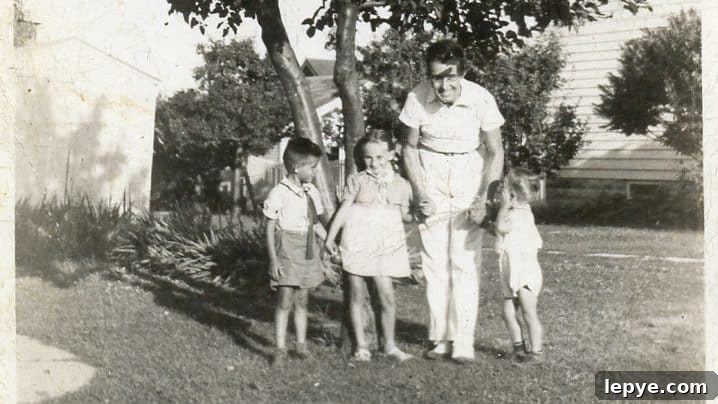
Happy times in 1941, Ralph (5), Ellen (6), Emanuel Bronner, little Jimmy (3).
Tragedy struck as Nazism overtook Germany. Some family members escaped, but Emanuel’s father Berthold and others were unable or unwilling to leave. The forced Aryanization of Jewish businesses and the tightening restrictions on emigration left many trapped. In 1942 Berthold, his wife Franziska, and a sister-in-law were deported to concentration camps. Berthold and the sister-in-law died soon after arrival; Franziska was later killed at Auschwitz. Emanuel received a censored postcard from his father with a single line readable: “You were right. Your loving father.”
Back in the U.S., Emanuel endured further personal losses. His wife Paula suffered a breakdown and died in 1944. These events, combined with the horrors of war and the new nuclear age, convinced him that the world faced existential threats and that unity and moral clarity were urgently needed.
He critiqued the era’s embrace of synthetic chemistry and industrial solutions, predicting the environmental damage and social costs that would follow. Rather than give in to bitterness, Emanuel devoted himself to spreading a set of ethical principles he called the Moral ABC, summarized by his repeated cry: “All-One!”
His Moral ABC begins with the individual and moves outward: “1st: I am not for me, who am I? Nobody!” and “2nd: Yet, if I am only for me, what am I? Nothing!” He drew on nature, philosophy, science, education, and religious traditions to show how shared values bind humanity together.
His writings are compact, urgent, and sometimes poetic, full of hyphenated compounds and repeated refrains meant to jolt readers into attention. He spoke plainly about unity, responsibility, and care for the earth. Yet his accent and intensity sometimes made audiences uneasy. In 1946 he was arrested for speaking without a permit at the University of Chicago and subsequently institutionalized at Elgin State Asylum, where he received electroshock therapy that he later believed contributed to his blindness. He escaped after several attempts and ultimately made his way to Los Angeles.
In Los Angeles Emanuel found a platform at Pershing Square, where he handed out small bottles of his family’s peppermint-scented Castile soap. He noticed people took the soap home but often didn’t stay for the talk. So he placed his message directly on the label, knowing people would read it in private while using the soap. That decision created the distinctive Dr. Bronner’s label.
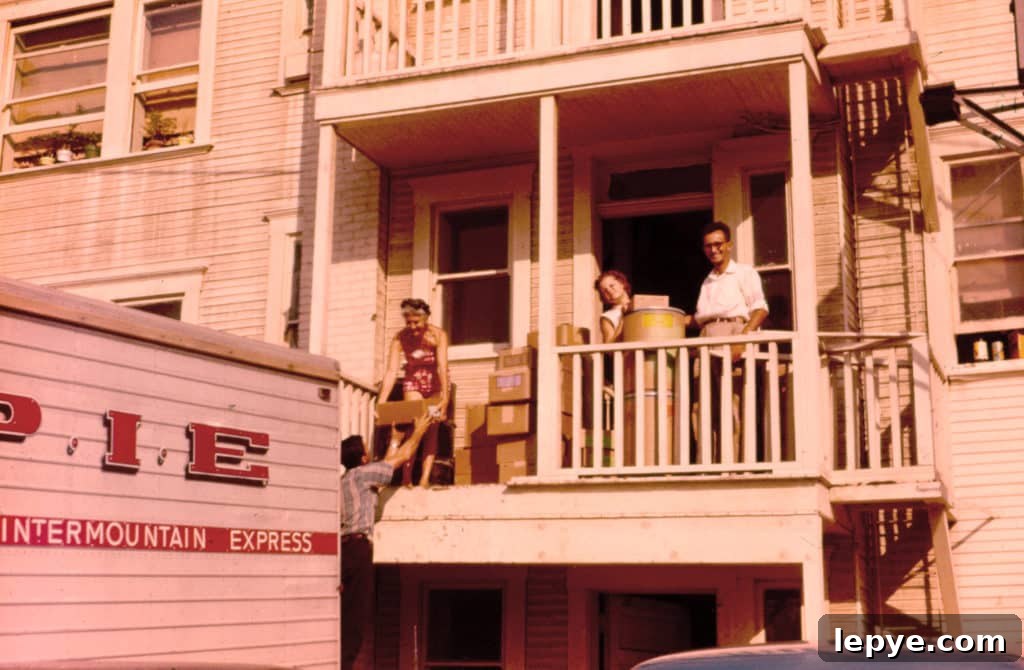
A shipment going out from Emanuel Bronner’s L.A. apartment. From left to right: My dad Jim Bronner, a woman I don’t know, my Aunt Gisela (Ralph’s wife), and Emanuel Bronner himself.
Demand grew beyond street outreach. Emanuel began selling soap through small health stores and renting a reactor on Saturdays to increase production. By the 1960s his message found a wider audience among the counterculture: people drawn to nature, peace, and authenticity embraced both the soap and the label. Emanuel moved to Escondido, California, where he lived modestly while producing soap and continuing to host conversations and gatherings.
At first, only Emanuel and my father Jim knew the secret soap formula. The business grew, but Emanuel viewed it primarily as a vehicle for his message and operated with a principle he called Constructive Capitalism: share profits with workers and the earth. He paid employees well, gave to causes he believed in, and lived simply. The IRS eventually required the company to be taxed as a business in 1973, but Emanuel continued to give extensively.
He edited the label obsessively, even as his vision faded. He would mark revisions with a red crayon, dictate changes by phone, and rally family members to help research, transcribe, or speak parts of the text back to him. The label evolved with new scents and formulations; different quart-size scents still carry different portions of his writings.
There were offers to sell the soap without the label, but Emanuel refused. For him the soap was the medium for his philosophy: remove the label and you remove the purpose. He insisted any buyer accept the label intact — the two were inseparable.
Word of mouth and family “soap trips” helped spread the product. My uncle Ralph traveled the country, visiting health stores, handing out soap, telling the story, and playing music. Customers who found the distinctive, text-covered bottle in a friend’s bathroom often became lifelong users and advocates.
Ralph Bronner, around 2002, still making soap trips and playing guitar.
Today the company remains family-run and guided by the label’s principles. The business operates as a Benefit Corporation, caps executive pay relative to the lowest-paid full-time employee, and supports causes from organic and fair-trade agriculture to drug policy reform and racial justice. In 2019 the company directed a significant portion of profits to charitable causes and continues to prioritize fair pay, healthcare, childcare assistance, bonuses, profit sharing, and tenure awards for employees.
The label’s influence endures in the company’s six core principles:
Work Hard! Grow!
Do right by customers
Treat employees like family
Be fair to suppliers
Treat the earth like home
Fund & Fight for what’s right.
Not everyone agrees with every part of Emanuel Bronner’s message, but his goal was to provoke conversation. He welcomed disagreement so long as it led to engagement. Above all he wanted people to act with fairness, generosity, and love toward one another and the planet.
In all we do, let us be fair, generous, and loving to Spaceship Earth and all its inhabitants. For we’re All-One or None! All-One!
Further reading
The Five Soapmaking Locations of Bronner Family Soaps