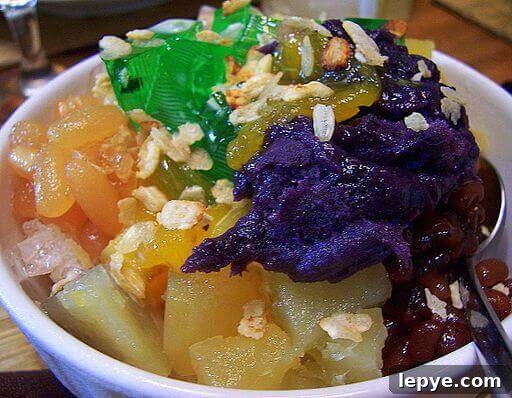
Halo-halo is a well-loved Filipino dessert made by combining a variety of sweet ingredients with shaved ice and evaporated milk. Its name comes from the Tagalog word “halo,” which means “to mix,” a fitting description of how the dessert is prepared and enjoyed.
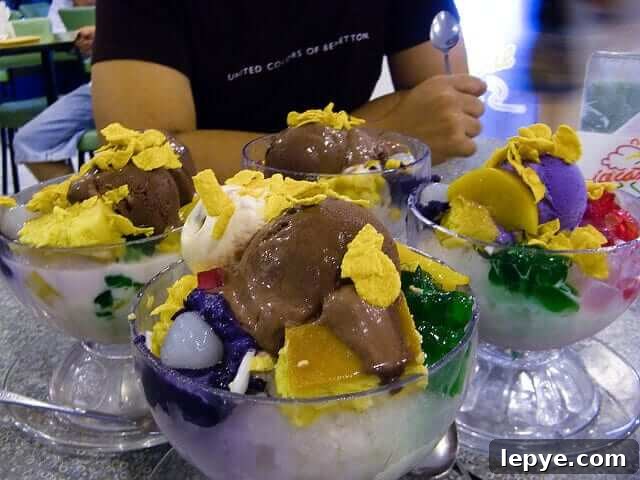
Typical ingredients used in halo-halo include kaong (sugar palm), boiled kidney beans, pinipig (pounded young rice or flat rice crisps), nata de coco (coconut gel), ripe jackfruit, flavored gelatin, tapioca pearls, sweetened saba bananas, and macapuno. These components provide a range of textures and flavors—chewy, creamy, sweet, and slightly crunchy—making each spoonful interesting.
To assemble halo-halo, the various ingredients are layered in a tall glass with a touch of sugar. Shaved ice is added on top, then traditionally the dessert is finished with evaporated milk poured over the whole glass. Classic or “special” versions are often crowned with slices of leche flan and a dollop of ube halaya (purple yam jam); ice cream is sometimes added as well to make it even richer.
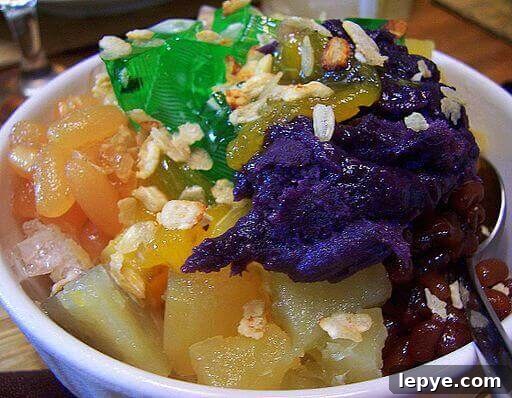
Halo-halo is eaten with a spoon. Before digging in, the ingredients are lightly stirred so the flavors and textures distribute evenly. Stirring can be awkward at first because of the compacted shaved ice, but it becomes easier as the ice melts and the layers blend together.
This dessert is especially popular in the hot summer months. Street vendors often prepare halo-halo at stalls, displaying ingredients in glass jars on small tables so customers can see and choose what goes into their glass. Street-side halo-halo remains an accessible and authentic way to enjoy the treat.
Many restaurants and fast-food chains have added halo-halo to their menus, serving regional or signature takes on the classic. Some chains offer it year-round, while specialty restaurants and eateries may present premium versions with handmade or artisanal toppings. Personal favorites vary widely—some diners prefer a simpler version with fewer add-ins, while others seek out richer variants topped with flan, ube halaya, or ice cream.
Prices for halo-halo can vary depending on location, ingredients, and whether it’s sold at a street stall, cafeteria, or sit-down restaurant. Street vendors typically charge less, while specialty shops and restaurants may charge more for premium components. Where and how you enjoy it will affect both the style and cost.
If you have a favorite place that serves a great halo-halo, share it—there are many regional and family-run establishments across the Philippines that put their own spin on this classic dessert.