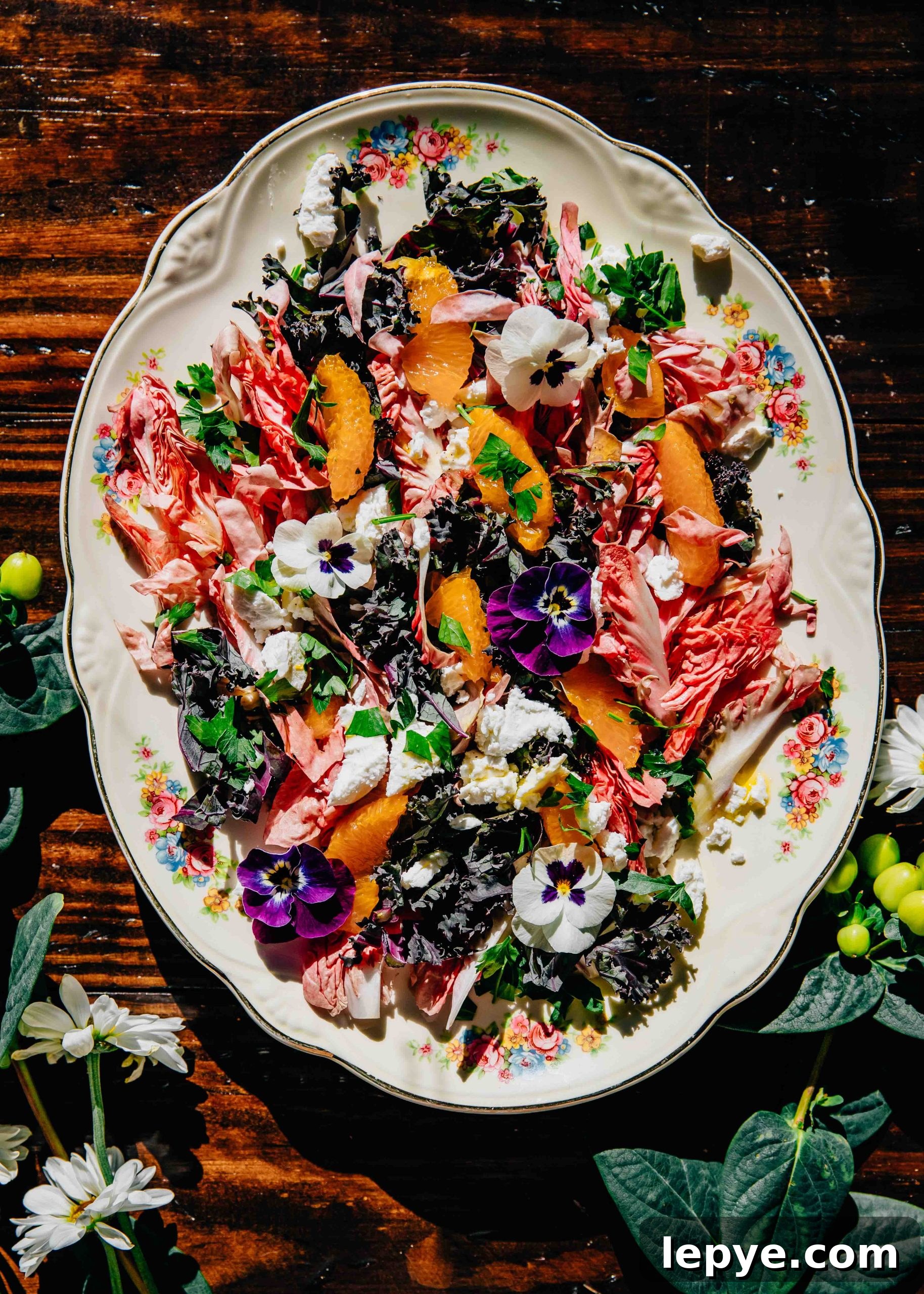
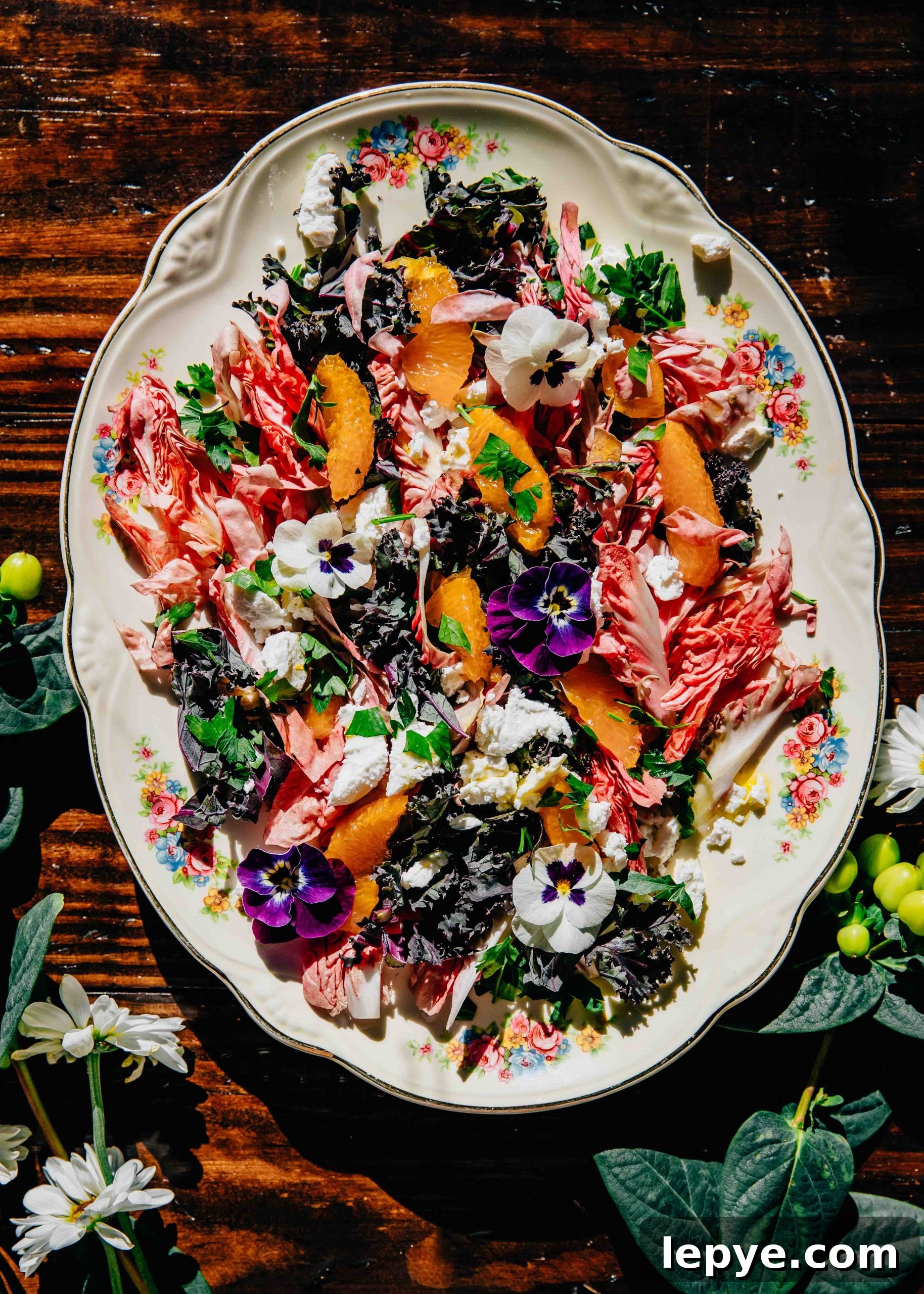
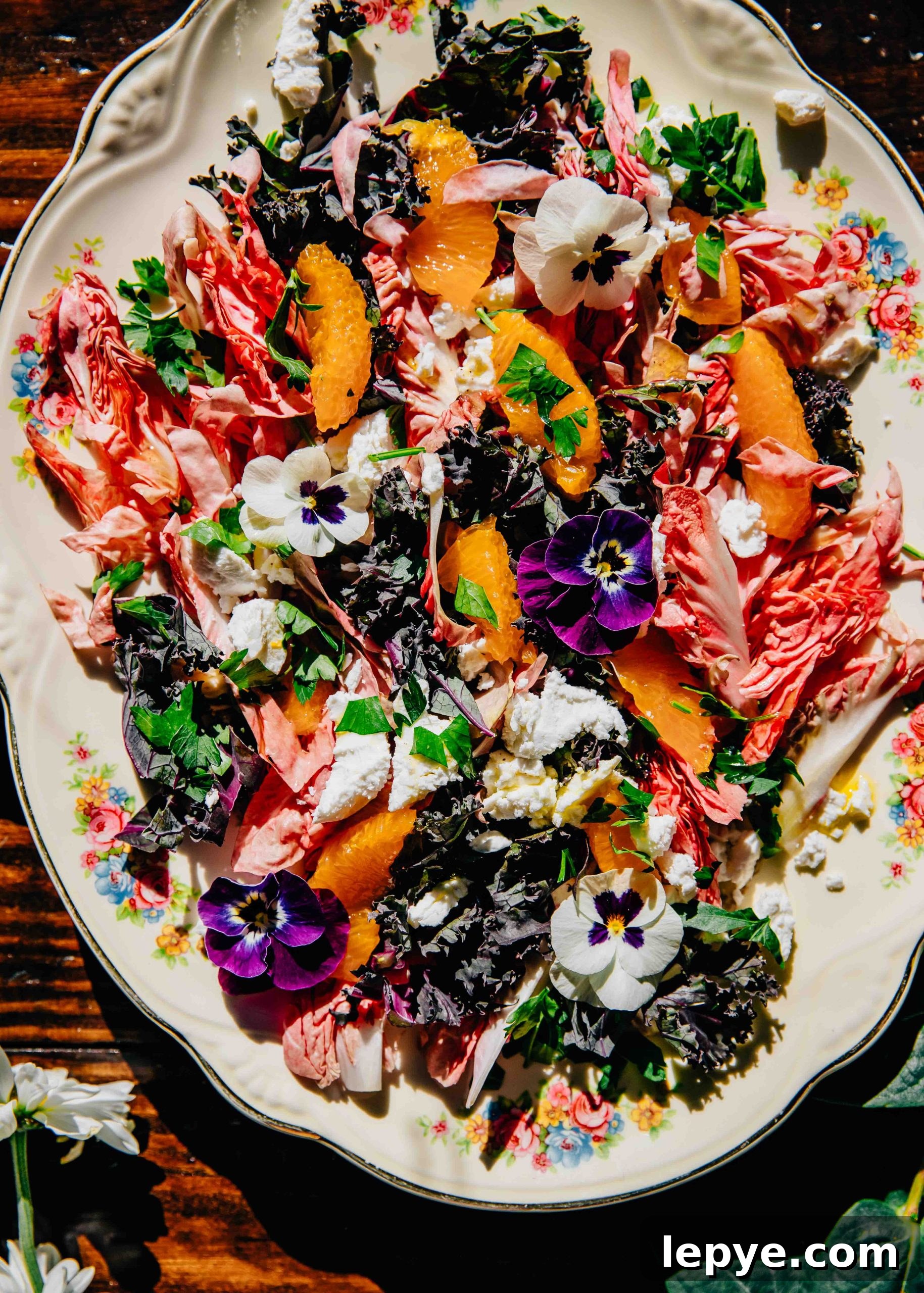
This vibrant, seasonal Garden Pansy Salad features edible flowers, crisp greens, and a simple vinaigrette. It’s ideal for a light lunch or an elegant spring appetizer. Use organic or home-grown pansies for the safest, best flavor.
I have a soft spot for pansies — they were the official flower for my college sorority, Kappa Alpha Theta. I still remember the Lilly Pulitzer sorority print bag I carried everywhere; it was yellow and blue, patterned with pansies. Even though my sorority experience was mixed, pansies have always felt cheerful to me, and I’m grateful to still be close with my little and my little kite.
Pansies add color and charm to a salad thanks to their wide range of hues. In this recipe I used white and purple pansies, but choose any non-yellow varieties you trust. Some people report stomach upset after eating yellow pansies, so I avoid them. Always source pansies from organic, pesticide-free gardens and double-check that the flowers you use are safe and edible.
If you enjoy floral spring recipes, try other favorites like Nasturtium Tangerine Spritz, Chive Blossom Vinegar, or a Flower Garden Salad.
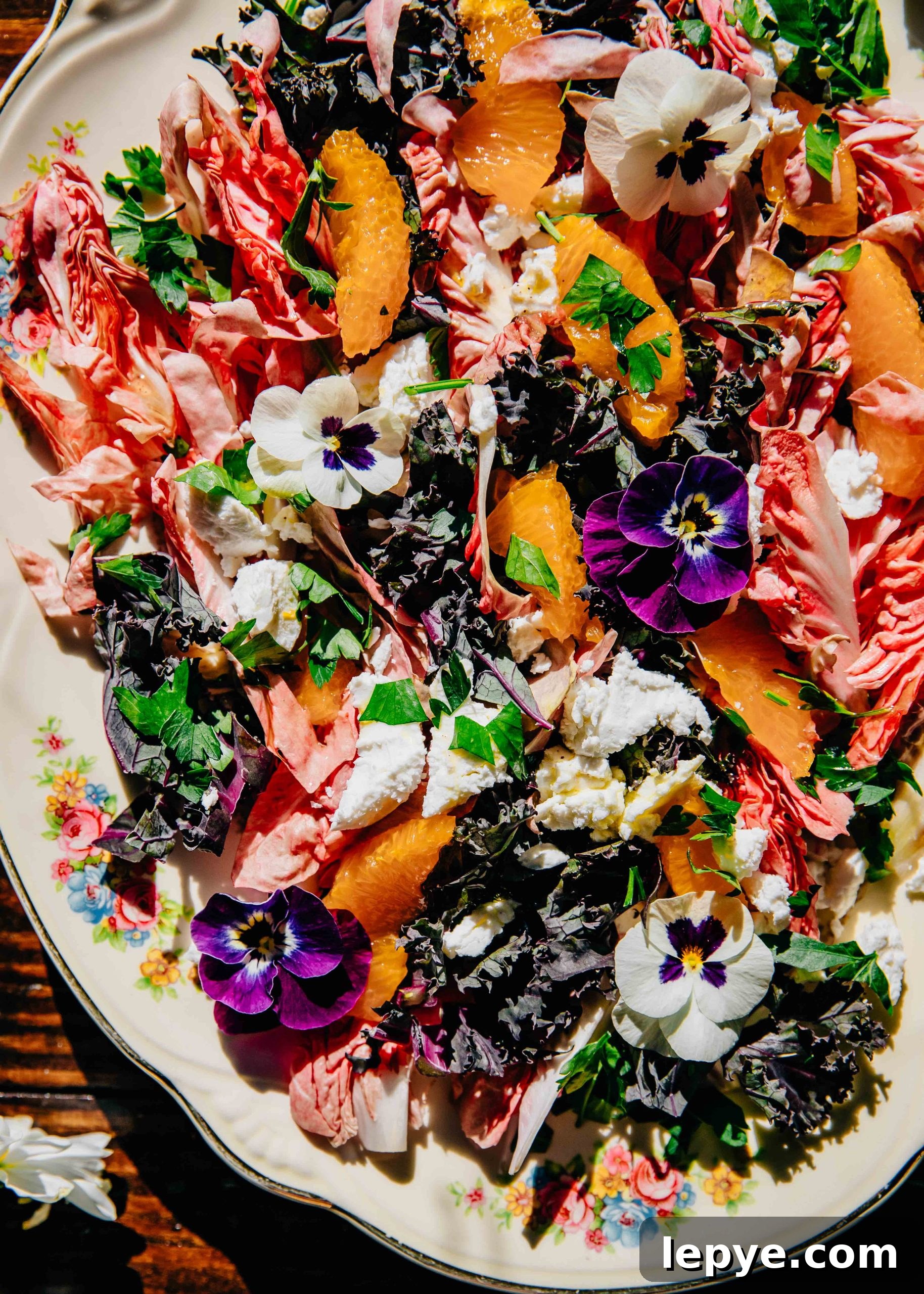

Garden Pansy Salad
Ingredients
The Salad
- 1 Orange
- 1 Head Pink Radicchio (or purple)
- 4 Cups Purple Kale, packed
- 1/3 Cup Chopped Parsley
- 1/2 Cup Goat Cheese
- 6–8 Pansy Flowers (organic, pesticide-free)
Vinaigrette
- 1/4 Cup Extra Virgin Olive Oil
- 2 Tbsp Red Wine Vinegar
- 1 Tsp Honey
- 1/2 Tsp Salt
- Black Pepper, to taste
Instructions
-
Supreme the orange: trim the top and bottom so it sits flat, then slice away the peel and pith by following the curve of the fruit. Cut along both sides of each segment to release the orange slices. Some pieces may break — that’s fine.
-
Wash and dry the radicchio, kale, and parsley, then chop the greens into bite-sized pieces.
-
Rinse the pansy flowers gently and dry them completely. Confirm they are organic and haven’t been treated with pesticides.
-
Assemble the salad: layer radicchio and kale in a large bowl or on a platter, add the orange segments, tear the goat cheese into pieces, sprinkle the chopped parsley, and scatter the pansy flowers on top.
-
Make the vinaigrette by whisking together olive oil, red wine vinegar, honey, salt, and pepper. Taste and adjust seasoning. Drizzle over the salad just before serving.
-
Serve immediately and enjoy.
Nutrition
| Carbohydrates: 10 g
| Protein: 7 g
| Fat: 20 g
| Saturated Fat: 6 g
| Sodium: 425 mg
| Fiber: 2 g
| Sugar: 5 g
| Vitamin A: 2905 IU
| Vitamin C: 49 mg
Share your photo and tag the creator on social media with the recipe hashtag to be featured.
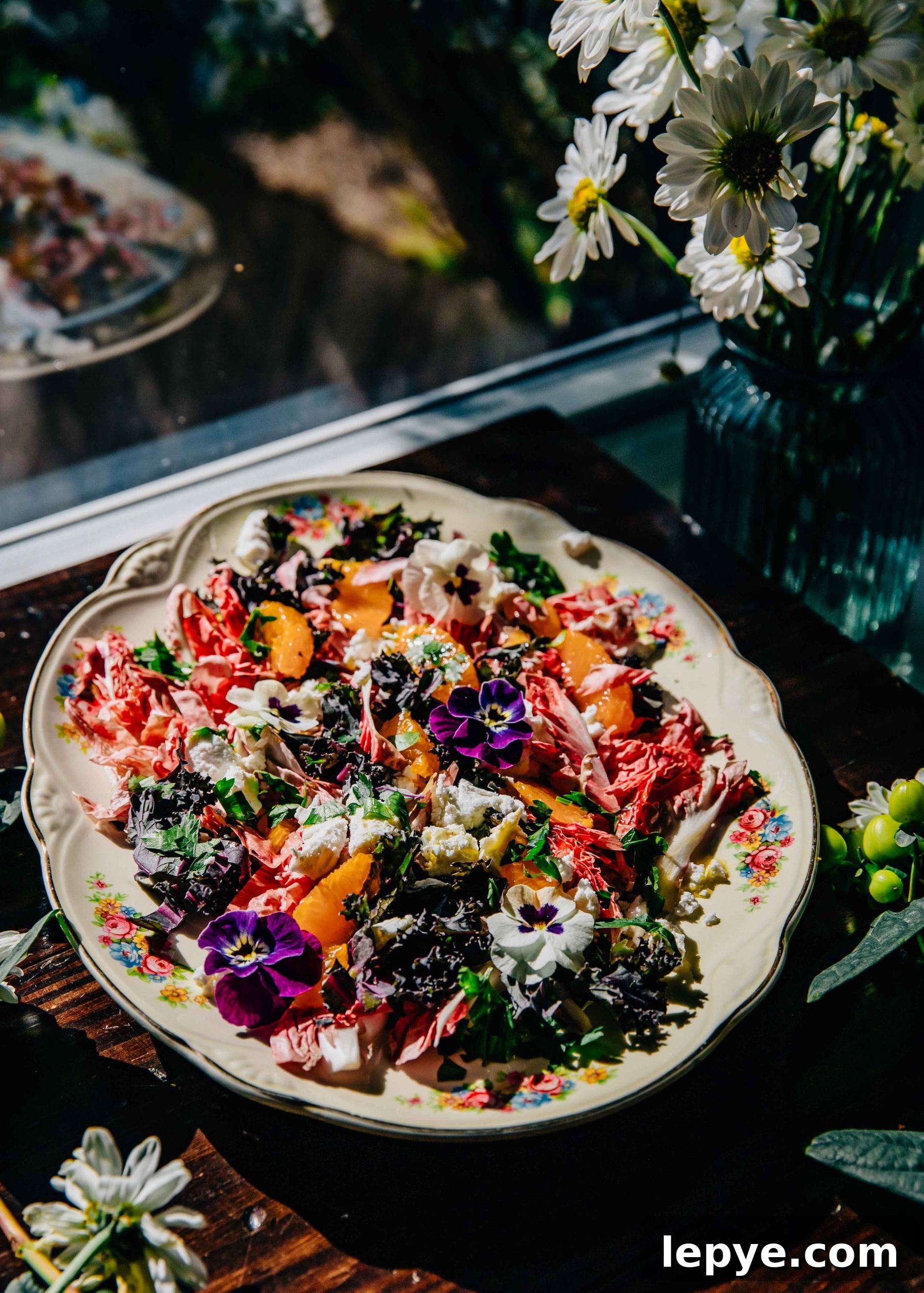
Garden Pansy Salad FAQs
Can you eat pansies in a salad?
Yes. Pansy flowers are edible and make an attractive, flavorful addition to salads when they come from pesticide-free sources.
Are pansies healthy to eat?
Pansies contain antioxidants and some vitamins, such as vitamin C and vitamin A, and have been studied for anti-inflammatory properties. They can add a small nutritional boost and visual appeal to dishes.
What do pansies taste like?
Pansies have a mild, slightly sweet, sometimes grassy flavor similar to tender lettuce. Some varieties may carry a faint wintergreen or floral note. Taste a petal first if you’re unsure.
Are violets and pansies the same thing?
Both belong to the Viola genus. Pansies are large, cultivated hybrids known for bold, overlapping petals; violets are generally smaller. Both share similar flower structure but are different groups within the same genus.
Are all violets and pansies edible?
Most garden violets and pansies (purple, blue, white, and multicolored) are edible. Avoid yellow varieties if you’re sensitive, and remember that African violets are not edible. Always confirm plant identification before eating wild or foraged flowers.
Can you cook pansies?
Yes—pansies are often used as delicate garnishes but can also be candied for desserts, infused into syrups or teas, pressed onto baked goods, or used fresh on salads and cold dishes. Their delicate texture makes them best suited for finishing touches rather than long cooking.
P.S.
For more plant-forward recipes and seasonal inspiration, follow the creator on social platforms and tag recipe photos with the project’s hashtag so they can be seen and shared.