
Have you heard the old advice to “shop the perimeter of the supermarket” and avoid the center aisles? That guidance can be confusing. Lately, many shoppers are turning to the middle aisles for budget-friendly, shelf-stable staples like canned beans, canned salmon, pasta, and oats. While the perimeter does include fresh produce—something most people would benefit from eating more of—the center aisles also hold a wide variety of nutritious, affordable, and culturally familiar foods that deserve attention.

I asked ten registered dietitians to name their favorite center-aisle nutritional superstars, explain why they recommend them, and share simple preparation ideas. Below are their top picks and practical ways to use each ingredient at home, from canned tomatoes and oatmeal to frozen produce and nut butters.
Nuts
Amy Gorin, MS, RDN — Nuts are rich in heart-healthy monounsaturated and polyunsaturated fats, and they also supply fiber and protein, which help you feel full longer. All types of nuts—almonds, pistachios, walnuts, and more—are nutritious and versatile. Add chopped nuts to oatmeal, baked goods, energy bites, salads, or stir-fries for extra crunch, flavor, and nutrients. A favorite easy idea is chocolate almond butter protein balls, which combine nuts with a few pantry staples for a quick snack.
Frozen Fruits and Vegetables
Manuel Villacorta, MD, RD — Frozen produce is convenient, usually more affordable than fresh, and it won’t spoil quickly. Because vegetables and fruits are flash-frozen at peak ripeness, they retain most of their nutrients and antioxidants. Use frozen vegetables in soups, stews, grain bowls, and casseroles; add frozen fruit to smoothies or warm fruit compotes. Frozen corn and peas, for example, can be tossed into a simple sauerkraut salad or warmed and served as a side.
Canned Salmon
Lauren Harris-Pincus, MS, RDN — Canned salmon is an economical source of high-quality protein and heart-healthy omega-3 fats, and it requires no cooking. Because it stores well in the pantry, canned salmon reduces food waste and makes it easy to meet weekly seafood recommendations. Use it on avocado toast, mix with yogurt or light mayo for a salmon salad, form salmon burgers, or add it to grain bowls for a quick, nutrient-dense meal.
Dry Pasta
Rosanne Rust, MS, RDN, LDN — Pasta is a reliable, quick-cooking carbohydrate that provides sustained energy. Far from being unhealthy, whole-grain or enriched pasta can form the base of balanced meals when paired with vegetables and lean proteins. One cup cooked is a reasonable serving; add frozen shrimp, canned tuna, or cooked chicken and a few cups of spinach for an easy, satisfying dinner in under 20 minutes. Pasta is also useful for stretching smaller portions of meat or seafood across multiple meals.
Oatmeal
Arielle “Dani” Lebovitz, MS, RDN — Oatmeal is economical, versatile, and nutritious. Half a cup of dry rolled oats provides fiber, protein, and iron, and it cooks quickly for sweet or savory breakfasts. Beyond porridge, oats can bulk up meatballs or meatloaf, form a crispy coating for chicken, top fruit crumbles, or be ground into oat flour for pancakes, muffins, or cakes. Simple no-bake oat cookies are an easy way to enjoy oats as a treat or snack.
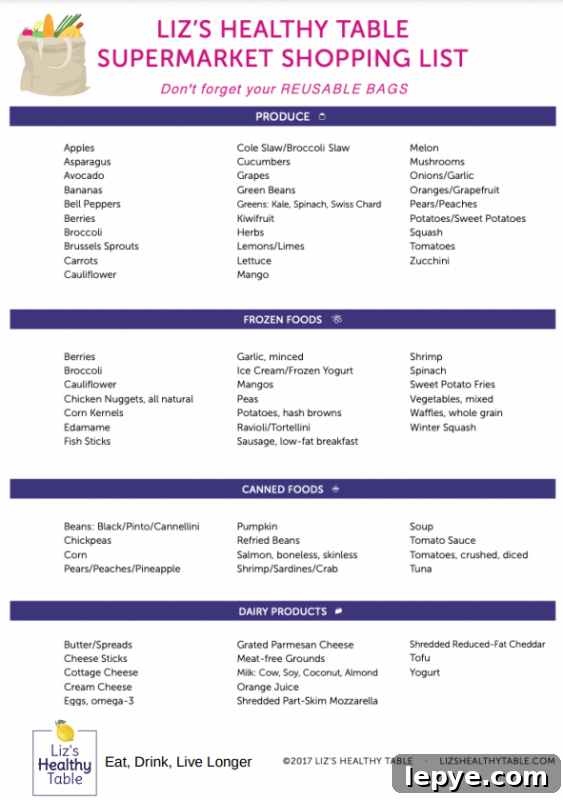
Download the free Aisle-By-Aisle Supermarket Shopping List to help plan balanced grocery trips.
Canned Diced Tomatoes
Toby Amidor, MS, RD, CDN — Canned diced tomatoes are picked and canned at peak ripeness, which preserves nutrition. They’re low in calories and rich in vitamin C, fiber, and the antioxidant lycopene. Keep several cans on hand to add to chili, soups, pasta sauces, lasagna, or to poach fish. Choose no-added-sodium varieties if you are watching salt intake, or drain and rinse to reduce sodium.
Peanut Butter
Sharon Palmer, MSFS, RDN — Peanut butter is a shelf-stable, budget-friendly source of protein, healthy fats, vitamin E, magnesium, niacin, and more. Use it in sandwiches, smoothies, and oatmeal, or swap it for butter or oil in baked goods. Peanut butter also works well in savory dishes like Thai-inspired sauces, lentil patties, or vinaigrettes for salads and slaws—one spoonful can boost flavor and nutrition.
Quinoa
Michelle Dudash, RDN — Quinoa is a complete plant protein, higher in protein than many other grains, and cooks quickly (about 20 minutes). One cup cooked offers a good amount of protein, fiber, magnesium, and iron. Cook quinoa in broth for extra flavor and serve it as a side, in salads, or as a base for bowls with vegetables and beans. A simple tomato-and-avocado quinoa salad makes a satisfying, nutrient-dense meal.
Lentils
Marisa Moore, MBA, RDN, LD — Lentils are a fast-cooking pulse that provides substantial protein and fiber—half a cup cooked supplies about 9 grams protein and 8 grams fiber. They require no soaking and work well in soups, stews, salads, and rice dishes. Swap lentils for some or all of the meat in tacos or meatloaf to boost fiber and plant-based protein. Try a warming pumpkin lentil curry or add cooked brown lentils to pilafs and salads.
Powdered Milk
Sylvia Klinger, DBA, MS, RDN — Powdered milk is inexpensive, stores longer than fresh milk, and contains the same essential nutrients. It can be reconstituted for drinking or added to recipes and baked goods to enhance protein, calcium, and other nutrients. Powdered milk lends convenience and shelf stability for households that prefer a longer-lasting dairy option.
Canned Beans (from my kitchen)
Liz Weiss, MS, RDN — Canned beans—pinto, cannellini, black, kidney, or garbanzo—are pantry staples that add fiber, protein, and versatility to many dishes. Half a cup of beans provides fiber and protein, and canned versions are convenient for soups, hummus, quesadillas, and even baked goods. To reduce sodium, rinse canned beans under water or choose low- or no-salt-added varieties. Canned beans are a cost-effective way to increase plant-based protein in meals like minestrone soup or hearty stews.
Shopping the center aisles with intention can expand your culinary options and support a balanced, budget-friendly approach to healthy eating. Keep a few of these staples on hand to create quick meals, add nutrients to favorite recipes, and reduce waste while enjoying a variety of flavors and textures.