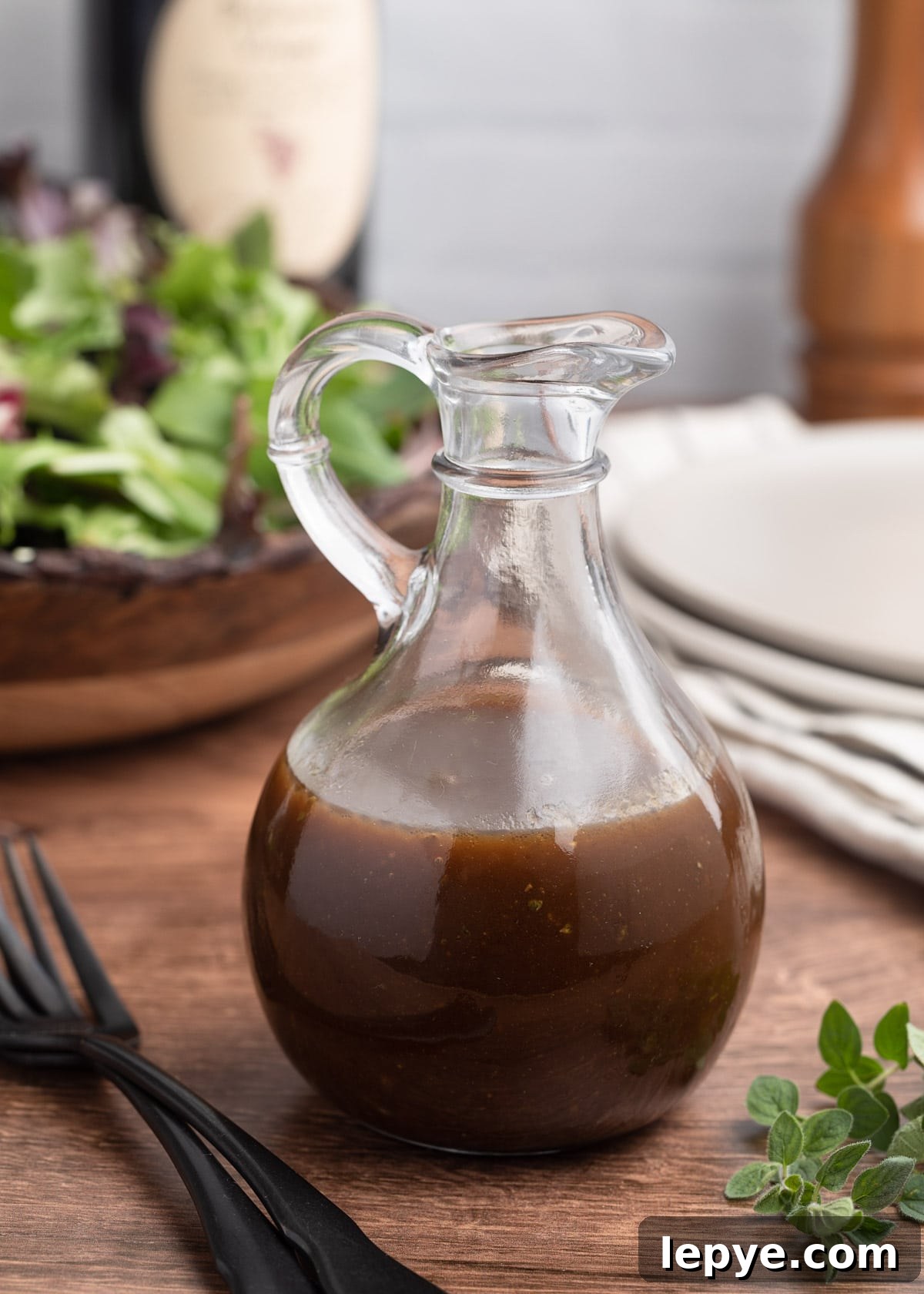
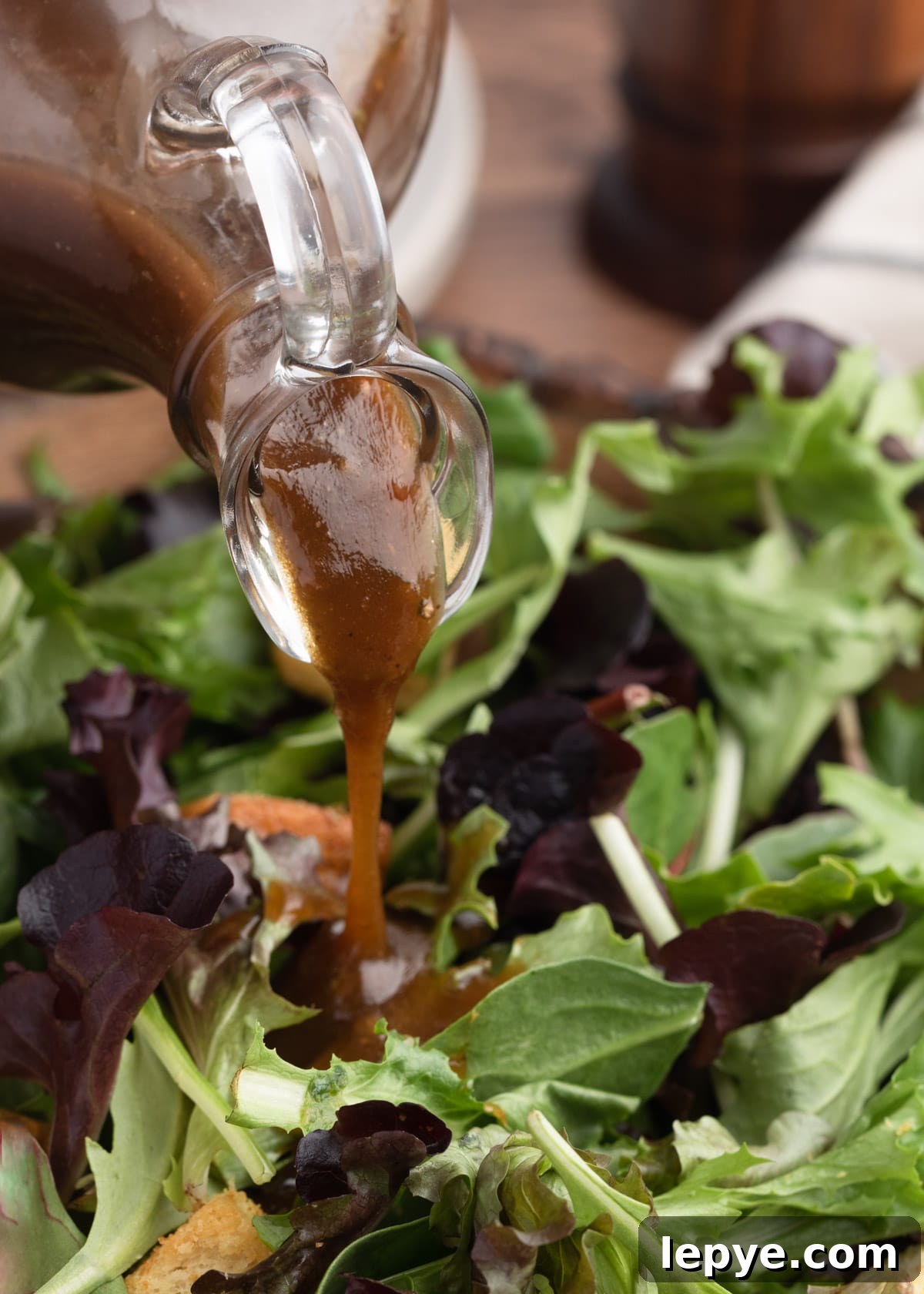
Homemade balsamic vinaigrette is an easy way to enjoy a restaurant-quality salad at home. This classic emulsion of aged balsamic vinegar, extra virgin olive oil, Dijon mustard, aromatics, herbs, and a touch of honey yields a rich, balanced dressing that holds together well.
This post contains affiliate disclosures. Recommendations and opinions are my own.
Balsamic vinaigrette is one of my go-to dressings. It’s flavorful without feeling heavy and pairs especially well with spinach, spring mix, and bitter lettuces. Making it at home takes about 10 minutes and delivers fresher, brighter flavor than most store-bought options—without preservatives or additives.
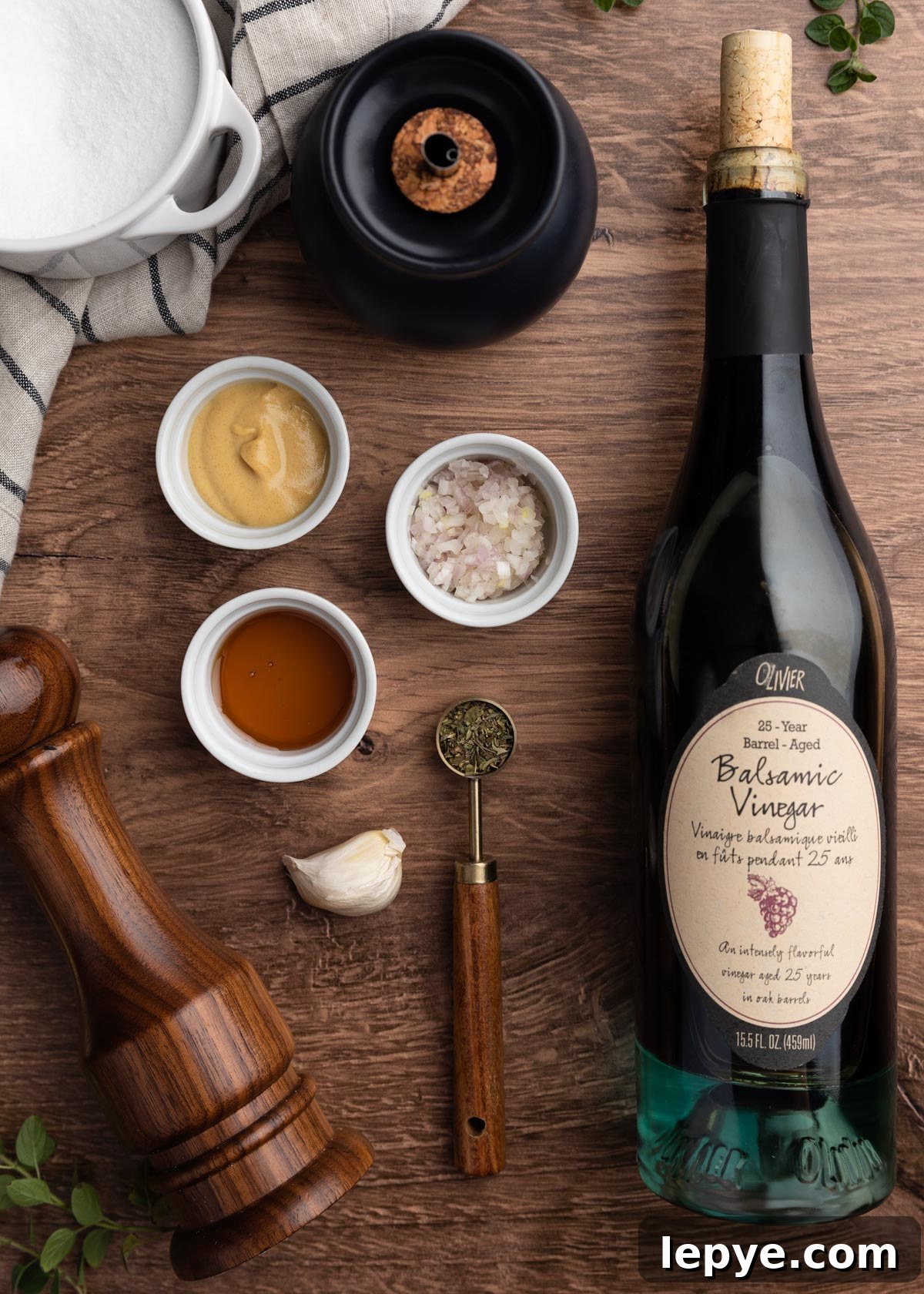
What You’ll Need to Make Homemade Balsamic Vinaigrette
- Aged Balsamic Vinegar. For the best complexity, use an aged balsamic from Modena. Its depth and sweetness give the dressing a rounded flavor.
- Extra Virgin Olive Oil. Choose an EVOO with medium pungency—fruity with a gentle peppery finish works well to complement the balsamic.
- Dijon Mustard. Acts as an emulsifier to help the oil and vinegar bind so the dressing stays smooth.
- Honey. Adds balance and a little stability; adjust the amount depending on how sweet or tart your balsamic is.
- Garlic and Shallot. Mince finely so they blend into the dressing and don’t leave large pieces.
- Dried Italian Herbs, Salt, and Pepper. A simple herb blend (thyme, oregano, basil, marjoram, rosemary), kosher salt, and freshly ground black pepper round out the seasoning.
I use a classic ratio of about 1/4 to 1/3 cup balsamic vinegar to 3/4 cup olive oil. Adjust within that range to match the intensity and sweetness of your balsamic and your personal taste.
Two Ways to Make This Vinaigrette
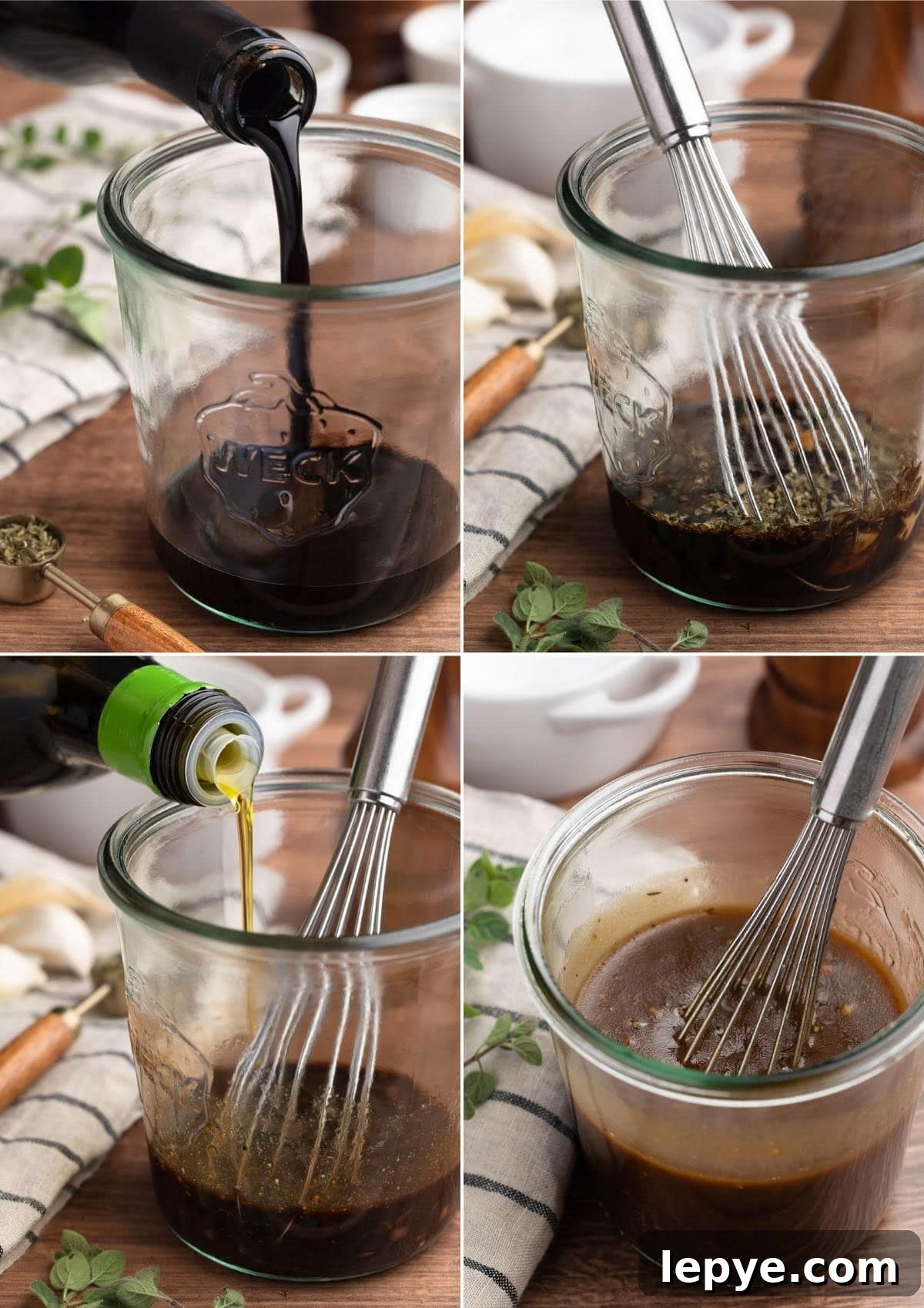
This vinaigrette comes together quickly either by whisking or by shaking the ingredients together in a sealed jar. Whisked vinaigrette often stays emulsified a little longer, but either method works—just re-whisk or shake if it separates before serving.
To make the dressing with a whisk:
Use a bowl or jar wide and deep enough to whisk comfortably. Combine the balsamic vinegar, minced shallot, garlic, Dijon, honey, and seasonings. While whisking constantly, drizzle the olive oil in a slow, steady stream so the mixture emulsifies into a smooth, velvety dressing.
Tip: If you prefer a milder raw garlic flavor, let the minced garlic sit in the vinegar for 10 minutes before continuing.
To make shaken vinaigrette:
Place all ingredients in a mason jar or other lidded container, seal tightly, and shake vigorously until combined and emulsified.
Balsamic Vinaigrette Questions
How long can I keep this balsamic dressing?
Store the dressing in the refrigerator in an airtight container for 5–7 days. It will thicken when chilled; allow it to sit at room temperature for 10–15 minutes and shake or whisk briefly before serving.
My vinaigrette is too thick or too sharp—what can I do?
Variations in oil and vinegar can affect texture and bite. To thin or soften the flavor, whisk in a splash of warm water (up to a tablespoon) rather than adding more oil.
Can I use flavored balsamic vinegar?
Yes. Fruit-flavored balsamics (fig, raspberry, apple, etc.) add seasonal nuance but can be sweeter than traditional balsamic—reduce the honey if needed to balance sweetness.
Is this vinaigrette good for marinating chicken?
It can be used as a quick marinade, but for optimal results on meat I prefer a formula with a higher oil-to-vinegar ratio. For chicken marinades, aim for about equal parts oil and vinegar or follow a dedicated marinade recipe.
More Recipes Using Balsamic Vinegar
- Fig Salad with Goat Cheese and Baby Arugula
- Blue Cheese Crusted Steak with Balsamic Shallots
- Mixed Citrus Salad with Honey-Balsamic Vinaigrette
- Grilled Balsamic Chicken Salad
- Balsamic-Roasted Strawberry Baked Brie
Craving more? Subscribe to the newsletter and follow for the latest recipes and updates.
Balsamic Vinaigrette
Ingredients
- ¾ cup extra virgin olive oil
- ¼ to ⅓ cup aged balsamic vinegar (adjust to taste)
- 1 tablespoon minced shallot
- 1 medium garlic clove, minced (about ½–¾ tsp)
- 1 teaspoon honey (additional, if needed, to taste)
- 1 teaspoon Dijon mustard
- ½ teaspoon dried Italian herbs
- ¼ teaspoon kosher salt
- ½ teaspoon freshly-ground black pepper
Instructions
- In a bowl or jar, whisk together the balsamic vinegar, shallot, garlic, honey, Dijon, dried herbs, salt, and pepper.
- While whisking, drizzle the olive oil into the mixture in a slow, steady stream until the dressing emulsifies and becomes smooth and glossy. (Or add all ingredients to a mason jar, seal, and shake until emulsified.)
- Taste and adjust seasoning with additional salt and pepper as needed.
- Store tightly covered in the refrigerator for 5–7 days. Let stand at room temperature for 10–15 minutes and re-whisk or shake before serving if the vinaigrette separates.
Notes
The amount of balsamic and honey will vary depending on the specific vinegar you use and your personal preference. Some balsamics are sweeter or tarter—adjust accordingly.
Nutrition Estimate
Nutrition information is an estimate and should be used as a guideline.
Recipes are developed using US customary measurements and have not been tested for high-altitude cooking.