
Brining pork is straightforward and reliable. This guide explains how to brine pork with an easy, balanced brine that works well for chops, tenderloin, loins, and roasts. Brining keeps pork juicy and flavorful and helps prevent dryness. Below you’ll find the basic ratio, recommended salt options, and suggested brining times to get consistent results every time.

Brining is one of the simplest ways to ensure pork stays moist and seasoned through to the center. This guide includes a salt-to-water chart to account for different salt brands and volumes so you can match the brine strength used here. Whether it’s a weeknight dinner or a holiday roast, this method delivers juicy, well-seasoned pork.
Why You’ll Love This Pork Brine
- Locks in moisture – Keeps pork juicy and tender after cooking.
- Works for multiple cuts – Suitable for tenderloin, chops, loin, and roasts.
- Customizable – Add herbs, spices, citrus, or sweeteners to suit your taste.
- Minimal prep – Mix until the salt and sugar dissolve.
For a delicious serving idea, try roast pork tenderloin with a mustard sauce or brine pork chops briefly before cooking for better results.
Ingredients You’ll Need
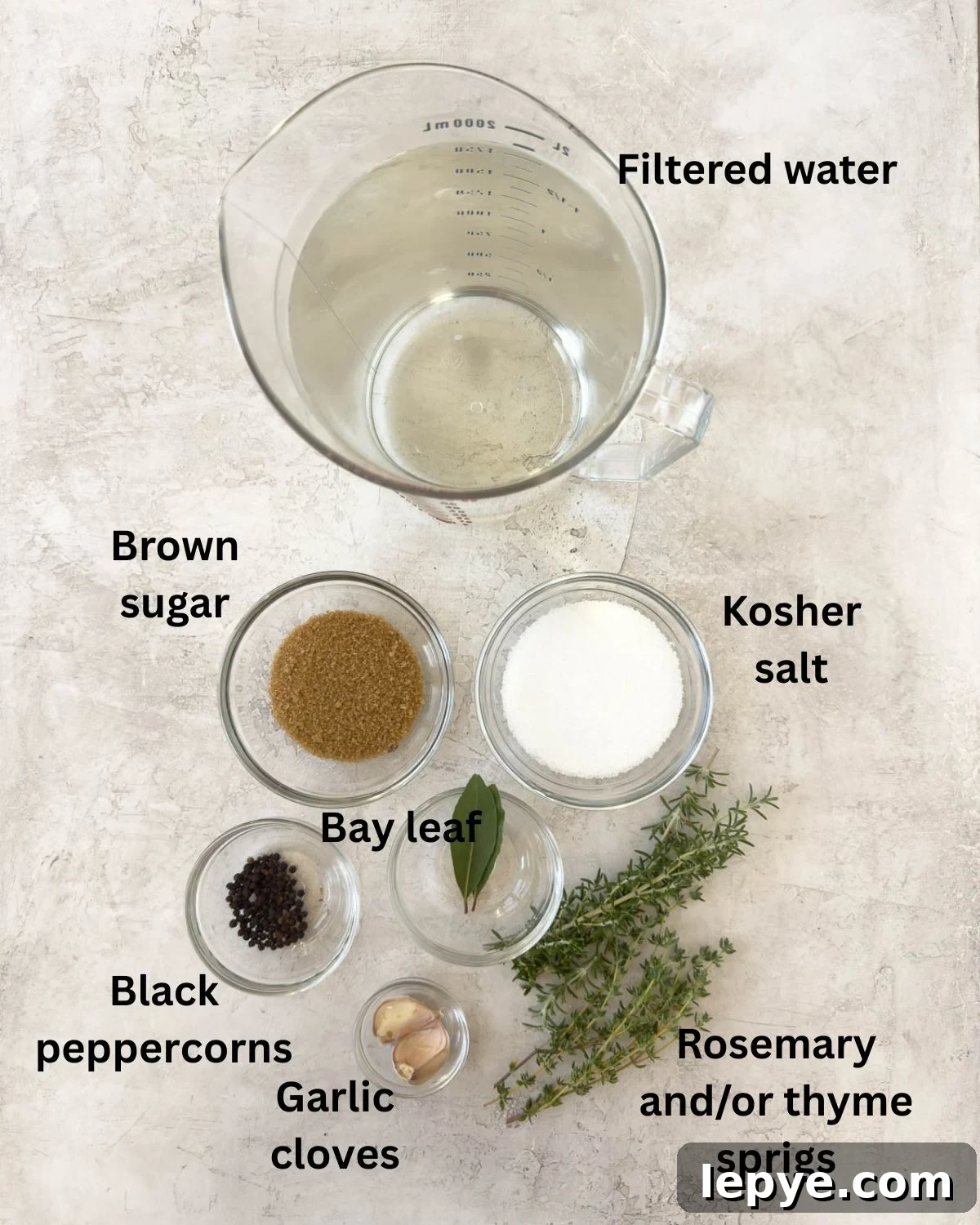
- Water – Use filtered water if possible; it’s the brine base.
- Salt – Kosher salt is preferred for ease of dissolving and clean flavor. See the salt chart for brand-specific adjustments.
- Brown sugar – Balances saltiness; honey or maple syrup can substitute for a different flavor profile.
- Garlic – Fresh cloves give the best aromatic flavor.
- Herbs – Fresh thyme or rosemary sprigs work well.
- Pepper – Whole peppercorns add gentle heat and aroma.
Please refer to the recipe card below for exact measurements.
Chef’s Tip – Salt Brands Matter
Salt volume varies by brand and type. Morton kosher salt is dense (½ cup ≈ 120 g), while Diamond Crystal is lighter (½ cup ≈ 73 g). La Baleine sea salt is mid-density (½ cup ≈ 100 g) and a reliable choice for consistent flavor. For precision, weigh salt rather than relying on volume and follow the weights in the salt chart below.
Substitutions and Variations
- Sugar substitute – Use golden monk fruit instead of brown sugar.
- Citrus brine – Add citrus zest and a splash of juice with herbs for brightness.
- Seasonal option – Replace part of the water with apple juice and swap brown sugar for maple syrup for a fall-inspired brine.

Pork Brine Salt Chart
Salt measurements can vary greatly by brand. The chart below is for 8 cups (1.9 L) water. Scale salt proportionally if you change the water amount.
Quick scaling tip: For 4 cups water, use half the salt. For 16 cups water, use double.
| Salt Brand / Type | Weight per ½ cup | Target Weight for Recipe | Salinity %* |
|---|---|---|---|
| Morton Kosher Salt | ~120 g | 120 g (½ cup) | ~6.25% |
| Diamond Crystal Kosher | ~73 g | 120 g (~¾ cup) | ~6.25% |
| La Baleine Sea Salt | ~100 g | 120 g (~scant ⅔ cup) | ~6.25% |
| Redmond Real Salt Kosher | ~112 g | 120 g (~slightly over ½ cup) | ~6.25% |
| Table Salt (not recommended) | ~146 g | 120 g (~scant ½ cup) | ~6.25% |
Chef’s note: A 6.25% brine is a medium-strong, versatile strength for pork.
How to Brine Pork Chops (Using the Salt Chart)
- Thickness matters – Thicker chops tolerate longer brines; thin chops brine quickly and can become too salty if left too long.
- Typical brine time range – Thin chops: 30–60 minutes. Thicker chops: 1–4 hours depending on thickness and taste.
- Don’t over-brine thin chops – For chops ½–¾ inch thick, stick to the shorter end to avoid a cured texture.
- Pat dry before cooking – Remove pork from brine, pat very dry to help browning and prevent steaming.
Chef’s Tip – Skip the Brine if Pork is Pre-Seasoned
If the package lists water, salt, or broth, that product is likely already enhanced. Brining again can result in overly salty meat.
How to Make Pork Brine
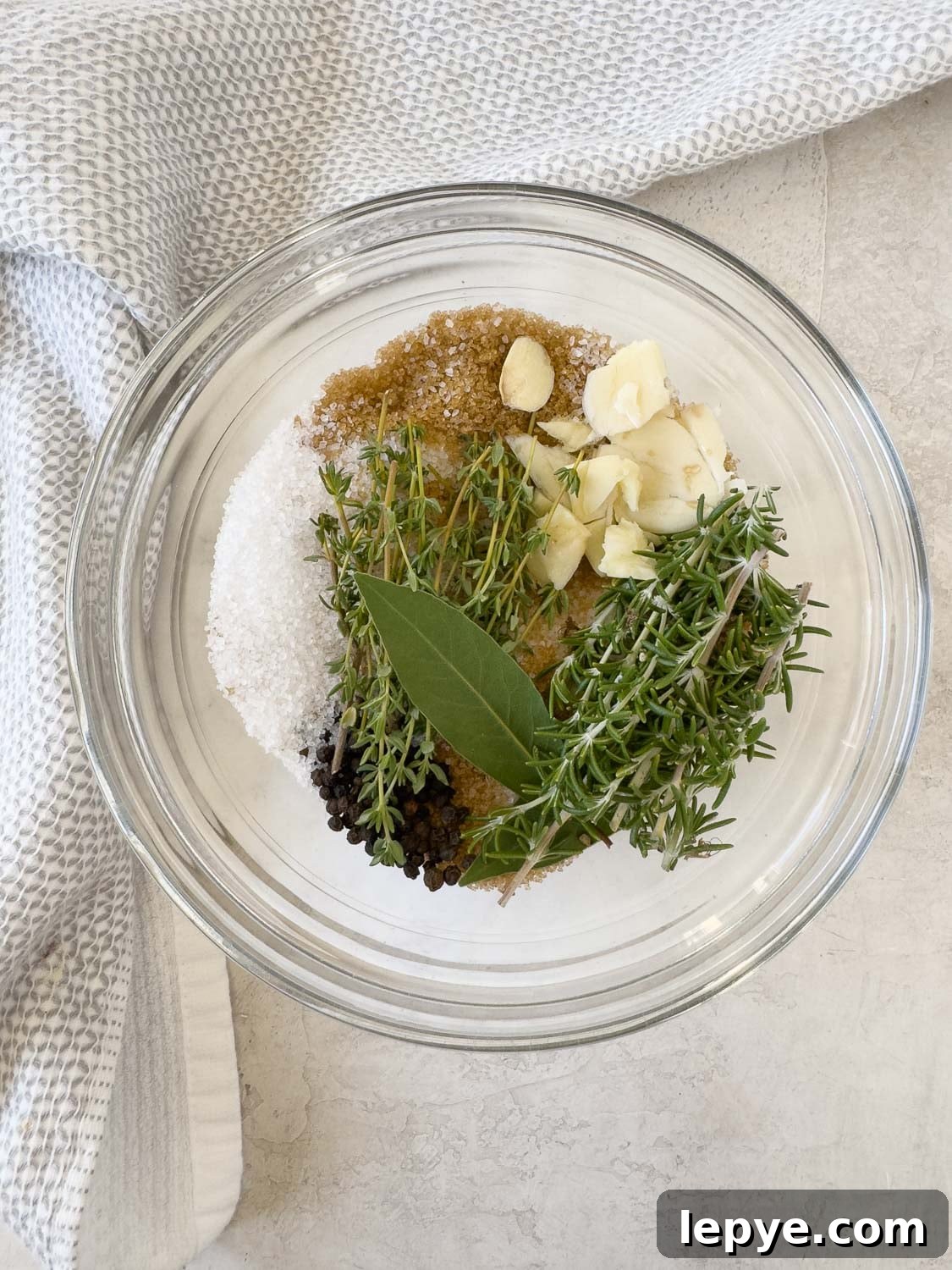
To prepare the brine: dissolve the salt and sugar in the water, then add smashed garlic, herbs, bay leaf, and peppercorns. The brine can be used immediately or covered and refrigerated for 1–2 days. If using fresh garlic and you prefer a milder garlic flavor, add the garlic closer to the time you brine.
For larger cuts like a pork rib roast, an 8–12 hour brine gives great results for holiday meals.
How to Use Pork Brine
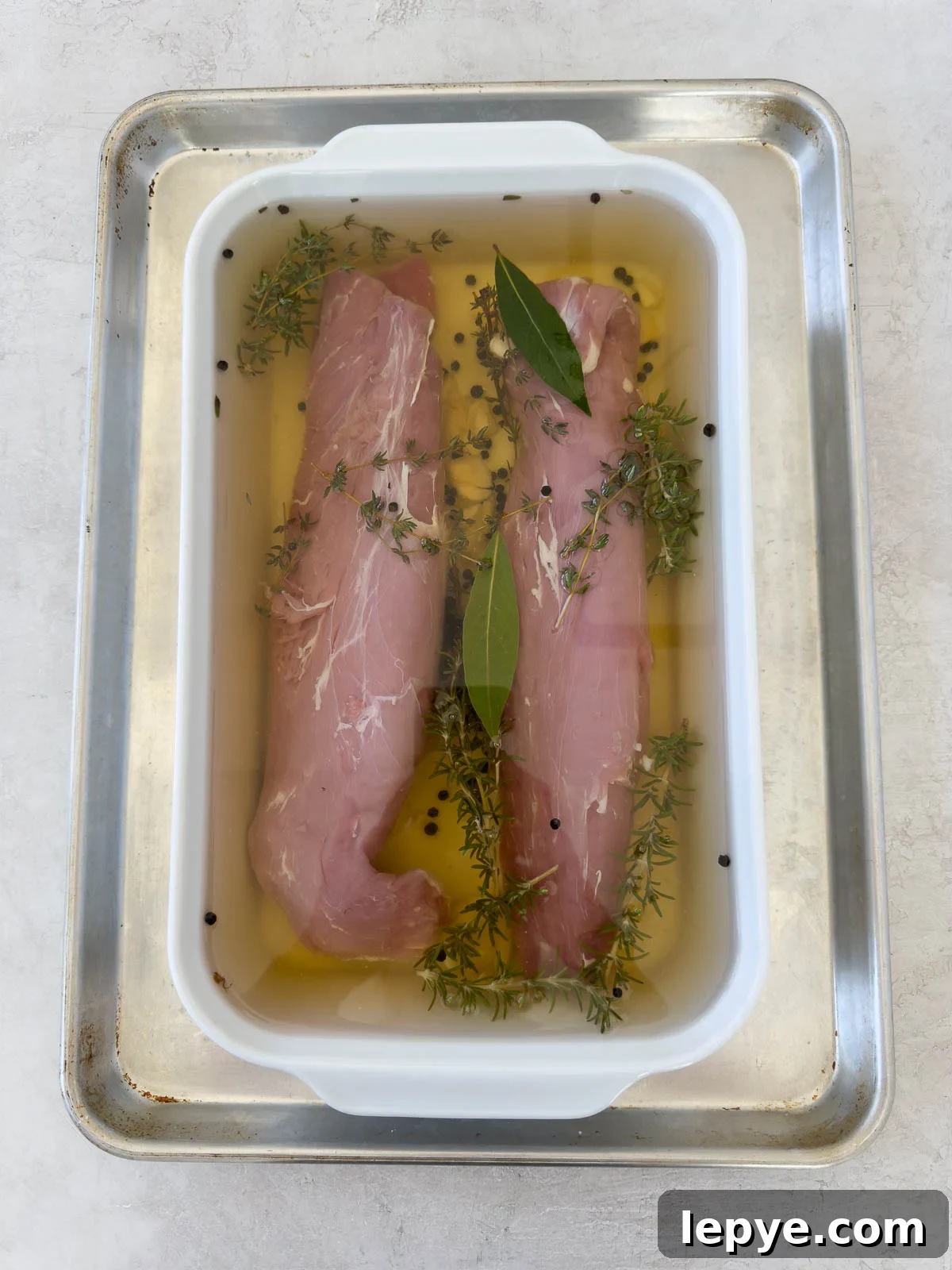
- Place pork in a large non-reactive container or a resealable bag.
- Pour cool brine over the meat until fully submerged.
- Refrigerate for the recommended time:
- Pork tenderloin or chops: 1–4 hours
- Pork loin or roasts: 8–12 hours (maximum)
- Remove pork from the brine and discard the liquid.
- Rinse briefly under cold water to remove surface salt, then pat dry with paper towels.
- Season lightly and cook as desired—grill, smoke, roast, or pan-sear.
Recipe FAQs
Yes. This all-purpose brine works for chops, tenderloin, loin, roasts, and can be adapted for ribs or pulled pork to help retain moisture and add flavor.
Yes. After brining, remove the pork, discard the brine, rinse briefly under cold water to remove excess surface salt, and pat dry before cooking.
Absolutely. Brining before smoking, grilling, or roasting helps lock in moisture and seasons the meat internally. Reduce added salt in rubs or marinades to account for the brine.
Timing depends on cut and thickness. Tenderloin or chops: 1–4 hours (thin chops 30–60 minutes). Loin or roasts: 8–12 hours maximum. Avoid over-brining to prevent overly salty or mushy texture.
Pork Recipes To Try With Brining
Brining enhances many pork recipes. Try brining before preparing roast pork tenderloin, creamy sour cream pork chops, pistachio-crusted pork rib roast, or smoked baby back ribs for juicier results.
-
Roast Pork Tenderloin with Dijon Mustard Sauce
-
Sour Cream Pork Chops
-
Pistachio Crusted Pork Rib Roast
-
3-2-1 Smoked Baby Back Ribs




Did You Make This Recipe?
If you try this pork brine, please share what you used it for and leave a comment or rating. Feedback helps other cooks and is appreciated.
📖 Recipe

Pork Brine
Sally Cameron
Equipment
- 2 quart container
Ingredients
- 8 cups filtered water
- ½ cup kosher salt (see the salt chart above to measure for your brand)
- ¼ cup brown sugar (or golden monk fruit)
- 2 large garlic cloves, smashed and peeled
- 3–4 fresh herb sprigs (thyme or rosemary)
- 1 large bay leaf
- 1 teaspoon whole black peppercorns
Instructions
Make the brine
- In a 2-quart container, stir cold water, salt, and sugar until dissolved. Add garlic, herbs, bay leaf, and peppercorns. Brine can be made 1–2 days ahead, covered and refrigerated.
Use brine—submerge pork
- Place pork in a zip-top bag or shallow dish and pour brine over it so it is completely submerged. Choose a container that allows full coverage.
Refrigerate pork
- Refrigerate for the recommended time: tenderloin or chops 1–4 hours; loin or roasts 8–12 hours (maximum). Thin chops can benefit from a short 30–60 minute brine.
Proceed with recipe
- Remove pork from brine, discard the liquid, rinse briefly to remove surface salt, pat dry, season lightly, and cook as desired.
Notes
If brining a roast: Use a tub or deep container so the roast can be fully submerged and adjust refrigerator shelves if needed.
Fall brine option (with apple juice):
- 4 cups filtered water
- 4 cups natural apple juice
- ½ cup kosher salt
- ¼ cup pure maple syrup
- 2 tablespoons brown sugar (optional)
- Garlic, herbs, and spices to taste as in the basic brine recipe
Use apple juice for some sweetness and fruitiness, but avoid replacing all the water with juice so the savory balance remains.
Let us know how it turned out with a comment and a star rating.