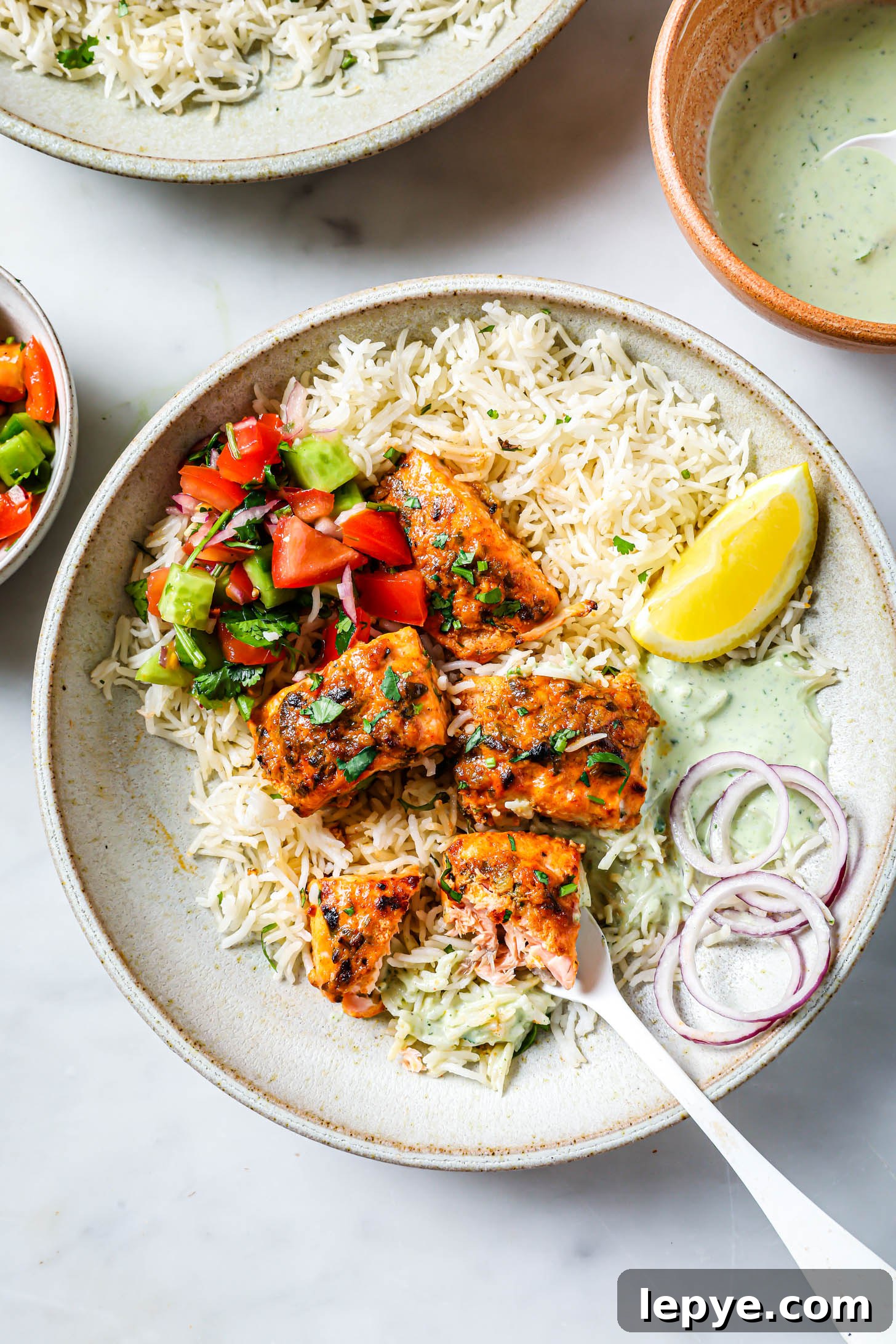
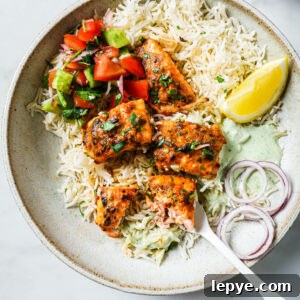
A simple, quick, and mess-free Salmon Tikka that’s full of flavor. Fresh salmon (or another firm fish) is coated in a tandoori-style yogurt marinade and broiled until tender inside with a slight char outside. No broiler? Instructions for baking, pan-frying, and air-frying are included.
Navigation
- Recipe Inspiration
- Ingredients
- How To Make Fish Tikka
- Alternative Cooking Methods
- How To Serve
- Recipe
Fish Tikka Recipe Inspiration
I first fell for this style of broiled spiced salmon after trying a friend’s broiled Moroccan salmon. The combination of a spice-forward yogurt marinade and high-heat broiling produces fish that is moist inside with a pleasant, slightly charred exterior. Over time I adapted that approach into a kebab-style fish tikka: bite-sized pieces of firm fish in a tandoori-inspired marinade, quickly broiled or cooked by other high-heat methods.
More Fish Ideas: Fish Masala, Salmon in Tomato Masala, and other salmon recipes to try.
Ingredients
Most items are pantry staples or easy to source:
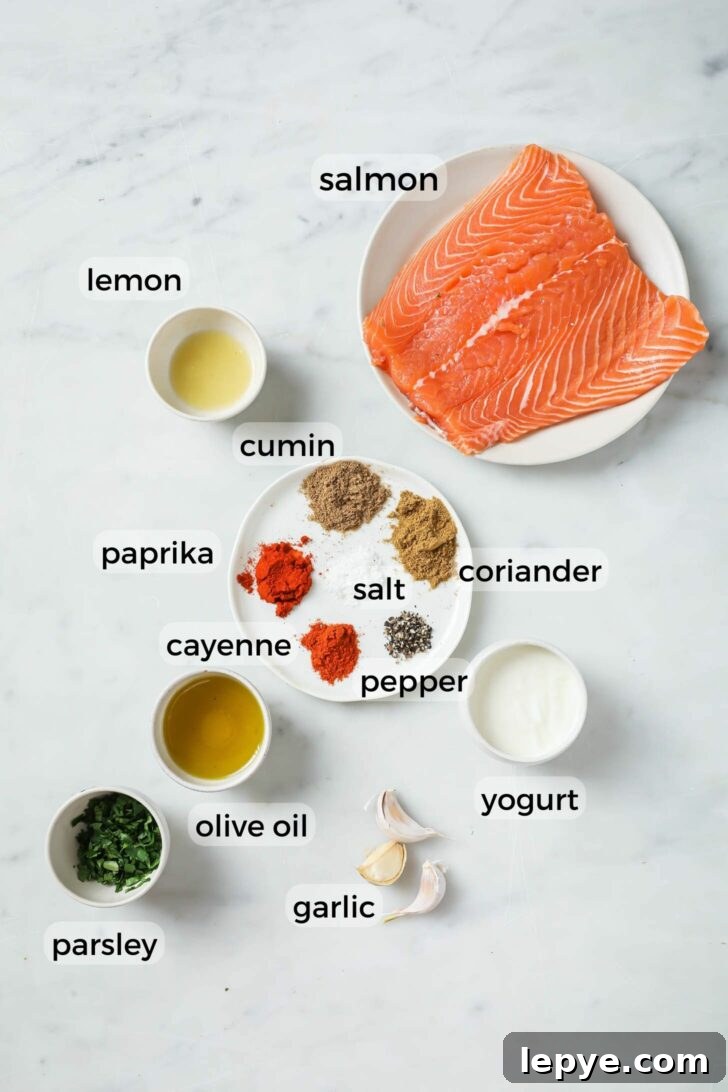
- Salmon: Skinless, firm, and thick-cut pieces work best. Farm-raised salmon tends to stay moister during high heat.
- Yogurt: Thick plain yogurt or Greek-style yogurt coats the fish better and yields a richer flavor.
- Olive oil: Keeps the fish tender; use another neutral oil if you prefer a higher smoke point.
- Lemon or lime juice: Adds necessary acidity.
- Garlic: Finely minced or pressed for best distribution in the marinade.
- Ground spices: Paprika or Kashmiri chili powder for color, plus coriander powder, cumin powder, black pepper, and a touch of red chili powder or cayenne for heat.
- Salt: Fine sea salt is used here; adjust if using kosher salt.
- Minced parsley or cilantro: Adds brightness—mince finely so the herbs incorporate smoothly into the marinade.
- Mint-coriander raita (optional): A cool sauce to serve alongside the tikka.
How to make Fish Tikka
Quick overview of the steps:
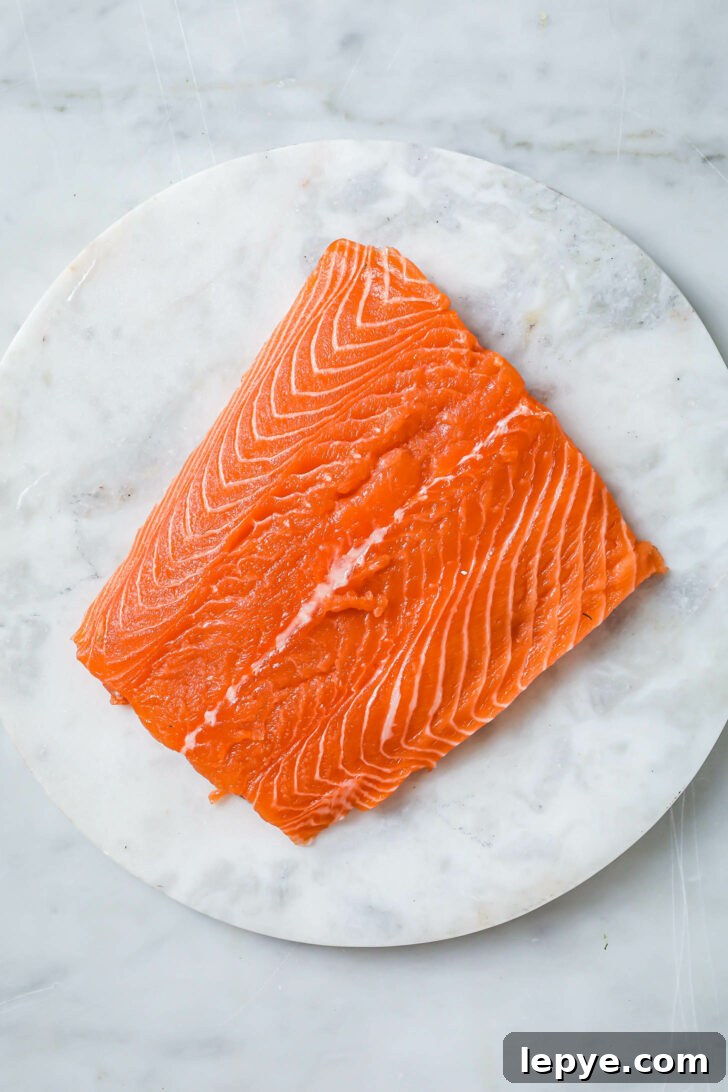
- Remove skin: Ask your fishmonger to remove the skin, or remove it at home by gripping a corner and pulling steadily. If you prefer, there are techniques that loosen the skin quickly—just take care not to overcook the flesh.
- Cut into pieces: Cut the fillet into roughly 1–1.5 inch pieces. Smaller pieces caramelize more, but keep them thick enough to avoid drying out.
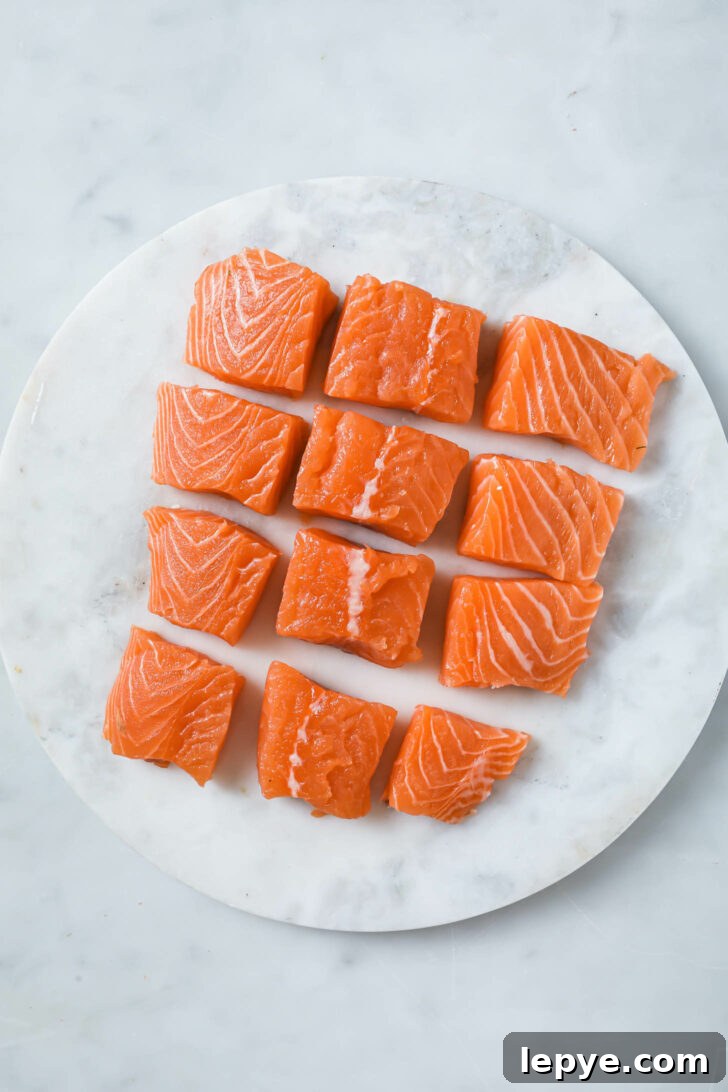
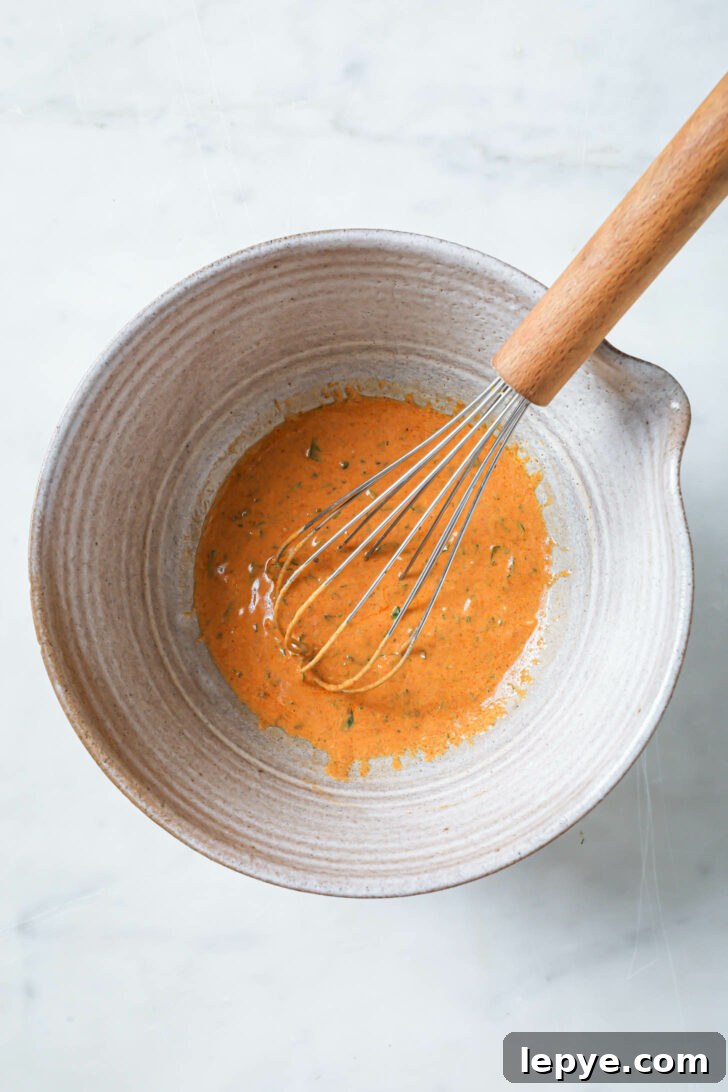
- Make the marinade: Whisk yogurt, oil, lemon juice, garlic, spices, salt, and chopped herbs together. Toss the salmon pieces to coat and marinate for at least 10 minutes while the oven broiler preheats. If marinating longer than an hour, refrigerate.
- Preheat broiler: Set your oven broiler to high (about 550°F / 289°C) and let it preheat for about 10 minutes.
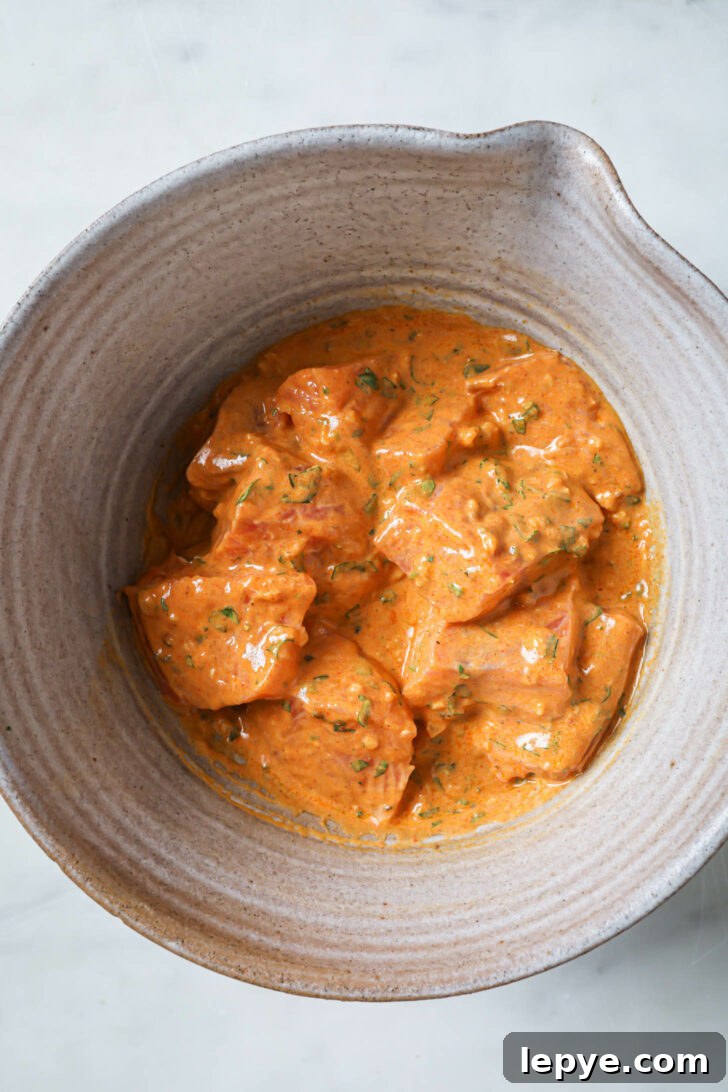
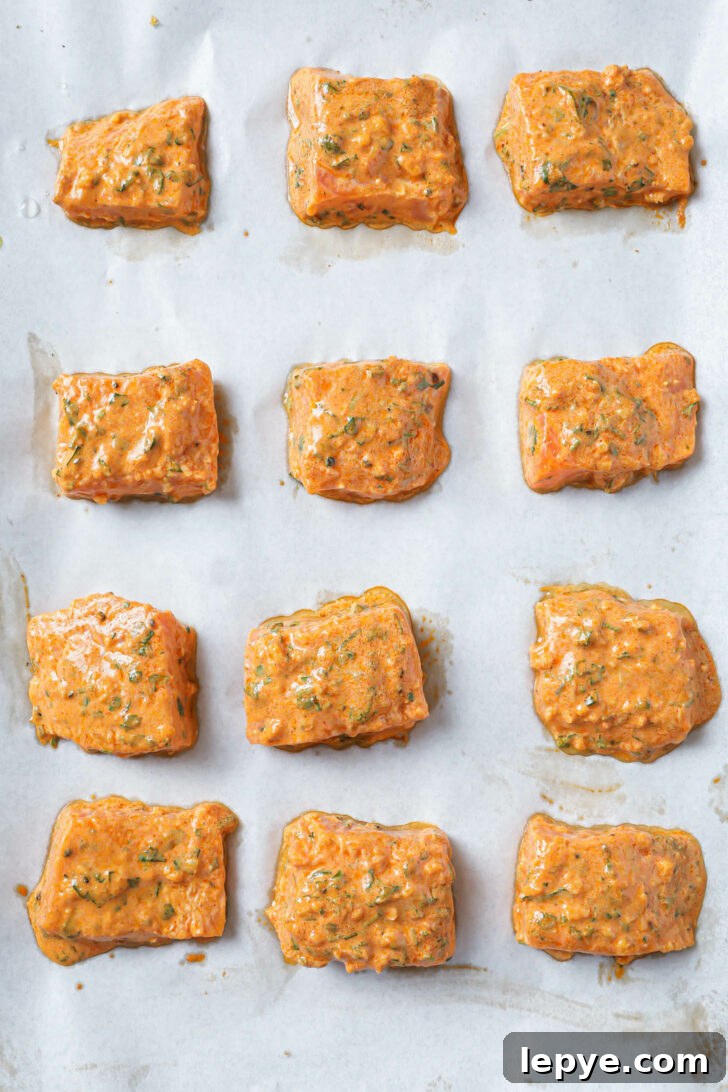
- Arrange on a lined baking sheet: Space the salmon pieces about an inch apart. Brush any excess marinade over the top; discard large amounts of excess if it’s very watery.
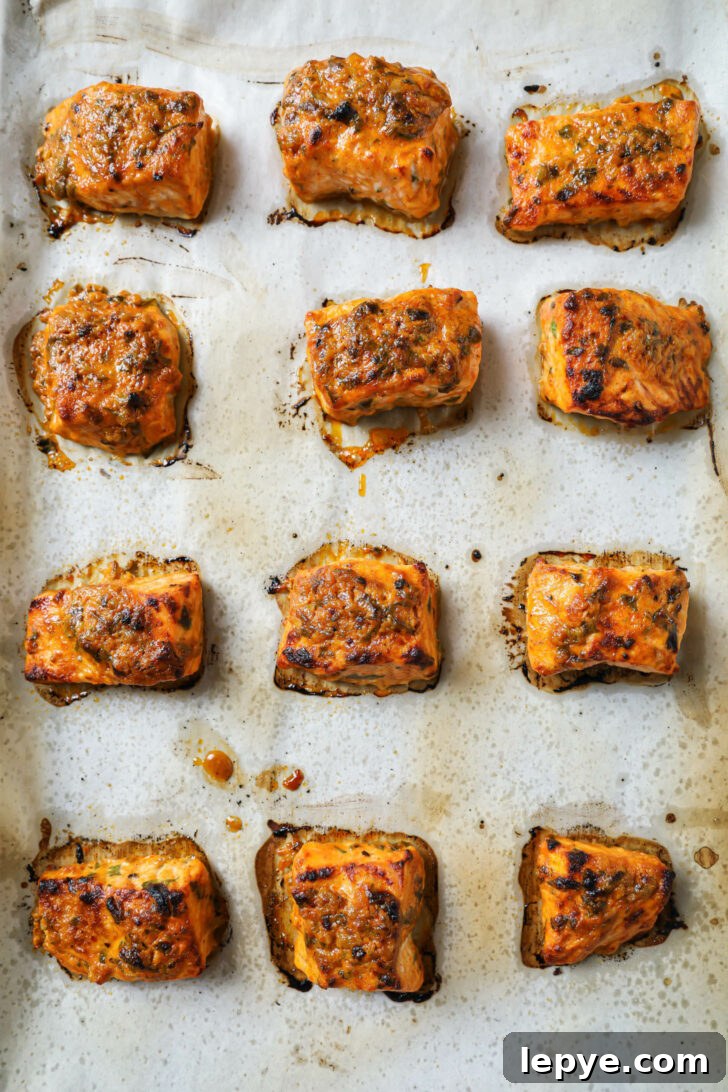
- Broil for about 7–8 minutes until the tops are golden and slightly charred and the internal temperature reaches 145°F. Broilers vary—watch closely to avoid overcooking. Remove smaller pieces earlier if they finish faster, and rotate the pan if needed to encourage even browning.
Alternative Cooking Methods
If you don’t have a broiler, try one of these:
- Bake – Preheat the oven to its highest temperature (about 500°F) and bake for roughly 10 minutes until lightly golden.
- Pan-fry – Heat a nonstick skillet over medium, add enough oil to coat the bottom, and cook 2–3 minutes per side until done.
- Air-fry – Preheat to 400°F, arrange salmon in a single layer, and air-fry for 6–7 minutes.
- Grill – Suitable for charcoal or gas grills; thread pieces on skewers if desired for easier handling.
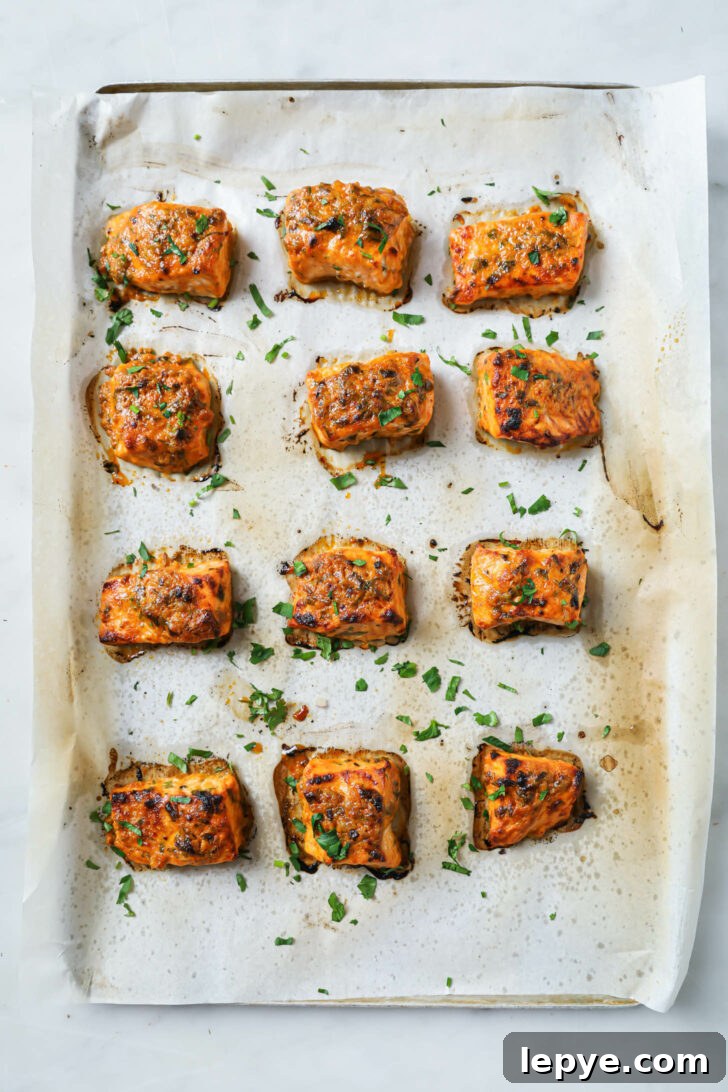
- Serve hot, straight from the oven or pan for best texture and flavor.
How to Serve
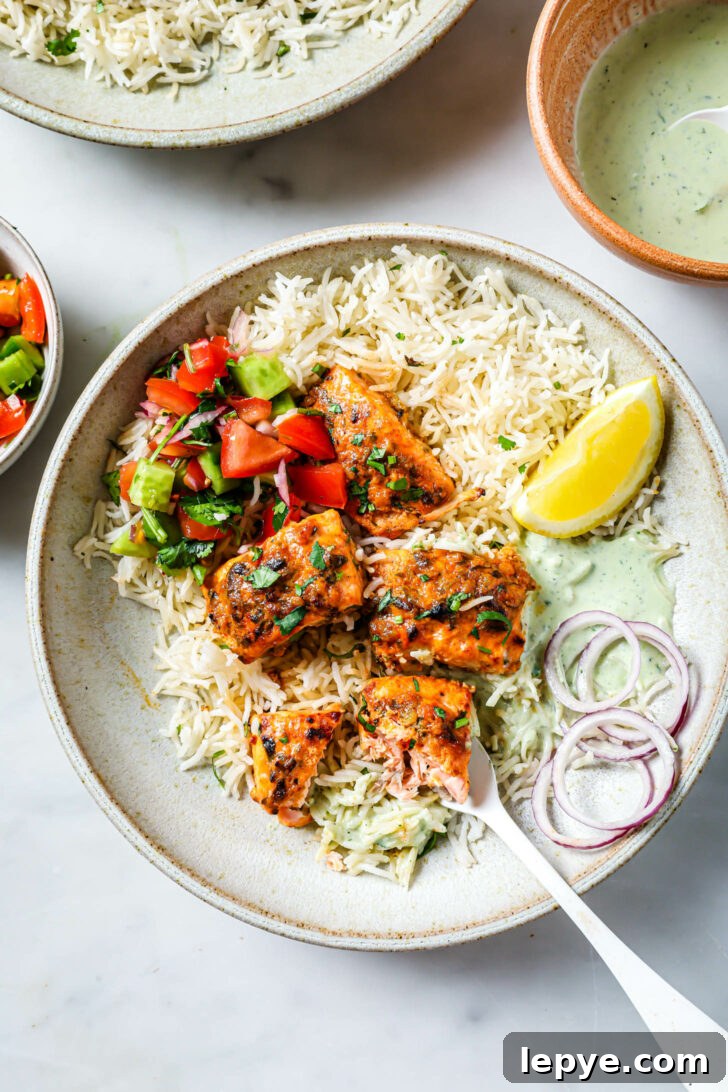
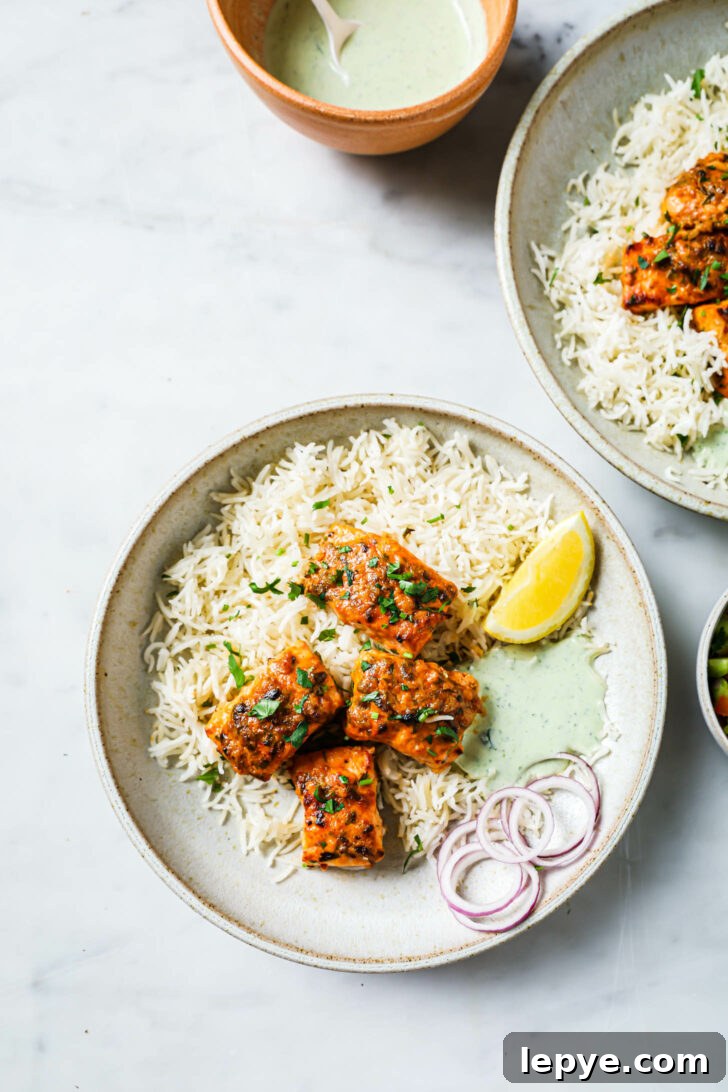
Serve the fish tikka the classic way with a cool sauce and bright, crunchy accents. Common accompaniments:
- Mint-coriander raita or another mild yogurt sauce.
- Thinly sliced red onion for crunch and bite.
- Lemon wedges to squeeze over just before eating.
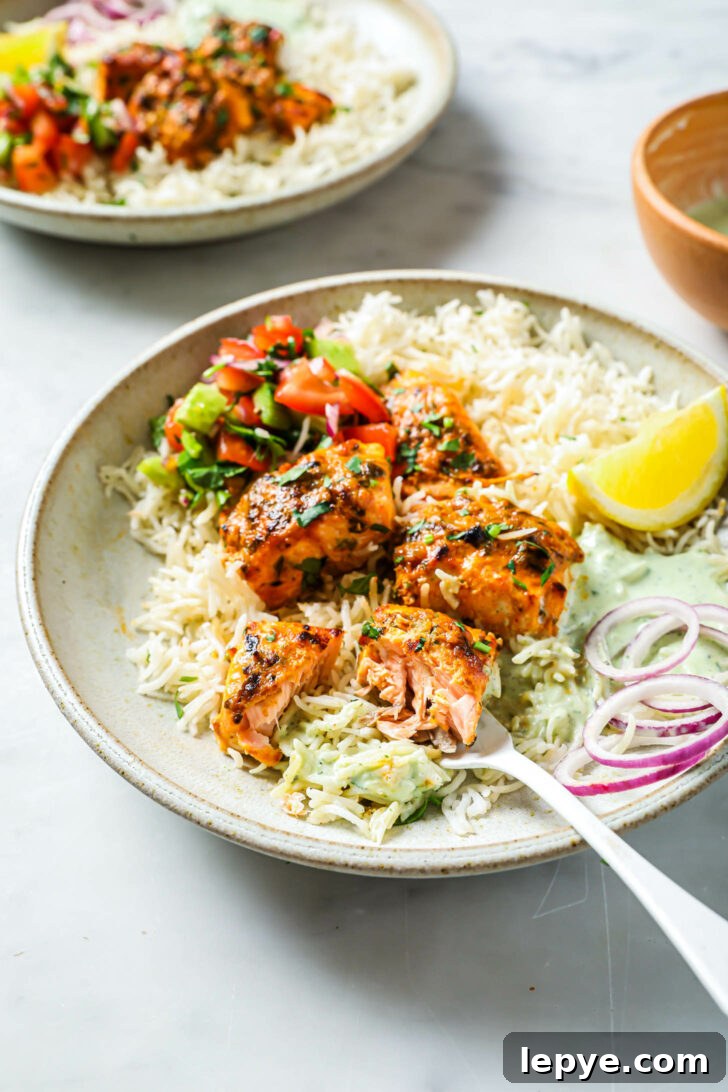
This dish works as an appetizer or a main. For a main course, pair it with basmati rice and a side salad or roasted vegetables. It also complements flatbreads such as roti or naan. Leftovers are great mixed into rice bowls with a touch of mayo, soy sauce, and sriracha for a flavorful quick meal.
More Pakistani & Indian Oven Recipes
- Baked Tandoori Chicken Curry
- Salmon in Spicy Tomato Masala
- Peri Peri Chicken
- Baingan Bharta
Tried this recipe? If you made it, consider leaving a brief comment or a photo—it’s always great to hear how it turned out. Thank you!
25-Minute Salmon Tikka (Fish Tikka)
Ingredients
- 1 -1.25 lb (16-20 oz) skinless salmon, rinsed and patted dry
- 1/3 cup ( ~75 g) plain whole-milk Greek yogurt
- 2 tbsp olive oil
- 1 ½ tbsp lemon or lime juice
- 3 garlic cloves, minced
- 1 tsp paprika or Kashmiri chili powder
- 1 tsp coriander powder
- 1 tsp cumin powder
- ½ tsp black pepper
- ½ teaspoon red chili powder or cayenne
- 3/4 tsp fine sea salt
- 2 tbsp minced parsley or cilantro, plus more for garnish
- Red or yellow onion, sliced into rings (optional, for serving)
Equipment
-
Standard sheet pan (or air-fryer basket / skillet)
Instructions
-
Cut the salmon into 1–1.5 inch pieces.
-
Whisk together yogurt, oil, lemon juice, garlic, spices, salt, and herbs. Add salmon pieces, toss to coat, and marinate for 10 minutes up to 1 hour in the refrigerator.
-
Preheat the oven broiler to high (about 550°F / 289°C) with the rack near the top. Line a baking sheet with foil or parchment.
-
Arrange the salmon pieces about 1 inch apart on the prepared sheet and brush any remaining marinade on top.
-
Broil for 7–8 minutes until golden and slightly charred on top, checking often to avoid burning. Rotate the pan if needed and remove smaller pieces earlier if they finish first.
-
Garnish with more parsley or cilantro and serve immediately with mint raita, sliced onions, lemon wedges, and your preferred sides.
Notes
Prevent overcooking: Keep a close eye during broiling—fish can go from charred to burnt very quickly. If pieces look done, remove them early. When unsure, stop cooking early; a slightly undercooked center is preferable to a dry fillet.