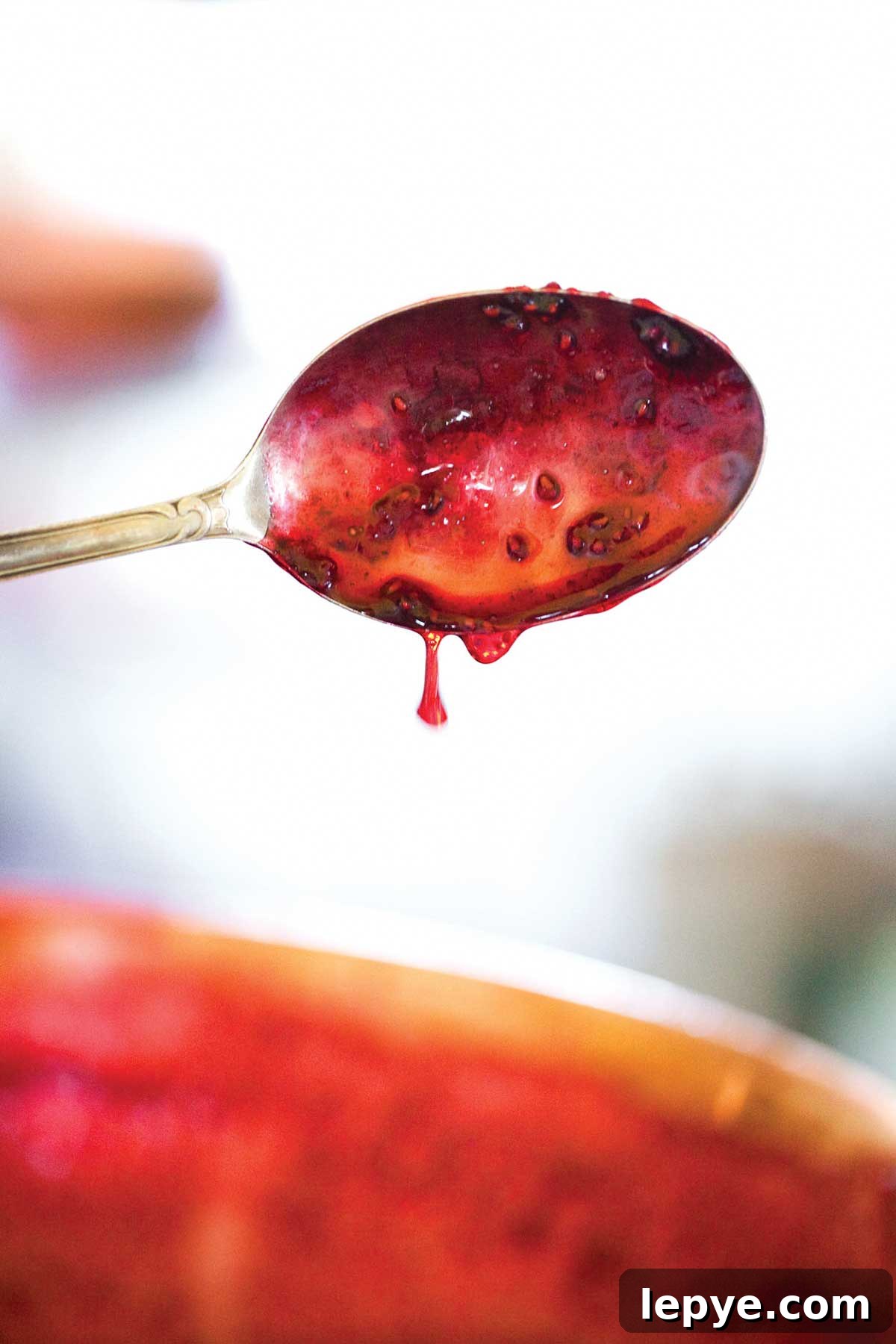
Homemade raspberry jam made with just vibrant red raspberries and sugar. Simple and easy to prepare, yet the flavor is exceptional.
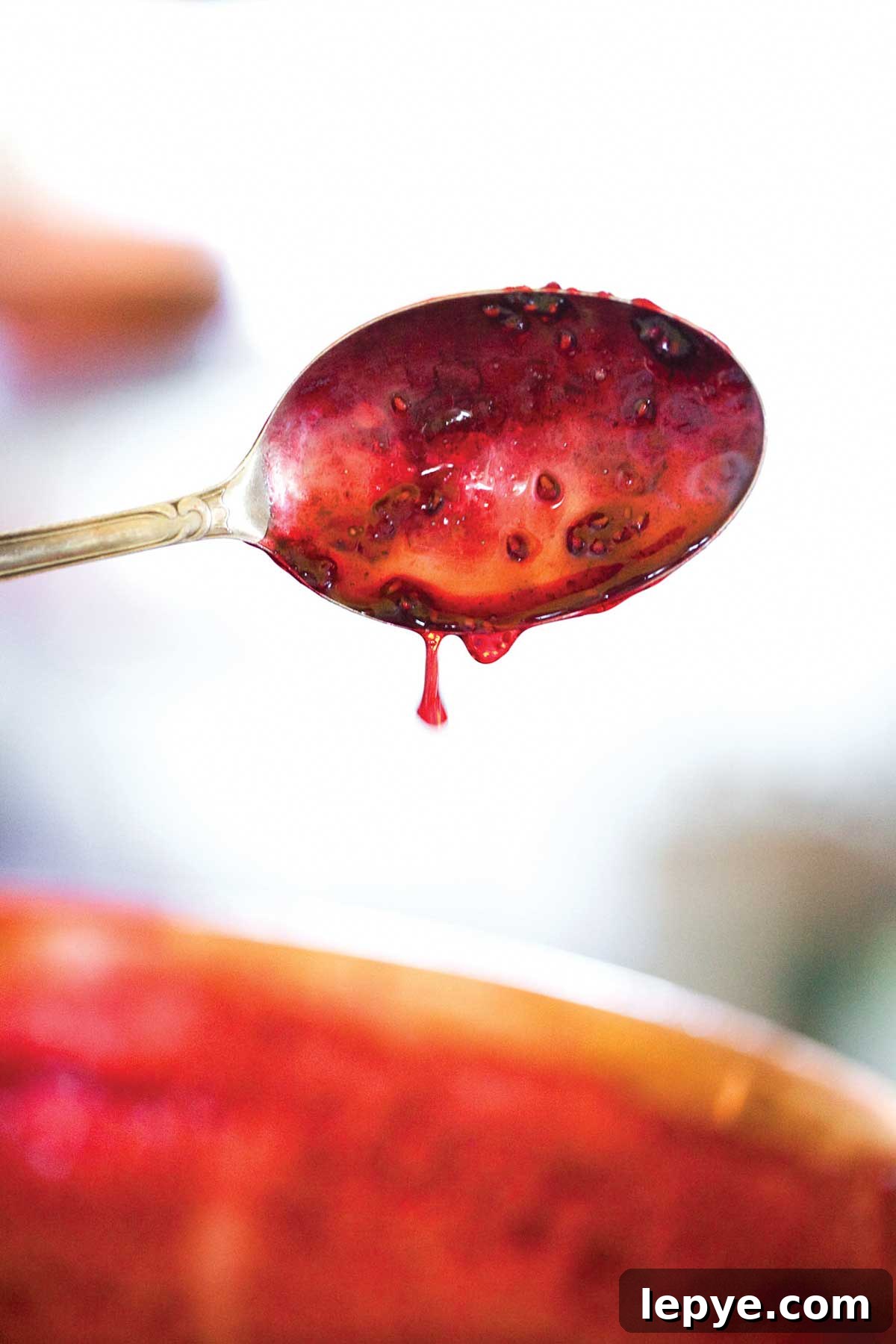
This raspberry jam is the simplest and most delicious version many of us have tried. It uses only fresh raspberries and granulated sugar, producing a bright, true-fruit flavor that belies how effortless it is to make. —David Leite
Homemade Raspberry Jam FAQs
A wide, deep-sided pan increases surface area and speeds evaporation, which lets you remove moisture quickly while minimizing the time the fruit spends over heat. That helps the jam thicken to a spreadable consistency while preserving the fresh raspberry flavor. For larger batches, consider making multiple smaller batches rather than one huge pot to avoid overcooking.
No. You can pour the finished jam into clean, sterilized jars and store it in the refrigerator or freezer. Refrigerated jam keeps for a couple of months; frozen jam for up to six months.
No. Raspberries are naturally high in pectin, so this recipe does not require added pectin.
Homemade Raspberry Jam
Equipment
- Sterilized canning jars (see note below)
Ingredients
- 2 1/4 pounds fresh red raspberries
- 3 pounds granulated sugar
Instructions
- Place a saucer and five metal teaspoons on a flat surface in the freezer to chill for later doneness testing. Set a medium-mesh strainer or chinois over a heatproof bowl if you plan to remove seeds.
- Combine the raspberries and sugar in an 11- or 12-quart preserving pan or a wide, deep-sided nonreactive pot. Cook over medium-low heat, stirring and mashing constantly with a heatproof rubber spatula until the berries begin to release their juice.
- As the sugar dissolves, raise the heat to high. Continue cooking, stirring frequently, until the mixture boils vigorously. Keep it boiling for 10 to 15 minutes, stirring often. Begin testing for doneness after about 10 minutes.
- To test, remove the pan from the heat and spoon a scant half teaspoonful of jam onto a frozen teaspoon. Return the spoon to the freezer for 3 to 4 minutes, then check the underside. It should be neither warm nor cold; if it’s still warm, chill it a bit longer.
- Tilt the spoon vertically: if the jam does not run and has a near-jelly consistency, it’s done. If it still runs, return the pan to the stove and cook a few more minutes, testing again as needed.
- Skim any foam from the surface with a stainless-steel spoon. If you prefer seedless jam, quickly push the jam through the mesh strainer using the back of the spoon, then discard the seeds and skim any remaining foam.
- Pour the hot jam into sterilized jars, leaving appropriate headspace. Seal and process according to your chosen preservation method, or simply refrigerate or freeze for shorter-term storage.
Notes
Refrigerator Jam Safety
Use sterilized heatproof jars. To sterilize: wash jars and lids with hot, soapy water and rinse well, then either run them through a dishwasher’s sanitize cycle or submerge in boiling water for 10 minutes; let air-dry. Fill jars hot, cap, and refrigerate promptly (≤40°F). Use clean utensils—no double-dipping. Refrigerator storage: up to 2 weeks (low-sugar versions 7–10 days). If you see mold, discard the entire jar. For longer storage, freeze up to 3 months with 1/2-inch headspace. Label and date jars.
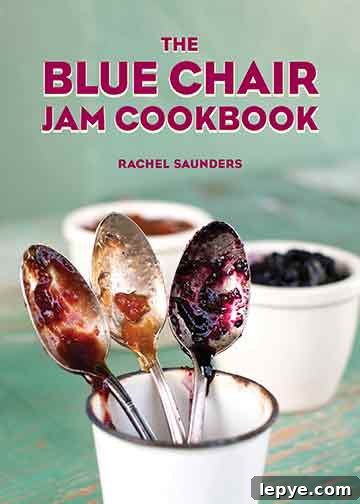
Adapted From
The Blue Chair Jam Cookbook
Nutrition
Nutrition information is automatically calculated and should be used as an approximation.
Recipe Testers’ Reviews
This recipe passed Leite’s Culinaria’s rigorous blind testing and earned the site’s approval. Testers’ feedback is below.

Trista C.
This jam isn’t too sweet and retains fresh fruit flavor. The short cooking time and minimal ingredients make it a great recipe for a first-time jammer. I halved the recipe, used a large skillet, tested at 6 minutes, and finished at 9 minutes.

Alexander Cowan
Rachel Saunders’ approach is straightforward and delicious. No pectin or thickeners—just fruit and sugar. I used an oven-canning method; be careful not to overprocess. This jam is perfect on toast, with ice cream, in cake layers, or by the spoonful.

Robert Castagna
The color, texture, and flavor were excellent. My yield seemed low until I weighed the discarded seeds and accounted for the difference.