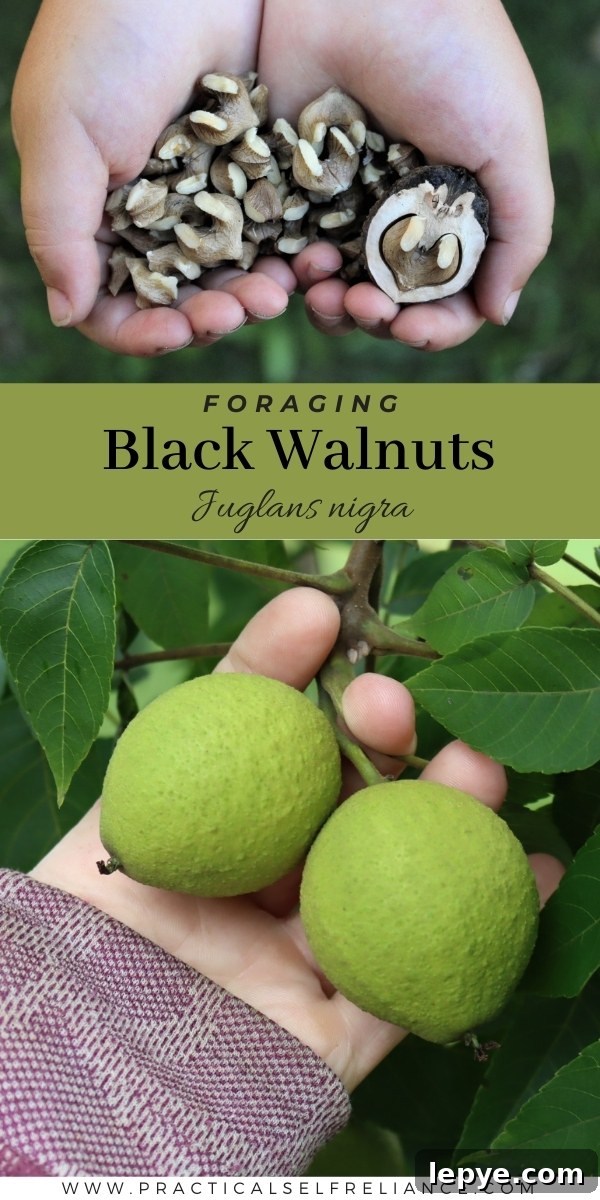
Black walnuts (Juglans nigra) are a highly productive native nut tree in the United States. Recognizable and nutritious, their harvest can add substantial, long‑lasting calories to your pantry.
I’m not usually thrilled by foraging salad greens. There are countless edible wild weeds that taste fine and make good additions to meals, but they rarely become a staple. I get more excited about wild fruits and nuts you can harvest in quantity and preserve: berries, wild flours, roots, and especially nuts. Those are the foods people relied on long before modern agriculture and the ones early settlers depended on when crops failed.
Nuts like chestnuts, acorns, beechnuts, hazelnuts, and hickory have long been important food sources. Black walnuts, in particular, are among the most common wild nuts in much of the eastern United States. They’re nutritious, abundant, easy to identify, and simple to collect. In many years trees produce more nuts than wildlife can eat, leaving a plentiful harvest for foragers.
What are Black Walnuts?
Black walnut (Juglans nigra) is a large deciduous tree in the walnut family, closely related to the cultivated English walnut (Juglans regia). Mature trees can exceed 100 feet tall but often begin producing nuts at about ten years old. Native to eastern North America, their range reaches into Canada and extends across the central U.S. down to northern Texas and the Florida panhandle. Hardy to cold climates, black walnuts are among the most cold-tolerant nut trees.
Beyond their native range they’re sometimes planted or established by wildlife in new areas. Historically valued for both timber and nuts, black walnuts are often found near old homesteads, in riparian zones, and in long-established landscapes.
What Do Black Walnuts Taste Like?
The taste of black walnuts depends on processing and personal preference. Properly husked, dried, and stored, their flavor is similar to English walnuts but earthier and with mild bitter or tannic notes. Those bitter flavors become pronounced when the outer green husk breaks down against the nut; left to rot, the husk will leach acrid flavors into the shell and nutmeat. That’s why timely husking is important after harvest.
Some people dislike black walnuts, just as some dislike the taste of regular walnuts. When processed correctly they make a flavorful ingredient in many baked goods, confections, and savory dishes.
Where to Find Black Walnuts
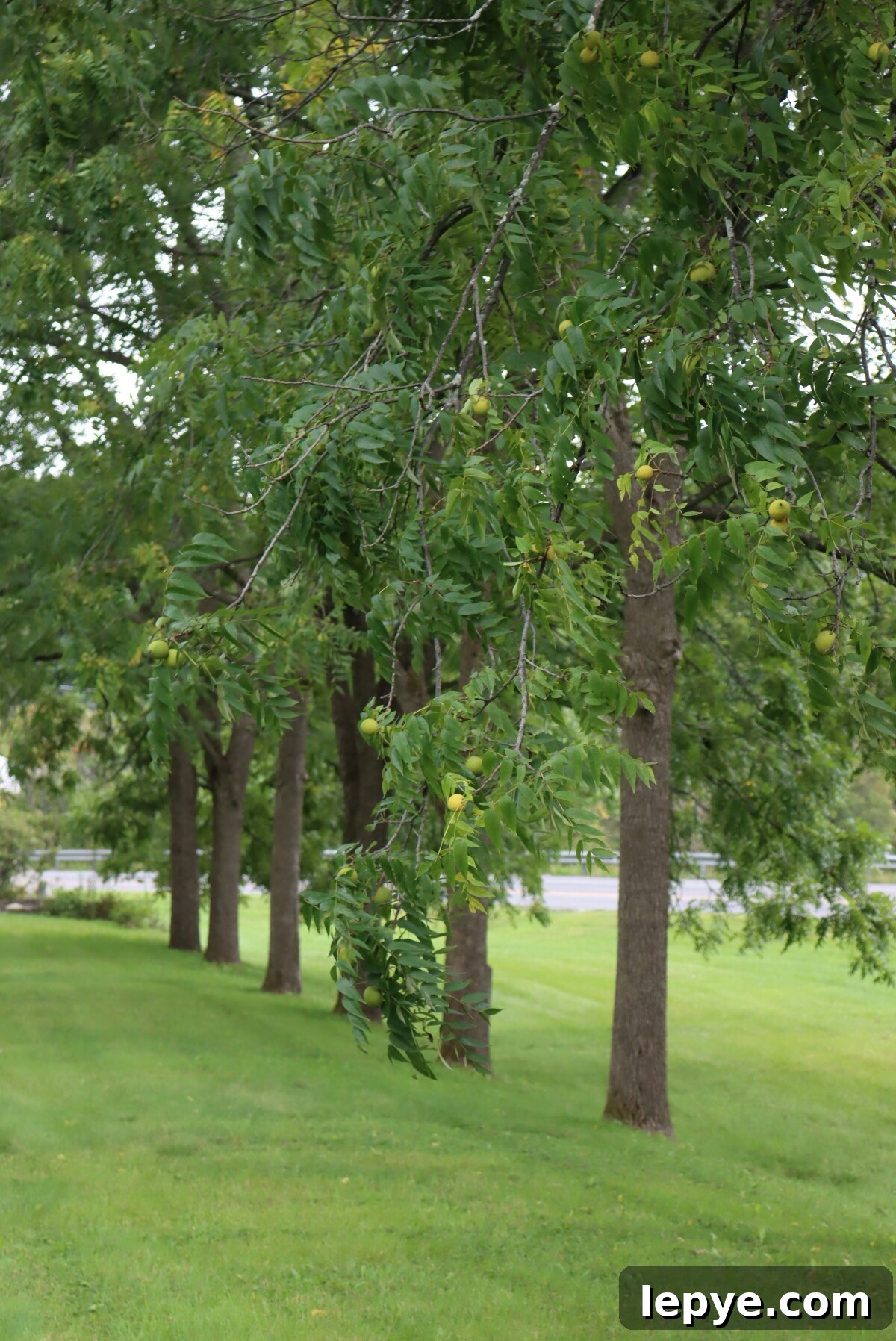
Black walnuts are common in woods across their range, particularly in wetter soils and along streams. Old homesteads, historical plantings, and older cemeteries often host established trees because families historically planted long-lived nut trees for future generations. These sites can be productive foragers’ spots.
I’ve harvested from neighbors’ trees planted decades ago and from cemetery groves where trees were intentionally planted as landscape and food sources. If you gather from private property, always ask permission.
Identifying Black Walnuts
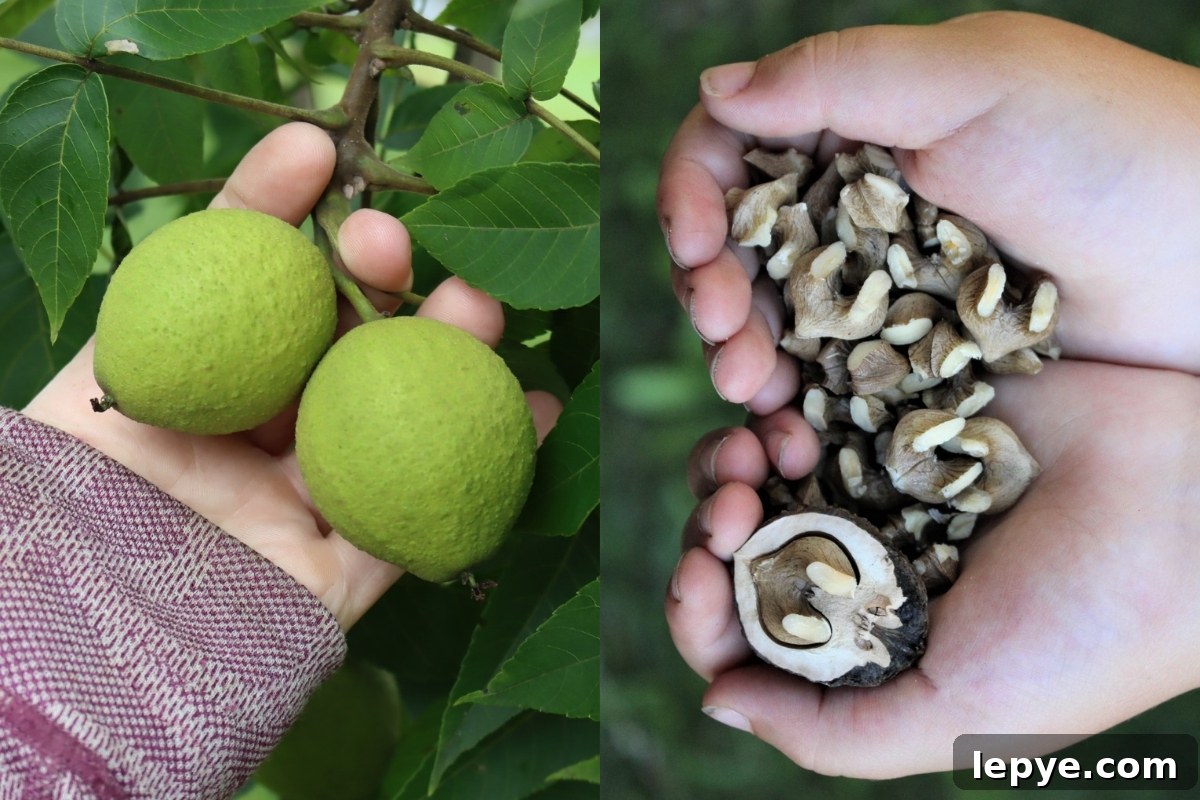
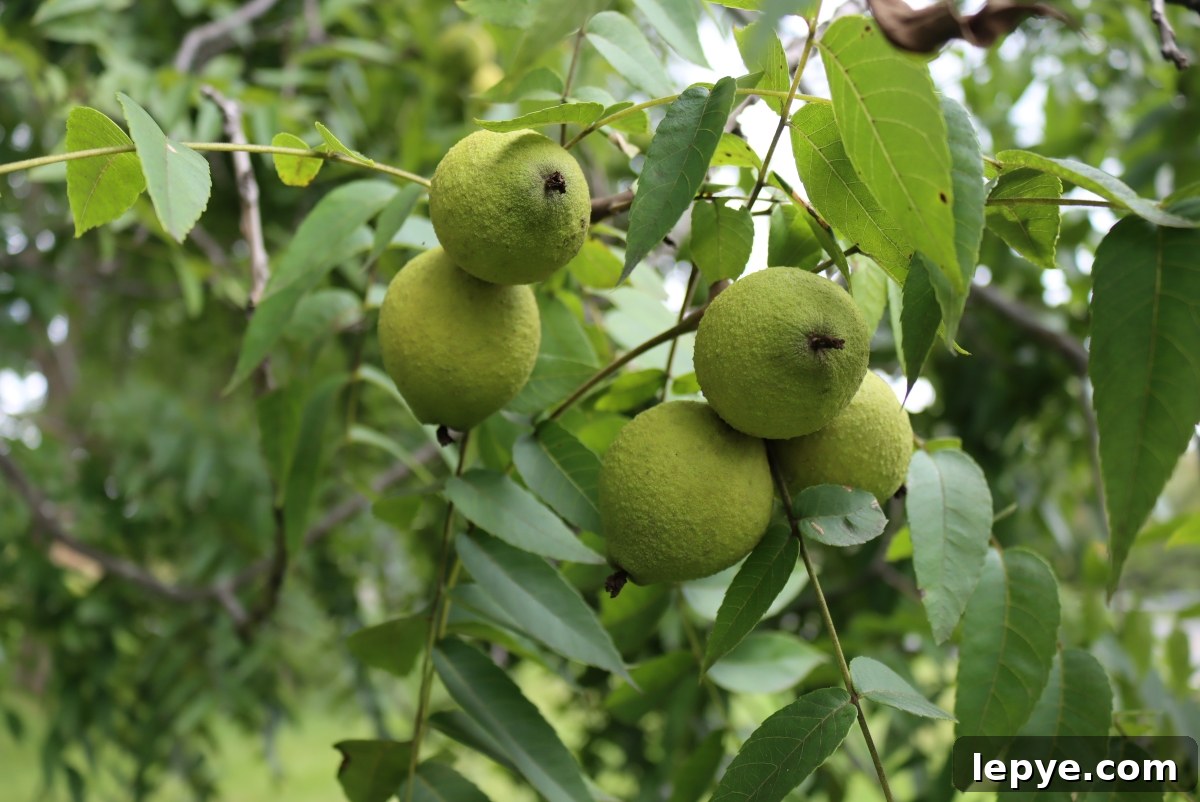
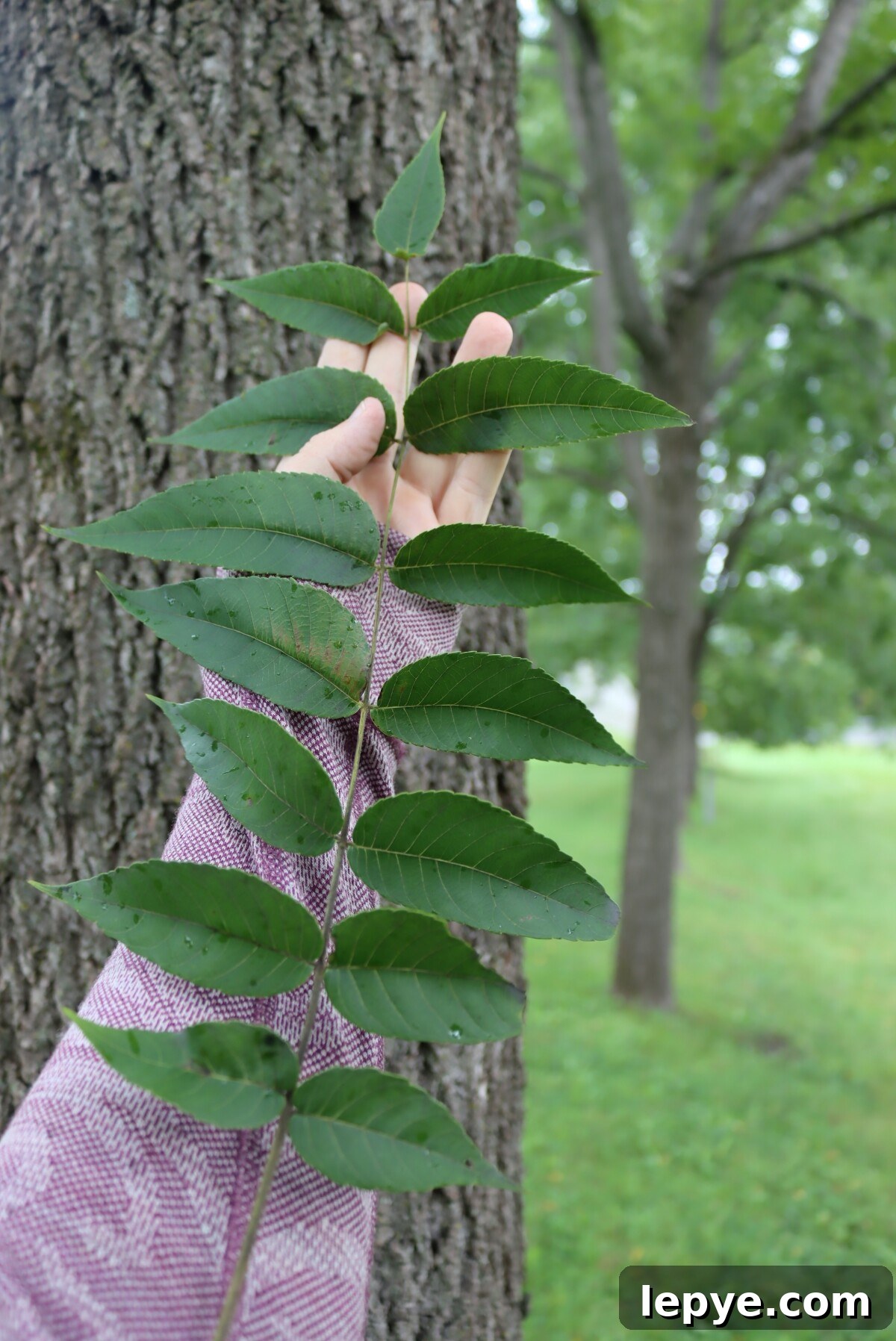
Black walnuts are easiest to identify when in fruit: round, green, tennis ball-sized husks hang from the branches. Leaves are pinnately compound and alternately arranged, with each compound leaf bearing 15–23 leaflets. Each leaflet is widest in the middle with a rounded base, pointed tip, serrated margins, and a slightly hairy underside.
All parts of the tree (except the nutmeat) have a distinctive pungent scent. The leaves have a spicy, slightly citrusy aroma that was historically used for seasoning.
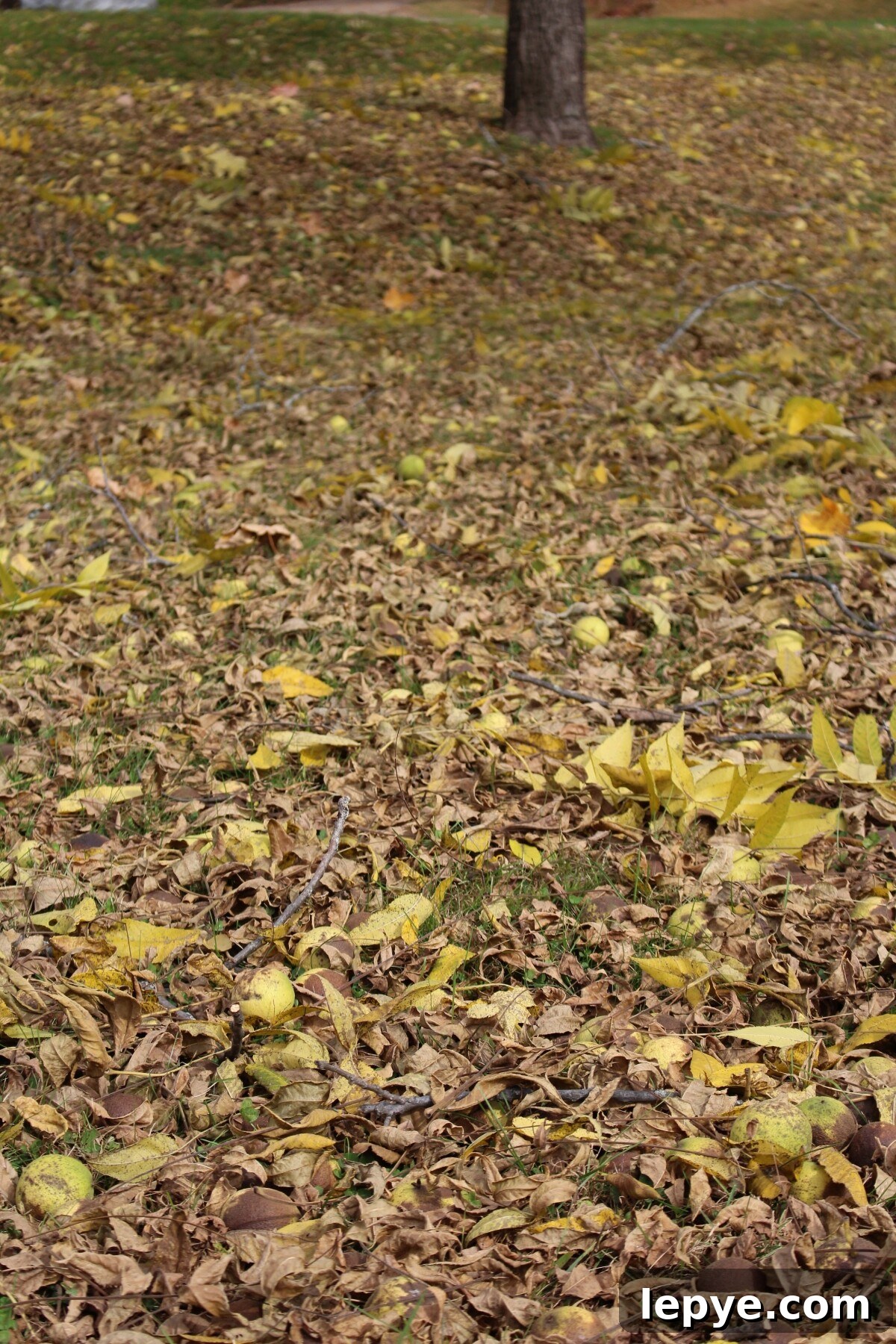
Leaflets on black walnut trees can appear slightly twisted at their attachment so their surfaces face upward. In autumn the leaves turn a bright yellow, making tree tops easy to spot during foliage season.
Black walnut bark is grey-black and deeply furrowed, though less dramatically patterned than butternut bark. Comparing bark, leaf scars, and nut shape helps distinguish black walnut from similar species.
Black Walnut Look-Alikes
Ash and other trees have compound leaves but do not produce walnut-like fruits. The most easily confused nut tree is the butternut (Juglans cinerea). Key differences include nut shape (black walnuts are round; butternuts are more elongated or barrel-shaped), bark texture and color, and subtle leaf scar differences. Butternut typically retains a terminal leaflet more consistently than black walnut, though terminal leaflets on black walnut can be variable.
Husking Black Walnuts
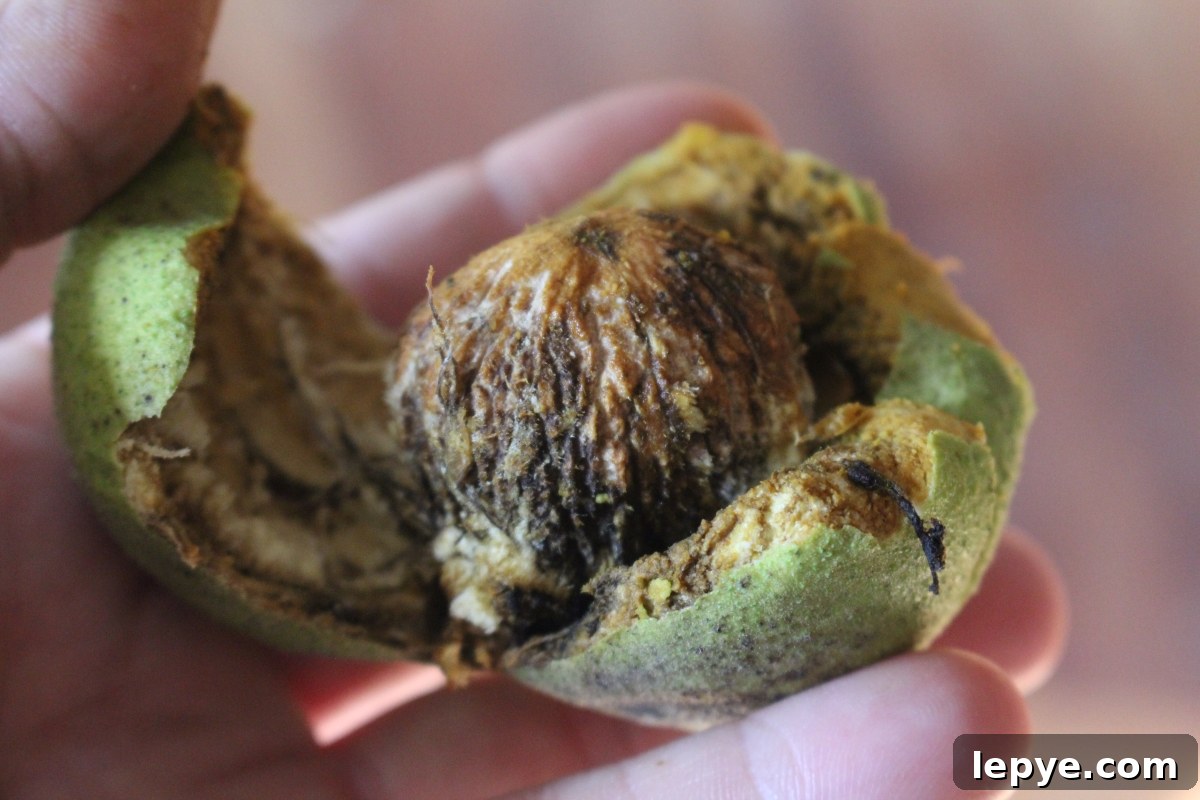
Black walnuts are encased in a spongy green husk that must be removed promptly after harvest. When ripe the husk will yield to gentle pressure and often peels off much like citrus skin. If the husk is left on and begins to rot, it will impart bitter, acrid flavors into the nut.
Husks stain hands and surfaces and were traditionally used as a dye and ink, so wear gloves if you’re concerned about staining or possible skin reactions. Save husks if desired: they can be used to make extracts and tinctures.
Storage: How Long Do Black Walnuts Last?
After husking, dry shelled nuts in a well‑ventilated single layer for several weeks to cure. Properly dried and stored in the shell, black walnuts will keep at room temperature for many months and often up to a year before flavor and texture begin to decline. Once cracked, exposed nutmeats are susceptible to oxidation and will go rancid more quickly, so keep walnuts in their shells until ready to use.
How to Crack Black Walnuts
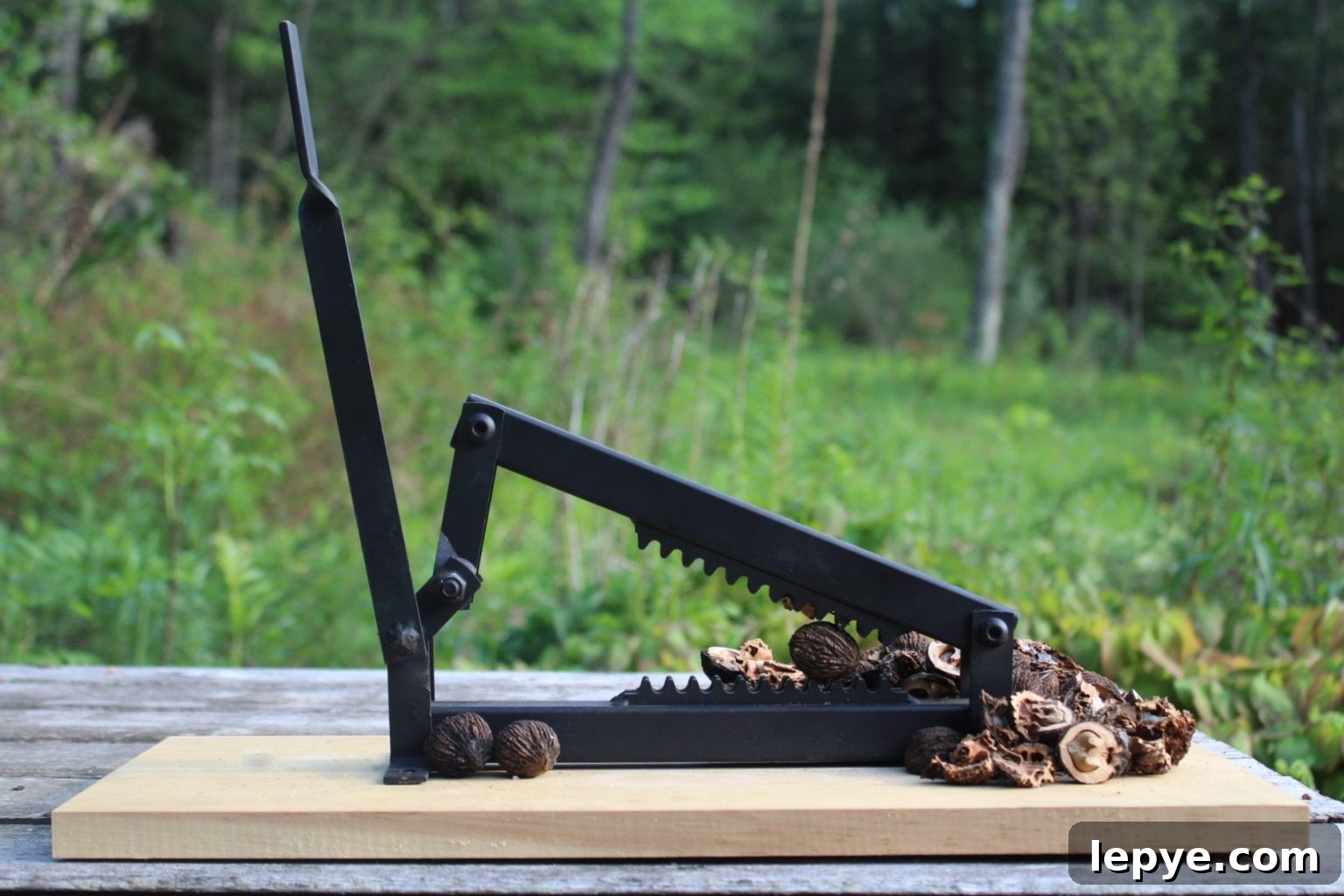
Black walnuts are among the hardest nuts. Small holiday nutcrackers usually won’t work. Effective methods include a heavy lever‑action nutcracker, a slow‑tension vise, or specialized mounted crackers. Some people hammer nuts inside a pillowcase to contain shell fragments, though this often breaks the nutmeat into small pieces.
A gentler, high-yield approach is patience: allow nuts to dry thoroughly. Many will develop a seam crack as they cure. Slip a pocketknife into that natural seam and the shell often opens cleanly into halves, yielding larger pieces of nutmeat with minimal shell debris. Dried nuts are easier to pry open and recover intact halves.
Using Black Walnuts in Cooking
Use black walnuts anywhere you’d use regular walnuts: baked goods, ice cream, pestos, pie fillings, and nut butters. Because their flavor is more robust and earthier, try them in chocolate cookies, pies, or savory sauces. Always taste a sample first—if you dislike their flavor raw, you may not enjoy them in recipes.
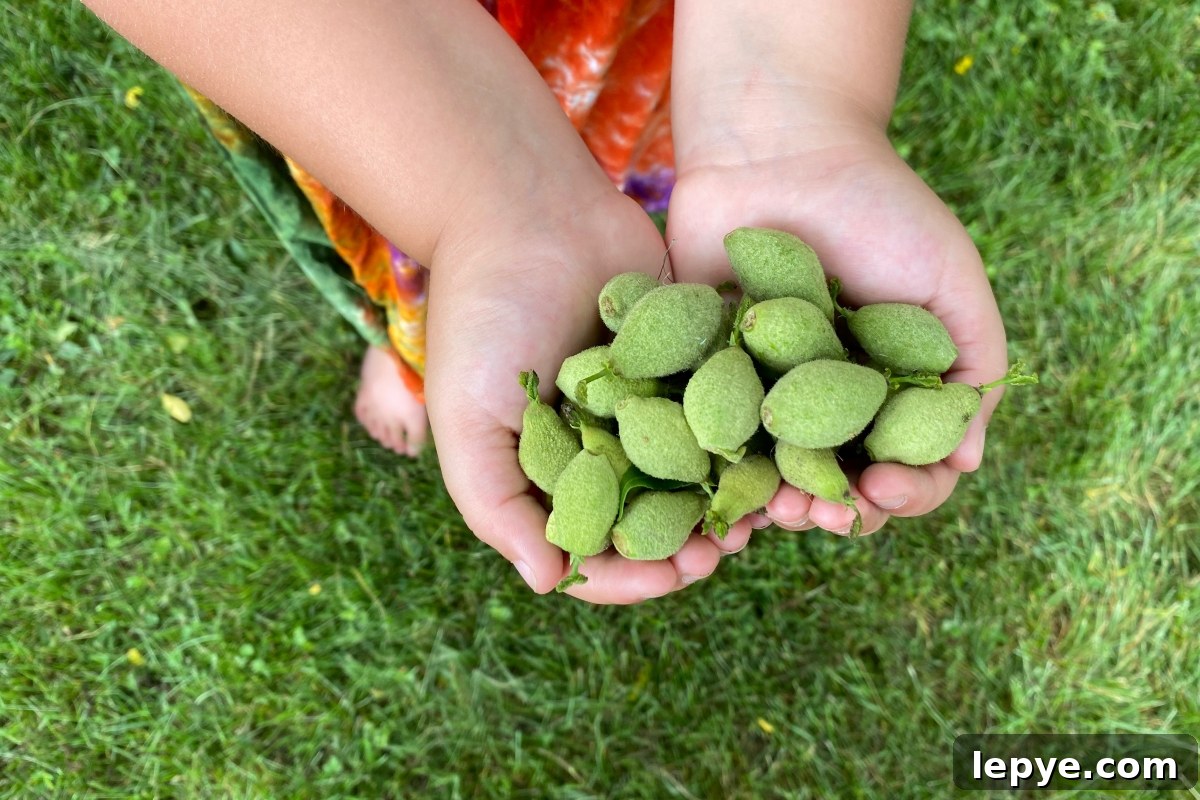
Immature green walnuts are also used whole, husk and all, in specialty preparations. Harvested in early summer, green walnuts offer a spicy, citrusy note; their soft interior dissolves into preserves, liqueurs, and pickled preparations. Green walnut harvests are traditional in many cultures and appear in seasonal recipes and folklore.
Where to Buy Black Walnuts
Black walnuts are not commonly stocked in mainstream grocery aisles, though specialty and foraged-food sellers occasionally offer them. If you can’t harvest your own, look for specialty foragers or small producers who sell shelled or in-shell black walnuts.
Conclusion
Black walnuts are a worthwhile wild food: abundant in many regions, nutritionally valuable, and versatile in the kitchen. With proper identification, timely husking, careful drying, and the right cracking technique, you can add a rich, distinctive nut to your pantry that connects you to historical foodways and makes great additions to both sweet and savory dishes.