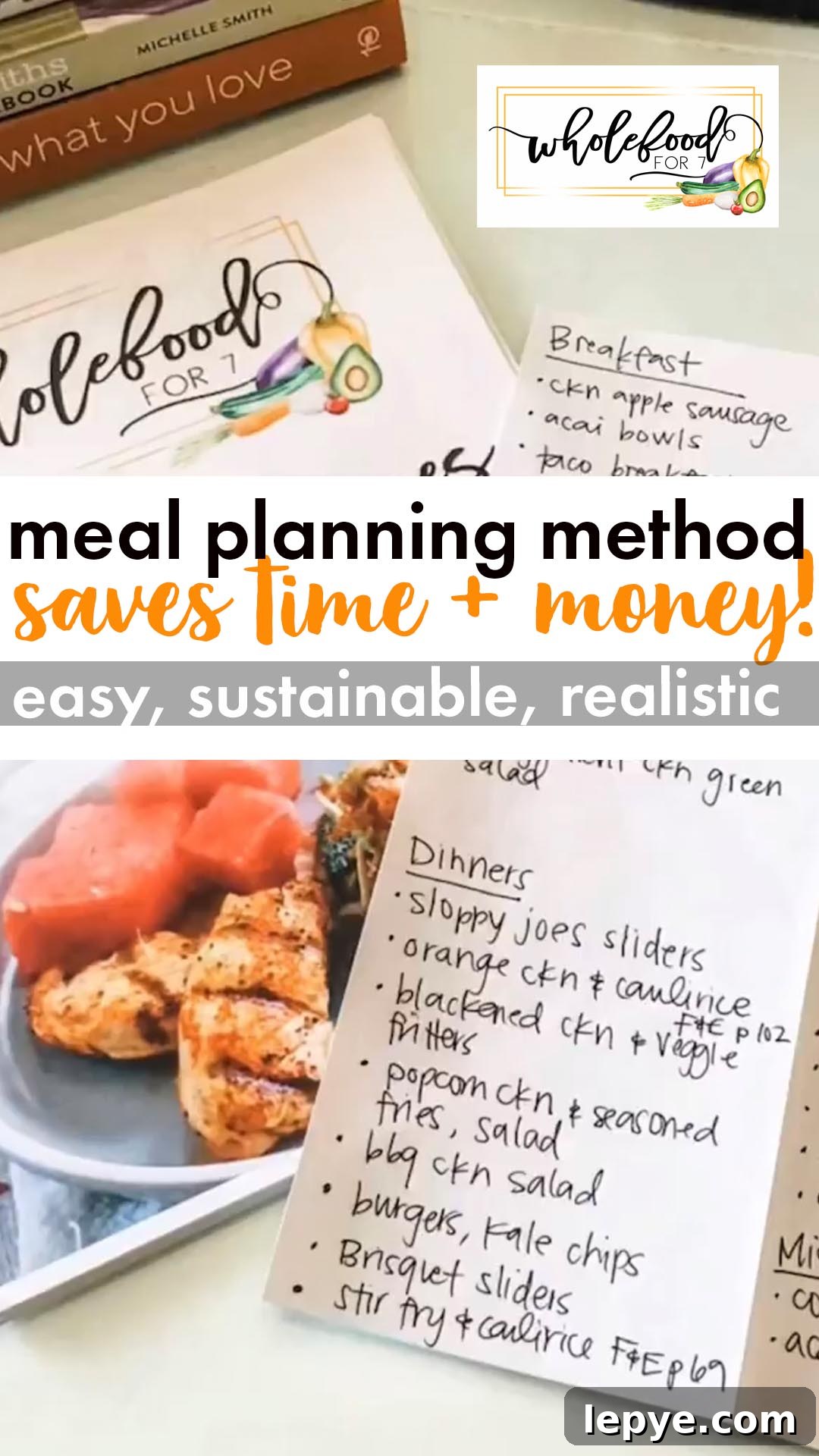
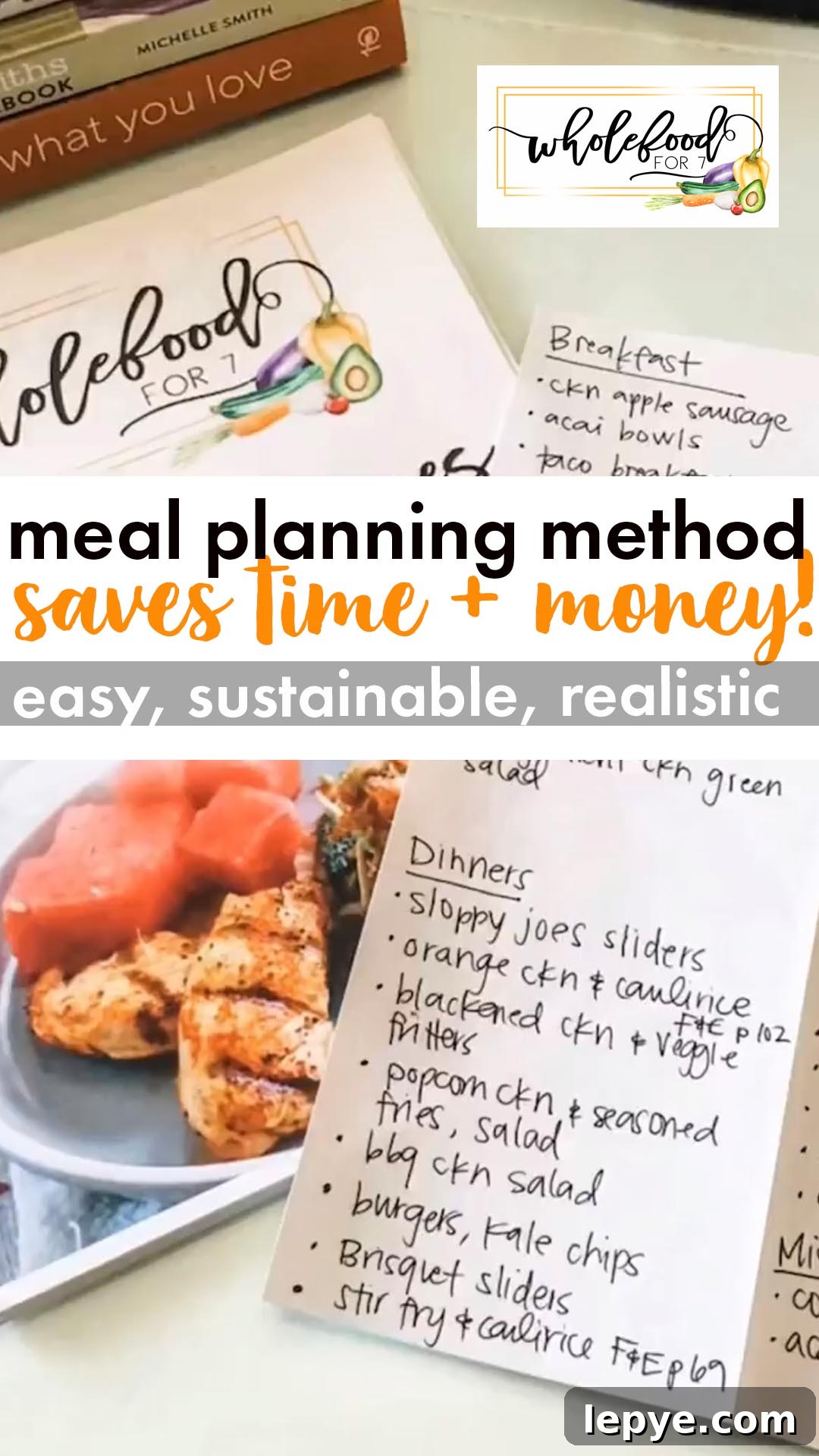
Why Should I Meal Plan?
Meal planning is one of the most valuable habits for building a healthy relationship with food. After coaching over 1,000 clients through Whole30, meal planning consistently emerges as an essential practice. Meal planning simply means deciding ahead of time what you’ll eat over a chosen period (a week, two weeks, or a month) and writing it down. Typically you also list the ingredients you need and create a grocery list to support the plan.
Three key reasons to meal plan:
- It sets you up for success. Deciding meals in advance removes the pressure of making choices at dinner time, making it easier to stick to healthy, affordable, or goal-oriented meals.
- It saves time. You eliminate the 5pm scramble and avoid last-minute grocery trips. With a plan, evenings are less stressful and more efficient.
- It saves money. A shopping list based on a meal plan helps you buy only what you need. Meal planning reduces food waste and cuts down on unplanned takeout or expensive last-minute meals.

Meal planning doesn’t have to be complicated. Below is how I plan for a week for my family of seven in a simple, repeatable way.
How I Meal Plan
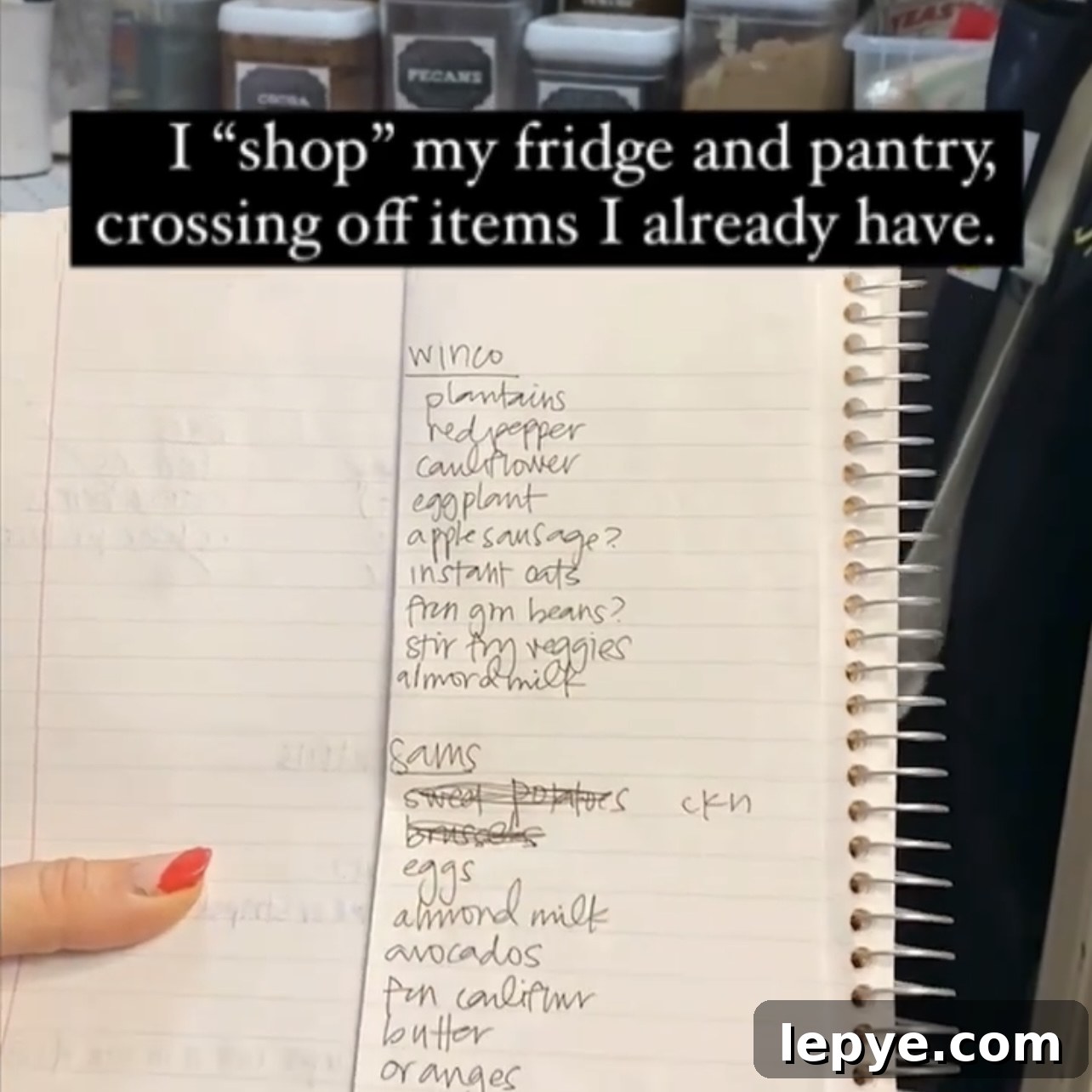
I chose a regular day to plan each week—Saturday mornings work for me. Using a plain sheet of paper folded in half, I make two columns: one for the meals we’ll eat that week and one for the ingredients needed for those meals. I organize the ingredient column by store and by area of the store (produce, dairy, pantry) so shopping is efficient. I typically visit 2–3 stores each week to get the best prices.
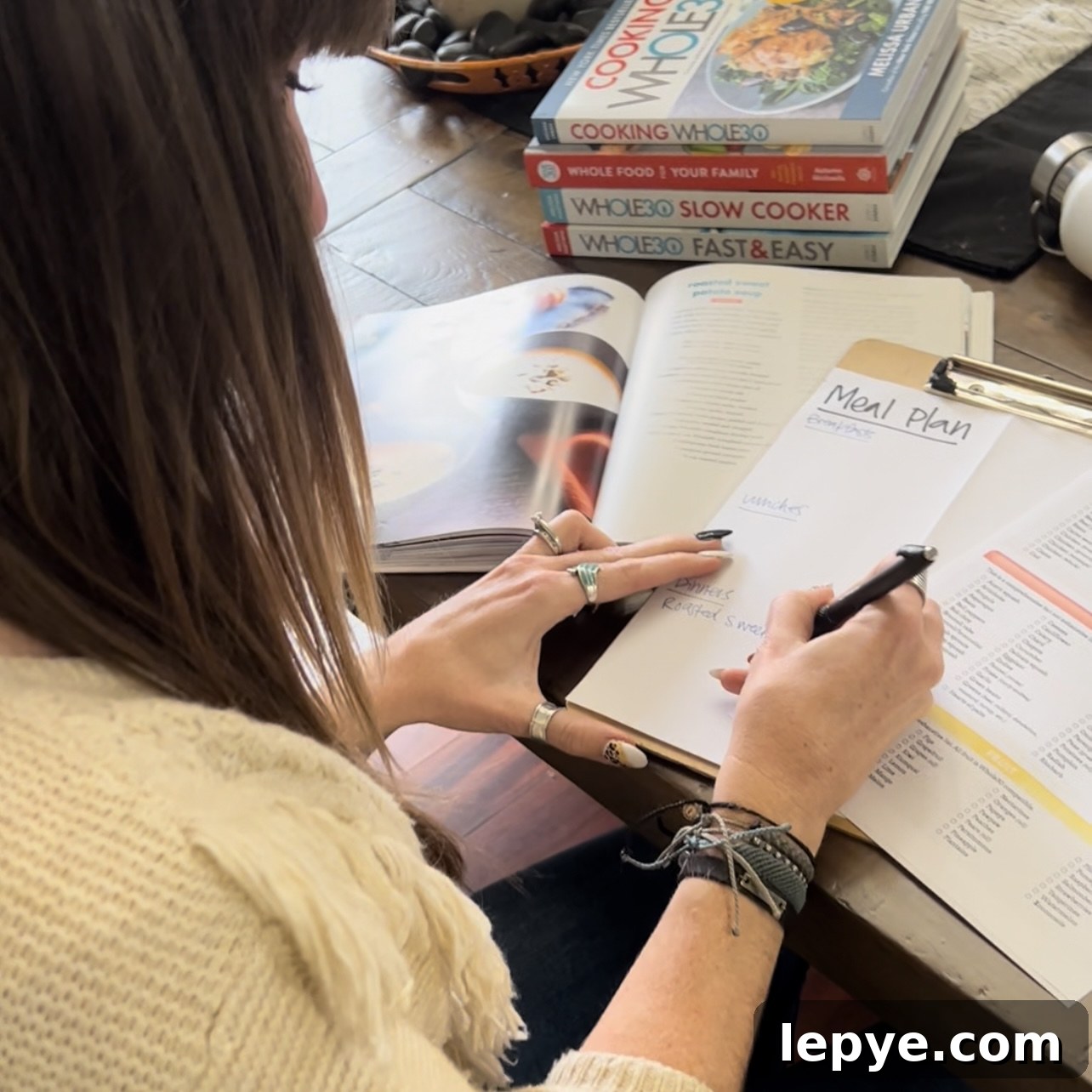
I usually pick about five dinner recipes and two to three breakfast or lunch items. That gives flexibility for leftover nights, spontaneous plans, or quick meals when needed. I don’t always assign a meal to a specific day so we can adapt to how the week unfolds. If you prefer scheduling meals by day, check your calendar and be realistic about how much time you’ll have to cook. For busy evenings I plan slow-cooker meals or 30-minute dinners.
Budget tip: Check your pantry and fridge before making your list. Note what you already have and include every ingredient a recipe calls for on the list. Only cross items off after you visually confirm you have enough (don’t assume jars or bags still have what you need).
I often involve a child or two in choosing recipes—kids are more likely to eat what they helped pick. They like browsing cookbooks and pointing to photos. To expand our family’s food vocabulary, I aim to try two to three new recipes a month. For a large family, I usually double recipes and freeze extras or serve leftovers for lunch the next day.
To build a sustainable meal planning routine, I recommend:
- Pick a regular date and time each week to plan.
- Decide how many meals you need and the planning window (for me, five dinners and two to three lunches/breakfasts for one week). Use cookbooks, social media, or your own recipe collection for inspiration and plan around what you already have.
- Create a shopping list that matches your meal plan and organize it by store or store section.

Grocery Shopping
I shop early to avoid crowds and heat. My youngest often comes along to hold the list and check items off—kids enjoy checking things off and can learn useful skills like comparing price per ounce. After shopping, everyone helps put groceries away. With a large family we use two refrigerators to store perishable items, so having help makes the process quicker.
I avoid meal prepping on grocery day because shopping usually takes several hours and I prefer to rest or spend time with family afterward.
How I Meal Prep
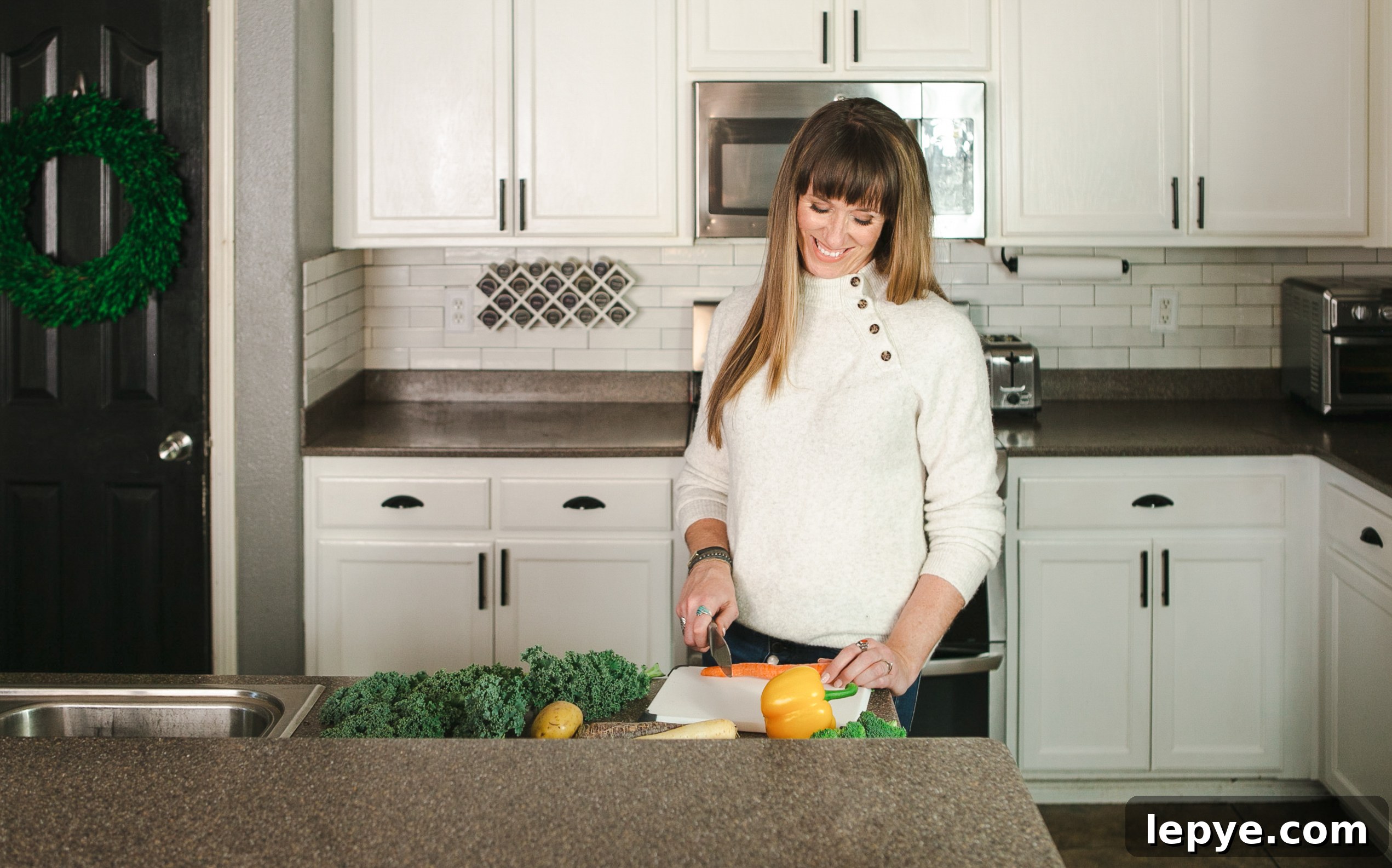
A single long meal-prep session didn’t work for me. Instead, I follow a meal-prep rhythm that spreads tasks across days and fits into our family schedule. This approach has been sustainable for keeping food prepped without spending excessive time in the kitchen.
Meal planning is a simple but powerful tool to ensure nourishing meals make it to the table. It saves time and money, reduces waste, and helps you feel more in control of family meals. I hope this approach inspires you to create a meal planning method that fits your life and keeps you consistent.
Want free Whole30 meal plans, including templates and family-friendly options? Look for resources that offer sample meal plans and shopping lists to get started.