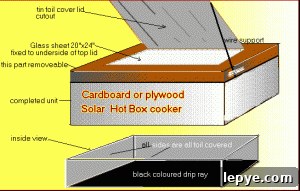
A solar cooker is a device that captures sunlight and converts it into heat to warm, sterilize, or cook food and beverages. Because it relies solely on the sun, it requires no fuel, which reduces operating costs and environmental impact. Solar ovens are increasingly popular for being affordable, eco-friendly, and practical. Many guides exist showing how to build a simple solar cooker at home.
There are several types of solar cookers. Simple box cookers are the most common and easiest to make, especially in emergency situations. They use relatively little energy and can represent a minor addition to household expenses. These cookers are straightforward to use, perform best in sunny weather, and require only moderate maintenance—their longevity depends largely on how well they are cared for. Basic construction and operation skills are sufficient to build and use one.
How to build a solar cooker
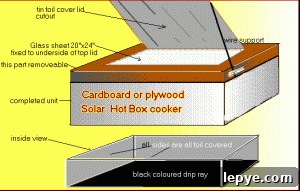
Gather the following materials to build a basic solar oven:
- aluminum foil
- cardboard
- one small and one larger cardboard box
- non-toxic glue and scissors
- clear plastic wrap
- pencil
- newspaper
- stapler
- black construction paper
These materials are inexpensive and often easy to find, making this design suitable for emergencies or low-cost sustainable cooking.
Instructions for constructing a solar oven
1. Choose two boxes so that the smaller fits inside the larger with an even gap of about 2–3 inches around all sides. Crumple newspaper and use it to fill the space between the two boxes as insulation. Line the bottom and sides of the outer box with more crumpled newspaper for added insulation.
2. Line the interior of the smaller box with aluminum foil, shiny side out, smoothing wrinkles to maximize reflectivity. Secure the foil with non-toxic tape or glue, folding the edges over the rim of the inner box so the lining stays in place.
3. Line the bottom of the inner box with black construction paper to absorb heat.
4. Cut a piece of cardboard to serve as a reflector. Trace the top of the outer box onto the cardboard, add about two inches all around, and cut out the shape. Cover the cardboard with aluminum foil, smoothing the surface and fastening the foil with non-toxic tape or glue.
5. Attach the reflector to the back of the outer box with staples so it can be angled to direct sunlight into the box when the lid is opened. Place the assembled cooker so the reflector faces the sun and adjust the angle during the day for best results.
6. Place the pot or pan with food inside the inner box. Stretch a sheet of clear plastic wrap over the top of the large box and seal it with tape to create a greenhouse effect that traps heat. Ensure the materials used can withstand temperatures up to around 150°C (300°F) without melting or releasing harmful vapors.
Solar box cookers usually reach moderate temperatures. Many traditional designs attain between 250°F and 350°F (120–175°C), which is adequate for most cooking tasks, though heating is generally slower than with conventional ovens. Foods with low moisture content can reach boiling temperatures (100°C / 212°F) more easily than very moist foods. Because solar cookers heat more slowly and typically do not reach the extreme temperatures of conventional ovens, food can often be left in the cooker for extended periods without burning.
Higher-performance solar concentrators can reach much higher temperatures, but simple box cookers remain effective for everyday cooking, pasteurizing, and basic sterilization. Pasteurization can be achieved by maintaining about 65°C (150°F) for roughly 20 minutes, and boiling at 100°C (212°F) will sterilize water—an important capability following disasters when safe water is needed.
Cooking times vary with weather, sunlight intensity, and cooker design; as a rule of thumb, expect food to take approximately twice as long as in a conventional oven. Regular cleaning of the cooker is important to prevent contamination and reduce the risk of foodborne illness.
by: karuwa