
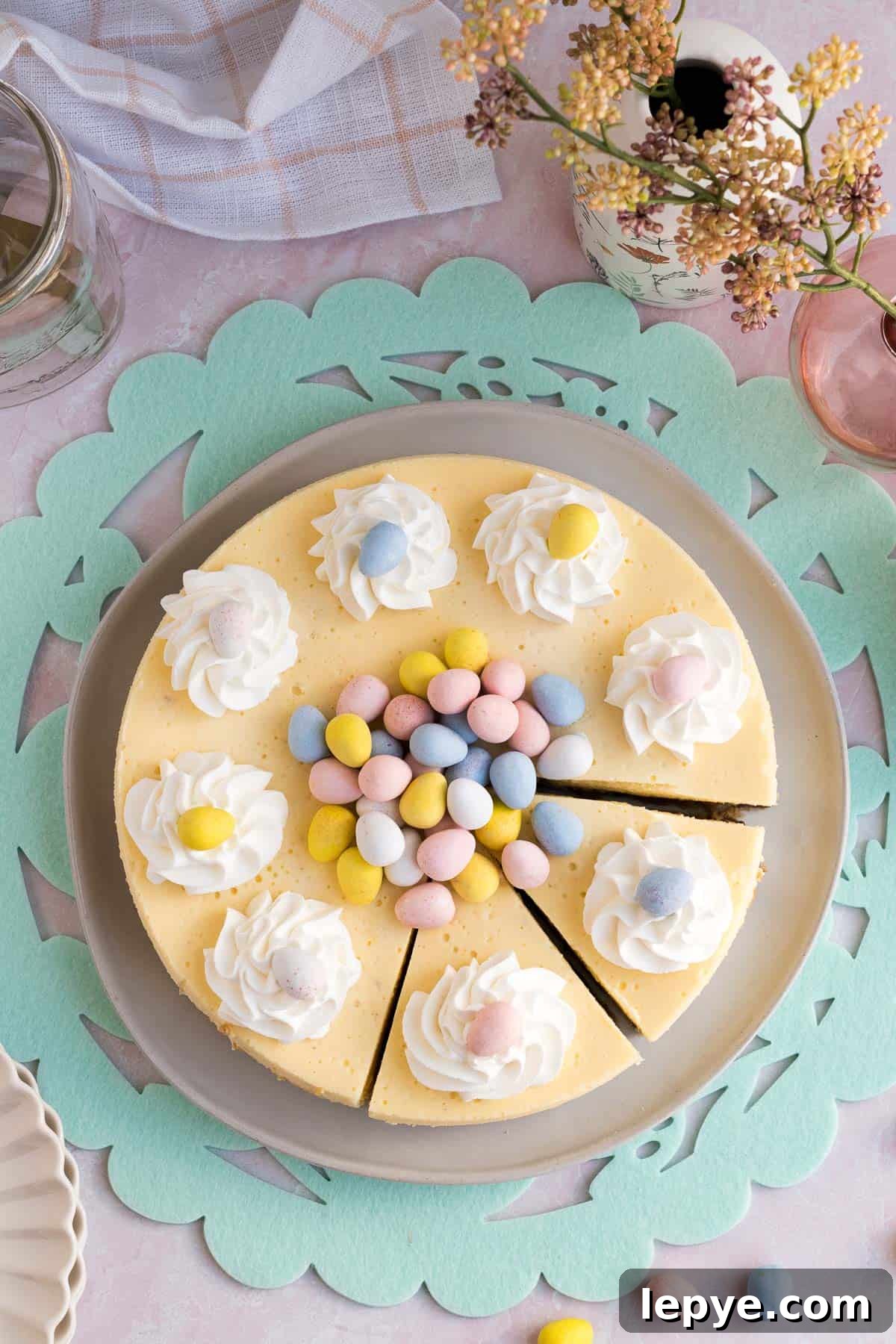
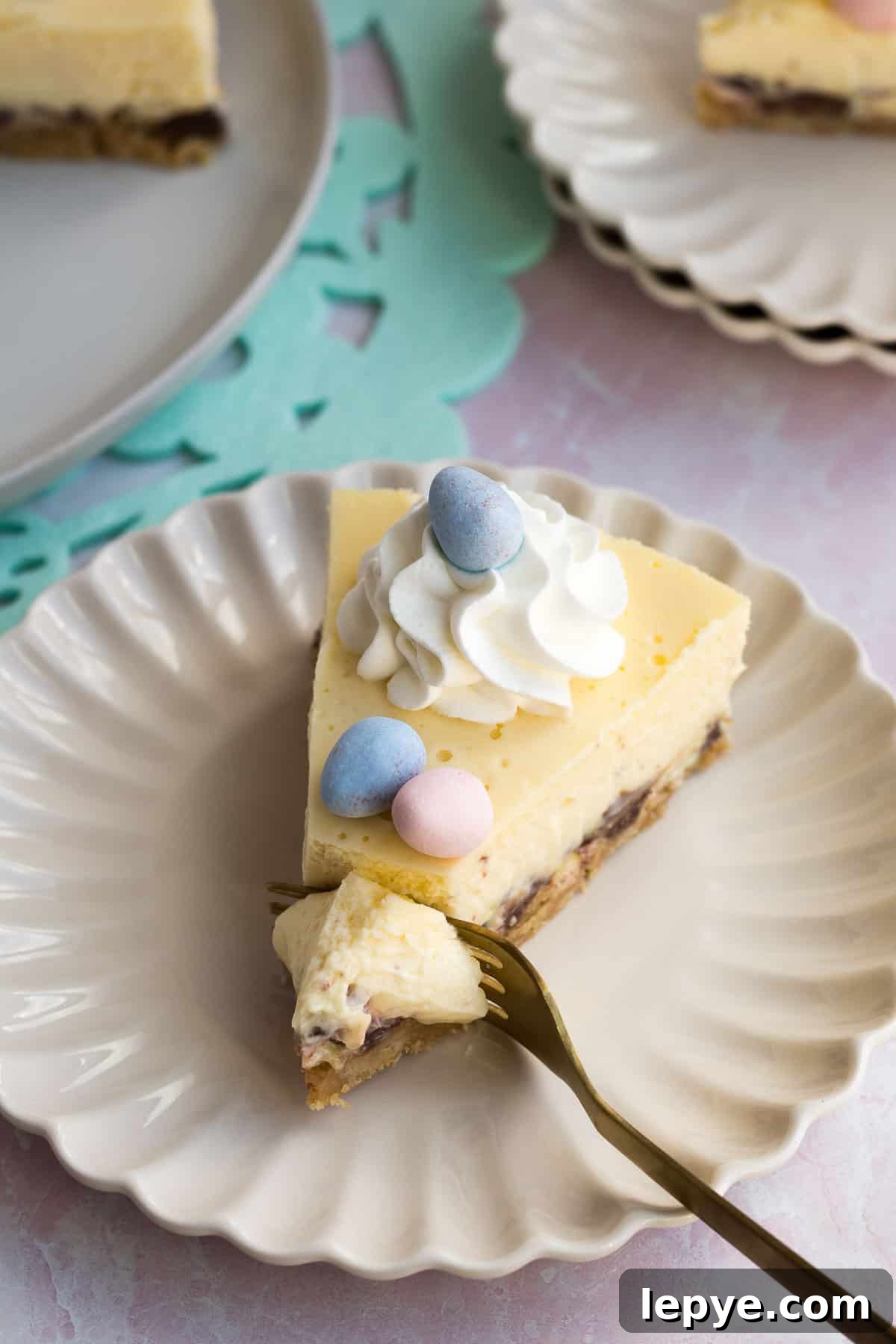
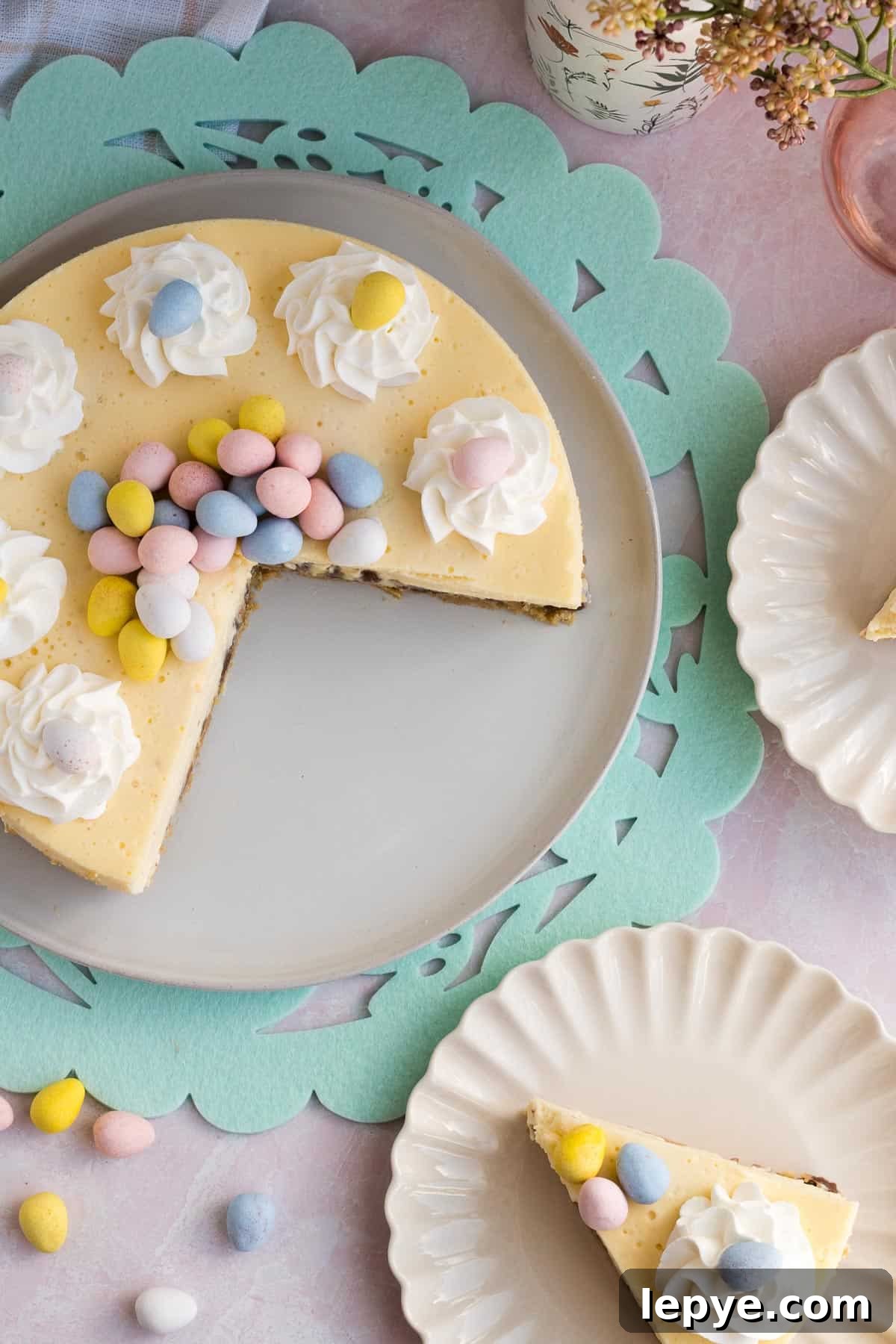
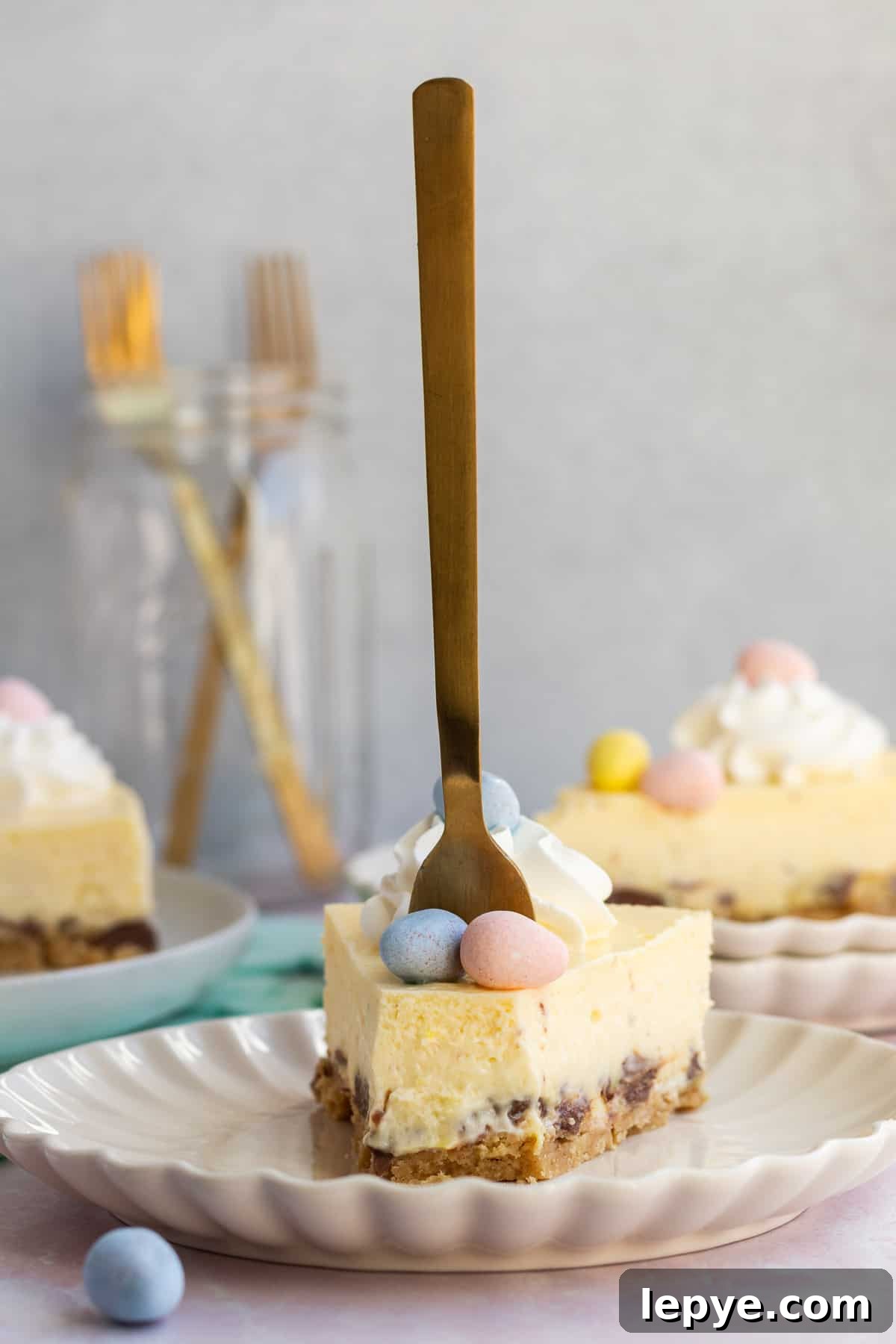
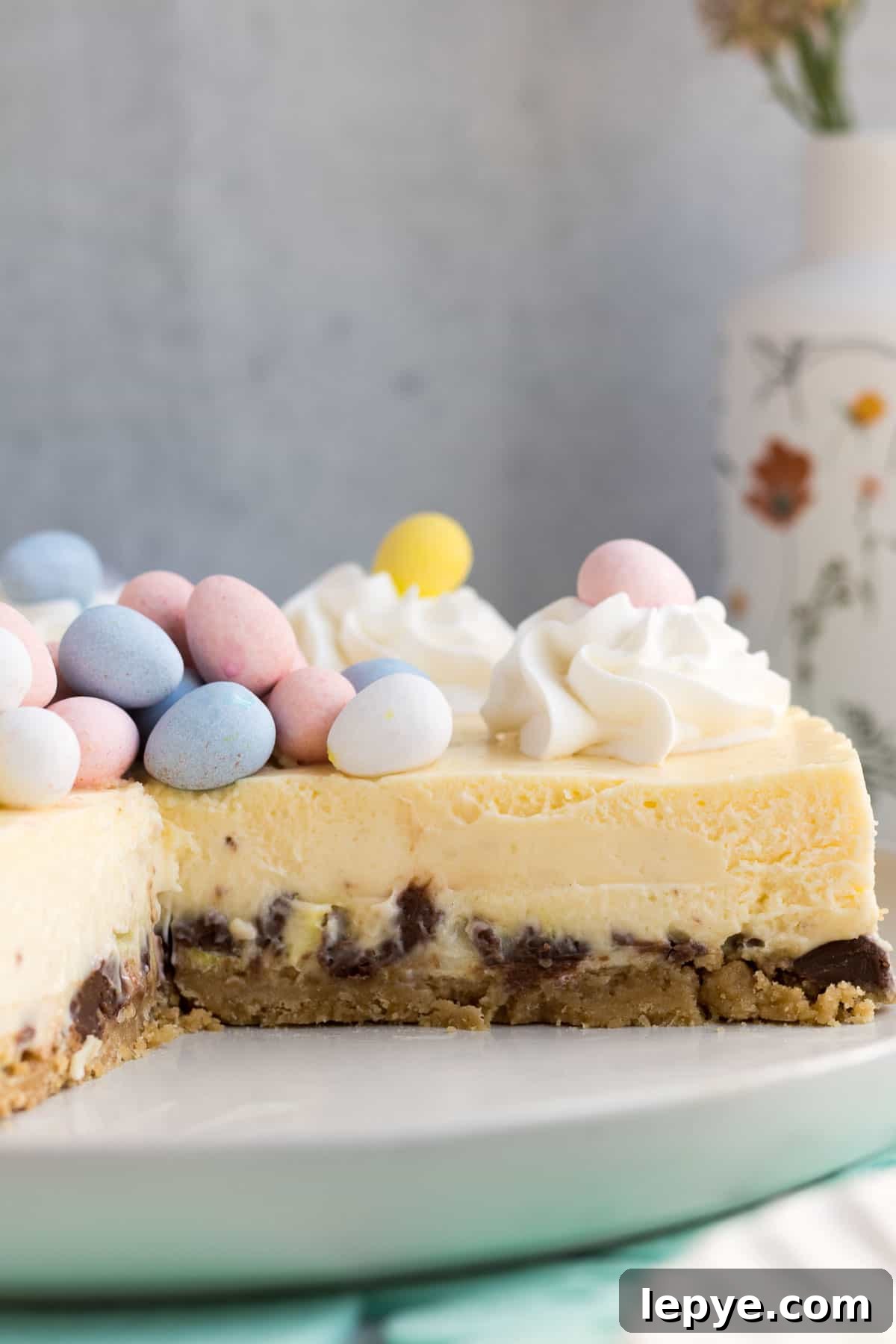
This Easter Egg Cheesecake is silky and ultra-creamy. A crunchy Golden Oreo crust forms the base, while chopped milk chocolate mini eggs are folded into the batter and piled on top before serving. The contrast of crisp crust, smooth cheesecake and crunchy mini eggs makes this an irresistible and festive Easter dessert.
Ingredient highlights
- Cream Cheese – Use full-fat Philadelphia-style cream cheese for the best texture. Make sure it’s at room temperature to avoid lumps in the filling.
- Granulated Sugar – Regular white sugar sweetens the filling. For a brown-sugar variation, try an apple crumble cheesecake recipe instead.
- Eggs – Large eggs at room temperature act as the binder and help create a custard-like creaminess.
- Almond extract – Almond extract adds a classic Easter hint that pairs nicely with milk chocolate mini eggs. Use ½ teaspoon for a noticeable flavor, reduce to ¼ teaspoon for a subtler note, or substitute 1–2 teaspoons vanilla extract.
- Kosher salt – A pinch of salt balances sweetness. If using table salt, reduce the amount by half.
- Heavy cream – Heavy whipping cream yields a luscious, smooth cheesecake. For a tangier flavor, sour cream can be used instead.
- Cadbury mini eggs – Chop and fold these into the batter and reserve some for decoration. See the safe chopping note below.
Equipment
These tools help ensure a successful cheesecake:
- 9-inch springform pan – Required for easy removal and the deeper sides of a cheesecake.
- Heavy-duty foil – Wrap the pan to protect it during the water bath and prevent leaks.
- Stand mixer with paddle attachment – Keeps air incorporation to a minimum, producing a dense, creamy filling. A hand mixer on low speed will also work.
- Roasting pan – Large enough to hold the springform pan for a proper water bath.
Tips for a perfect cheesecake
- Room-temperature ingredients: Bring the cream cheese and eggs to room temperature for a smooth, lump-free filling and to avoid overworking the batter.
- Use a water bath: A water bath produces even, gentle heat and moisture that prevents cracking and yields a silkier texture than dry baking.
- Slow cooling: After baking, turn the oven off and crack the door open. Let the cheesecake cool in the warm oven for 1 hour (still in the water bath), then cool another hour on the counter before refrigerating for at least 4 hours or overnight.
- Fixing cracks: If cracks appear, the flavor remains the same and the top can be covered with whipped cream and mini eggs.
- Paddle attachment: If available, use the stand mixer’s paddle attachment or beat slowly with a hand mixer to avoid whipping too much air into the batter.
Why a water bath matters
A water bath provides low, steady heat and added humidity, which reduces browning and cracking and gives the cheesecake a creamier, more velvety texture. The gentle environment allows the filling to set uniformly for a prettier, silkier result.
How to chop mini eggs safely
Mini eggs are hard and can be tricky to chop. Work carefully and chop them one at a time. Hold a single mini egg between fingers and cut it in half, then cut each half again to create roughly four pieces. This is time-consuming but far safer than rushing. A 9 oz bag yields about 1 cup of chopped mini eggs with a small amount left for decoration.
How to know when the cheesecake is done
Begin checking at 55–60 minutes depending on your oven. The edges (1–2 inches) should be set and mostly firm; the center should still have a gentle jiggle but not appear liquid. An instant-read thermometer should register 150–155°F in the center. Avoid overbaking; it leads to a gritty texture. The cheesecake will continue to set as it cools and will firm up fully after chilling in the refrigerator.
Removing the cheesecake from the springform base
Line the springform base with parchment before assembling the pan if you want to transfer the cheesecake to a serving platter. After cooling, run a knife around the inside ring, unlock the ring, and slide the cake out on its base. Carefully peel the parchment away from the crust while supporting the cake from underneath. If this feels fussy, serve the cheesecake on the springform base instead.
FAQs
No. If you prefer, substitute vanilla extract and increase it to 1–2 teaspoons to match intensity.
As a partial alternative, place a pan of hot water on the rack below the cheesecake. It won’t fully replicate a true water bath and you may see a small crack, but it’s better than no moisture at all.
Yes. If you prefer a classic graham cracker crust, swap in your favorite graham crust recipe.
How to freeze a cheesecake
Cool the cheesecake completely in the refrigerator for at least 6 hours or overnight, then remove it from the springform pan and place on a cake circle or sturdy plate. Do not add whipped cream or mini eggs before freezing. Freeze uncovered for about an hour so it firms up, then wrap tightly in plastic wrap and foil. Properly wrapped, it will keep for 1–2 months. Thaw in the refrigerator overnight before serving. You can also freeze individual slices the same way.
Storage
Stored covered in the refrigerator, this cheesecake will keep about 5 days. If decorated with mini eggs, note that their colors can bleed and their crunch will soften over time; remove decorative mini eggs before storing to preserve appearance and texture. Whipped cream should hold shape for the storage period.
Recipe summary

Easter Egg Cheesecake
Silky, creamy cheesecake with a Golden Oreo crust and chopped milk chocolate mini eggs folded into the filling and piled on top.
Ingredients
Golden Oreo Crust
- 24 Golden Oreos
- ¼ teaspoon kosher salt
- 4 tablespoons unsalted butter, melted
Cheesecake Filling
- 3 (8 oz) packages cream cheese, full fat and softened
- 1 cup granulated sugar
- 4 large eggs, room temperature
- ½ teaspoon almond extract (or vanilla)
- ½ teaspoon kosher salt
- ½ cup heavy whipping cream
- 1 cup chopped mini eggs (about one 9 oz bag), plus extra for decoration
Whipped Cream
- ½ cup heavy whipping cream
- 2 tablespoons powdered sugar
- 1 teaspoon vanilla extract
Instructions
Golden Oreo Crust
- Preheat oven to 325°F.
- Crush the Oreos in a food processor or in a zip-top bag with a rolling pin until finely ground.
- Combine cookie crumbs, salt and melted butter. Press into the bottom of a 9-inch springform pan.
- Bake the crust for 10 minutes. Cool on a wire rack while you make the filling.
Cheesecake Filling
- Prepare the springform pan for a water bath by wrapping it with two layers of heavy-duty foil, folding the edges up the sides of the pan. For extra protection, add an oven bag over the foil if desired.
- Beat softened cream cheese and sugar in a stand mixer with the paddle attachment (or use a hand mixer) on medium until smooth.
- Add the eggs one at a time, mixing after each addition.
- Mix in almond (or vanilla) extract and salt.
- Add the heavy cream and mix on low until combined, about 30 seconds.
- Fold in the chopped mini eggs. Pour the batter over the cooled crust.
- Place the springform pan in a roasting pan and carefully pour very hot water into the roasting pan until it reaches about halfway up the springform sides, taking care not to let water get between the foil and the pan.
- Bake at 325°F for 60–70 minutes. The center should register 150–155°F or have a slight jiggle while the edges are set.
- Turn the oven off, crack the door open, and let the cheesecake cool in the oven for 1 hour.
- Remove the roasting pan and cheesecake from the water bath, remove the foil, and cool another hour on a wire rack.
- Refrigerate covered for at least 4 hours or overnight. Top with whipped cream and extra mini eggs before serving.
Whipped Cream
- Beat heavy cream, powdered sugar and vanilla until stiff peaks form. Decorate the chilled cheesecake as desired.
Notes
- If you don’t like almond extract, substitute 1–2 teaspoons vanilla extract.
- Chop mini eggs individually and carefully; halve each, then quarter for smaller pieces.
- Keep the cheesecake refrigerated up to 5 days. Remove decorative mini eggs before storing to prevent color bleed and softening.